Appeals Court Ruling Offers Hope to Climate Grants, but a Clock is Ticking…

Hope from DC? (WMP&I)
More than four months after oral arguments, a panel of federal judges have effectively revived a suit that seeks to restore the Environmental and Climate Justice Community Change (ECJCC) grant program. Last year Springfield and a motley band of municipalities and nonprofits sued the Environmental Protection Agency for illegally terminating the program and, hopefully, restore grants the plaintiffs had received before Donald Trump returned.
The July 21 ruling from a three-judge panel—two from Trump had appointed—from the Court of Appeals for the DC Circuit does not say the municipalities and nonprofits were correct. Nor did they say the judge who dismissed the case was wrong on the law. Rather, they said US District Court Judge Richard Leon dismissed the case on the wrong basis.
“The [district] court erred by reaching the merits of the grantees’ constitutional claims before resolving mootness, a jurisdictional issue,” the judges wrote. “The court erred by reaching the merits of the grantees’ constitutional claims before resolving mootness, a jurisdictional issue.”
The mootness question refers to whether Congress had rescinded those funds as part of Trump and Republicans’ tax cut.
The plaintiffs had sued under several theories, including that terminating the ECJCC violated the law and that it wwas unconstitutional. Judge Leon ruled that statutory claims belonged in a special court for contract claims pursuant to the Tucker Act. The DC Circuit faulted Leon’s dismissal of the Constitutional claims without resolving mootness.
Nevertheless, the appellate judges vacated the ruling on the Tucker Act, too because it was the more just outcome. If the Judge Leon rules that Congress rescinded the funds, the Tucker Act is irrelevant.

Judges Srinivasan, Rao & Walker sent the case back to Leon (created via law.com, Wikipedia & Google images)
“The circumstances here favor vacating the entire dismissal order. On remand, the district court must assess whether the rescission statute mooted the grantees’ claims,” the judges continued.
The judges emphasized they were expressing no view on whether the case was moot. Nor were they saying Leon’s reasons for the dismissal were correct or not.
The funding at issue was part of former President Joe Biden’s climate legislation, the Inflation Reduction Act (IRA). It included various tax breaks as well as grants like the ECJCC grants.
When judges Sri Srinivasan, Neomi Rao and Justin Walker heard the case in March, whether the Trump tax bill had canceled the funds seemed like the overarching question. Rao and Walker, both appointed to the DC Circuit during Trump’s first term, have tended to side with Trump. However, even they were vexed about how to approach the mootness issue. Sending the case back to square one at the district court level might get more answers.
It is likely the judges knew another decision related to Trump administration spending chicanery could affect this case. Indeed, some of them hinted at this possibility during oral arguments more than four months ago.
Indeed, on August 4, the DC Circuit sitting en banc—meaning most or all of its 11 judges—ruled that the Trump administration had illegally tried to shut down a green bank the IRA had created.
Benjamin Grillot, a Southern Environmental Law Center (SELC) attorney, spoke for all plaintiff-appellants during oral arguments at the DC Circuit. In a statement the SELC provided, Grillot praised the ruling.
“EPA’s unlawful elimination of the Environmental and Climate Justice Block Grant program harmed communities across the country working to address the challenges of climate change, he said. “This decision allows us to continue to fight for these communities in court.”
The Justice Department did not respond to an opportunity to comment.
Senator Ed Markey, a major proponent and author of the program, also celebrated the win.
“This latest ruling proves what we’ve known all along. The Trump administration’s attacks on environmental justice and clean air programs—and the communities who depend on them—weren’t just cruel, they were also illegal,” Markey said in a statement. “Communities like Springfield never should have lost their grants, so I’m never going to lose the will to keep fighting for them. ”
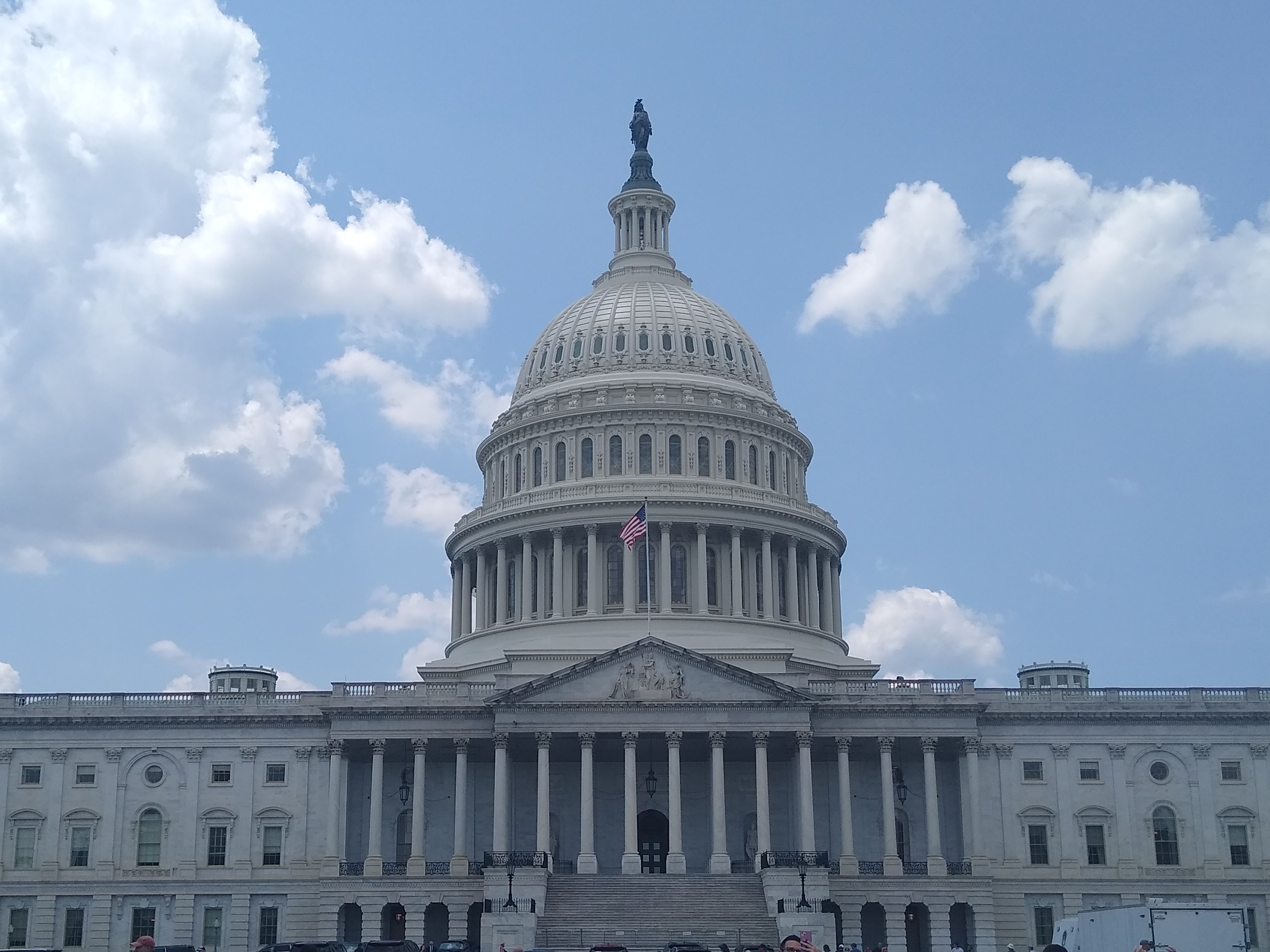
After the midterms, Congress may want a word on the program. (WMP&I)
US Representative Richard Neal was chairman of the Ways & Means Committee when the IRA passed and played key roles in its development. He emphasized the that the ECJCC program was intended to distribute $2 billion for green initiatives, especially to disadvantaged communities. Neal, whose district includes Springfield, condemned the Trump administration and Republicans for trying to gut the program
“For a city like Springfield, this grant program represented an unprecedented opportunity to work with the federal government to address challenges exacerbated by climate change,” Neal said in a statement.
“Publicly, Republican members of Congress do not want to challenge the President. Privately, they take a much different tone,” he continued. “These funds have benefitted red, blue, and purple districts alike, creating more than 400,000 good-paying jobs and unleashing more than $600 billion in private investments.”
The SELC and the group that represented Springfield and the other municipalities, Public Rights Project, also represented parties in a South Carolina suit over the ECJCC program. A judge in South Carolina found the EPA illegally terminated the program on June 11, dismissing the mootness question almost out of hand. A SELC spokesperson confirmed that both suits relate to the ECJCC program. A spokesperson for Public Rights Project could not provide comment before deadline.
Could Judge Gergel indirectly grant Springfield some Palmetto relief? (via wikipedia)
Judge Richard Gergel, sitting in Charleston, did not rule that the individual grantees in that case should receive their money. However, relying on the same case that Judge Leon based his dismissal on, Gergel said vacating the termination of the program was illegal even if the individual plaintiffs might need to seek relief elsewhere. He did not impose an injunction ordering EPA to implement the program, citing impracticalities.
The EPA told Inside Climate News it was reviewing the South Carolina ruling and would comply. While the judge did not order EPA to implement the policy, voiding the guidance terminating the program may have had the same practical effect. Nevertheless, the agency dragged its feet. Gergel issued an order for enforcement on July 22. The Justice Department has since appealed to the Richmond, Virginia-based Court of Appeals for the Fourth Circuit.
Stephen Buoniconti, the City Solicitor for Springfield, noted the legal developments in the Palmetto State. The lead plaintiff there is the Sustainability Institute. He suggested that the main dispute—whether the administration can avoid or ignore Congressional spending directives—is the same. Yet, the South Carolina case posture differed in ways that might help Springfield and its co-plaintiffs get their money.
“The Sustainability Institute has similarities to our case and the decision bodes well for the monies having to be released to the grantees (Springfield, et. al) even if not expended,” Buoniconti said in an email. “In our case, expenditure was impossible because the award was pulled before any monies were distributed.”
The DC Circuit’s ruling does not assure the grants’ survival, let alone the restoration of funds to Springfield and other municipalities and groups. Buoniconti predicted, correctly, the feds would appeal the South Carolina decision, delaying relief from that ruling.
“The news is positive for the City but there still is a long road ahead for the City to receive the $20 million grant.”

Back to you, Judge Leon. (via Wikipedia)
In his statement, Congressman Neal said he has been monitoring this case for some time. Even under the sunniest of circumstances, the situation may not resolve until well after this year’s elections. He promised to revisit the matter should Democrats retake the House. Assuming his own reelection, a Democratic would put him back at the top of tax-writing Ways & Means.
The Congressman’s comment seemingly alluded to another x-factor in this case. The IRA originally set the money to expire this September.
Back in March, Rao, Srinivasan and Walker also mulled over the expiration of funds. It is possible that they deadline will not doom the funds, especially since the administration likely acted illegally. At the very least, favorable rulings could clear a path to distribute the funds. Still, breaching September 30 could become a complication only Congress can fix.
For now, things are in a bit of a holding pattern. The DC Circuit must formally return the case to Judge Leon in District Court. From there, the argument will begin anew.