Take My Council, Please: The Pauses Will Continue until Morale Improves…
Backing up the food trucks. (WMP&I and Google images)
The Springfield City Council’s July 27 meeting looked back. While the procedural posture remain cloudy, the body revisit the new food truck ordinance that became law this year. Originally enacted to regulate food trucks on private property, its implementation prompted an outcry among vendors.
Also before councilors was an order seeking an outside ethics opinion on a Community Preservation Act (CPA) grant. It would fund a housing project a subsidiary of the New North Citizens Council (NNCC) proposed. At-large Councilor Justin Hurst has intimated that something untoward is afoot because the City Clerk, Gladys Oyola-Lopez, sits on the NNCC’s board.
Councilors Malo Brown, Michael Fenton and Kateri Walsh were absent. At-large Councilor Brian Santaniello participated remotely. Ward 5 Councilor Lavar Click-Bruce was in the chamber for most of the meeting, but went remote late in the meeting before dropping off.
A soupcon of procedural chaos hung over the food truck debate, concluding with a decision to pause the law rather than pass immediate amendments. The outside counsel order faced its own touch of turmoil City Council’s own attorney, Ken Shea, said the Council should entere executive session to discuss it. That prompted fierce pushback from Hurst and Council President Tracye Whitfield.
Otherwise, it was a fairly ho-hum agenda.
The body accepted the May revenue and expenditure report. It passed a resolution backing state action to help those facing impending food insecurity. Donald Trump and Republicans in Congress slashed the Supplemental Nutritional Assistance program, known colloquially as food stamps, to pay for the tax cut Trump and the GOP passed last year.
Councilors unanimously confirmed Madeline Landrau to the Water & Sewer Commission. While enthusiastic about the choice, councilors raise concerns about costs such as rising water bills.
The body also allowed Eversource to open up King and Margaret streets for utility work.
In one vote, Councilors approved 15 grants valued at less than $100,000. These went to departments ranging from Elder Affairs to the Library system.
HHS and its subagenies had lots of grants. (via YouTube/Focus Springfield)
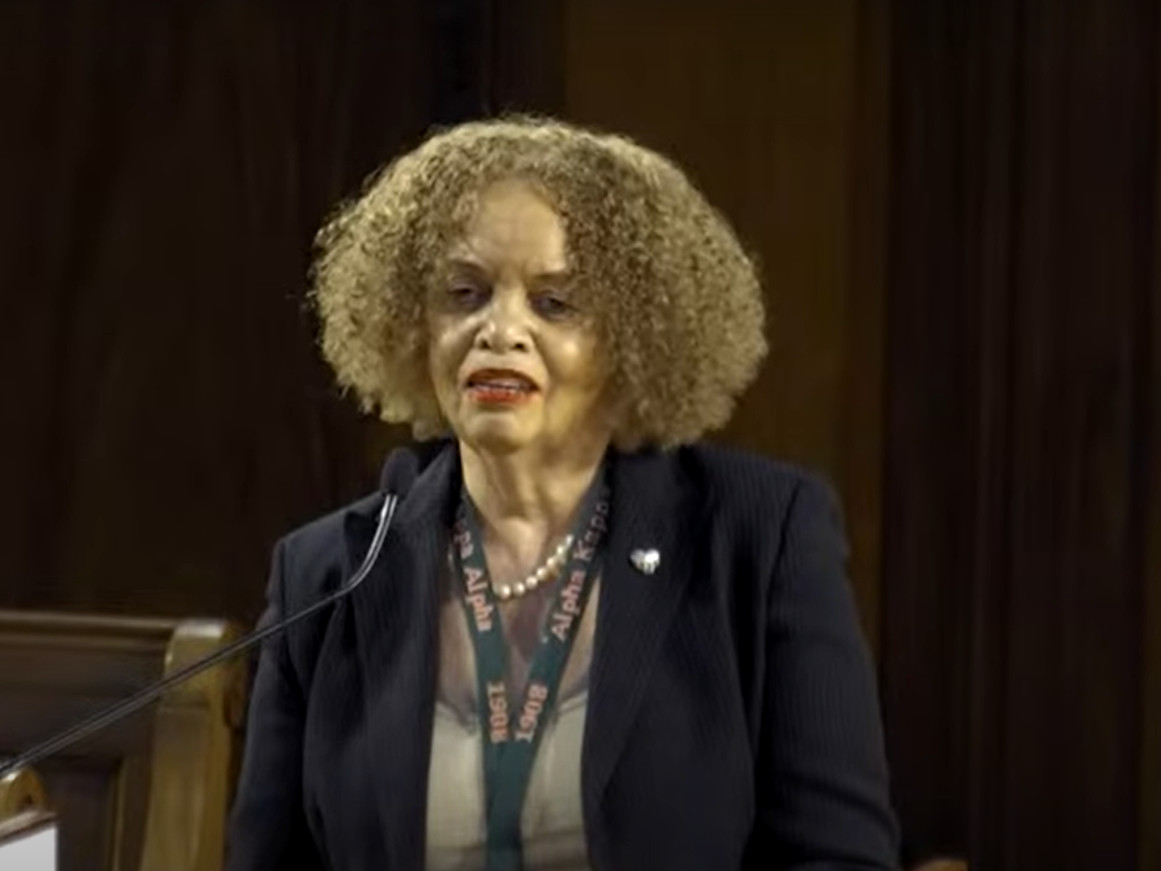
Health & Human Services Commissioner Helen Caulton-Harris presented several large grants. These were $121,682 for tobacco enforcement, $125,000 for regional substance abuse programs, and $139,805 for health and nutrition awareness. Library Director Molly Fogarty presented two grants—one for $145,000 and one for $180,000—from the Springfield Library Foundation. Fogarty said the former pays for personnel and operating costs and the latter finances library material purchases. All passed without dissent.
A separate $400,000 grant will pay for expansion for public health services. Roy Goodman from the Department of Elder Affairs presented a $488,976 grant that helps fund his agency’s operations. Finally, Lt. Brian Eliot of the Springfield Police presented the annual Gambling Enforcement Unit grant from the Gaming Commission. Eliot said the $1,308,213 pays for a supervisor and six officer assigned to the MGM area. (The State Police patrol the casino property itself.) All passed without dissent.
The Council authorized the acceptance ride share funds that the state collects from companies like Lyft and Uber. Public Works czar Chris Cignoli said the $158,596 distribution would finance sidewalk construction and crosswalks.
The body authorized the transfer of land near Sumner Avenue and Bairdcrest Street to the Conservation Commission.
Housing Director Gerry McCafferty presented property transfers to developers. Three plots on or near Greene, King and Walnut streets will go to Homes Development, LLC. The entity will use state neighborhood stabilization funds to develop the plots. Several parcels near or along Brigham Street will go to Naylor Nation Real Estate. The group will combine some of the parcels and building two-family homes. All transfers passed without dissent.
Councilors approved $645,000 to take property for the new German Gerena School. The current building on Birnie Avenue has long been troubled and the city has plans to build a new facility on Chestnut Street. Property on Massasoit and Prospect streets will join existing city land. The Council voted to correct a deed referenced in the order, but otherwise unanimously approved the funds and the taking itself.
Debate on the food truck ordinance was calm, but discombobulated. Councilors largely agreed that unworkable elements of the ordinance should be corrected. Yet, there was also frustration that months of pubic debate had not reached the proprietors who had issues.
Cl
Click-Bruce did not expect to still be trucking at that meeting. (still via YouTube/Focus Springfield)
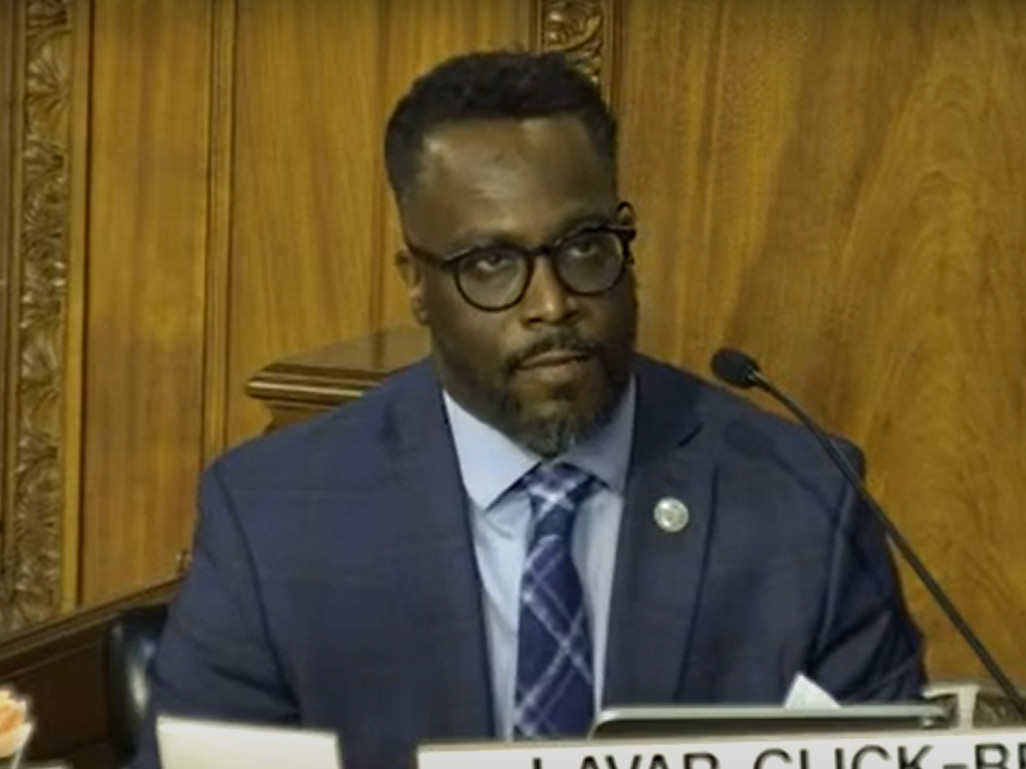
Councilor Click-Bruce, the chair of Maintenance & Development, kicked off debate with a history of the ordinance. He noted some of the issues that arose and that groups like the Latino Economic Development Council were prepared to step in and offer assistance. Click-Bruce also revealed that the city had effectively ceased enforcement for now.
The Ward 5 Councilor did not reject pausing the ordinance outright, but he indicated passing various amendments he had introduced would be best. This new bill, which was on the agenda, would amend the ordinance to alter the hours limitations and reduce certain distance rules.
There was some question about the breadth of the Council’s latitude to make amendments under open meeting law. However, the Law Department assured councilors that any amendment to Click-Bruce’s bill, including one pausing the ordinance entirely, was permissible.
Although President Whitfield and Councilor Hurst backed Click-Bruce’s suggestion, Councilors Victor Davila, Zaida Govan and Maria Perez preferred a pause.
The exact process became murky. The Council voted 9-1 with Hurst dissenting to table the amendments in Click-Bruce’s bill. However, those parts of the legislation may not have been independently debatable, at least in that moment. The Council vote unanimously to amend Click-Bruce’s bill to pause the ordinance. Yet, it was also unclear whether they successfully passed first step in the legislating process.
The Council appeared resigned to the possibility of holding a special meeting to finish the job, regardless.
There is also a 20-day period after the bill becomes law that it is subject to a referendum, but that is unlikely to matter.
The Council voted to approve polling places for the September 1 primary before moving on to Hurst’s order to seek private counsel. That matter has only become more fraught since the Council declined to take a vote on CPA funding for BELLA, LLC, a for-profit arm of the NNCC.
The Law Department had claimed it could not opine on the ethics issue Hurst claimed because it might be witness intimidation. What witness? Oyola-Lopez had reported the claims of vote-buying in the 2023 mayoral election. Hurst faced accusations of being involved, which he vehemently denied. Since returning to the Council this year, he has held several General Government Committee hearings on the 2025 election, claiming something happened with the count between initial and final reporting. (No evidence of actual tampering have surfaced.)
While the ethical questions about the CPA funding and Oyola-Lopez’s roles as Clerk and place on the NNCC’s board are most circumstantial, the Law Department’s disclaimer seems a bit off, too. It did not help when Attorney Shea advised the Counsel to go into executive session because the matter might involve the reputation, character or discipline of an employee or litigation.
However, on July 23, City Clerk Oyola-Lopez stood on the steps of the Courthouse while her lawyer warned Hurst to stop harassing her over the issue, as well as others.
Strictly speaking, the advice for executive session was sound. However, it may be overbroad, too. Hurst condemned the suggestion and correctly observed that the order on its face did not necessitate open session. Merely voting on an order to seek outside counsel may not justify a closed session under state law. Nevertheless, Hurst said he would oppose executive session, but would entertain tabling his order.
Shea emphasized that closing deliberation to the public was the Council’s choice. What he did not do was suggest a debate cabined to the four corners of the order may be less problematic.
Another issue Hurst alluded to, but was not discussed in detail, was how councilors could actually finance outside legal representation. Generally, the Council cannot appropriate funds without the mayor. The order itself did not identify an alternative mechanism. Hurst noted the the Council had received pro bono counsel before.
Oyola-Lopez was not present at the meetin—her deputy managed the meeting. Councilor Santaniello noted that an individual discussed in executive session has a right to be present. President Whitfield stepped down from the dais to join the debate then.
In an impassioned speech, Whitfield said she was not offered an executive session when the Council considered a vote of no confidence in her as presdient earlier this year. The wisdom and legality of removing her as president were certainly tenuous. The charter provides no mechanism for it. Yet, for these reasons, among others, it may not have been permissible to debate her ejection anywhere but in open session.
For all the sound and fury, though the order met its end in public. There was no motion for executive session and the Council vote 4-5 for the motion. Govan, Hurst, Perez and Whitfield backed it. Councilors Davila, Santaniello, Jose Delgado, Melvin Edwards and Gerry Martin voted against it. Click-Bruce did not vote.
Hurst told reporters he may pursue an opinion individually and share it with councilors.

(WMP&I)
These two matters exposed cleaves in the city. The first is between the municipal government and segments of its population. Councilor exasperated that some businesses had not heard about the new ordinance have a point. Yet, closing the gap between the governed and the governors somewhat rightly is the latter’s responsibility.
As for the outside counsel order, Hurst has made clear this is not over. On the limited question of getting an opinion, denizens of City Hall will simply have to wait and see. No matter what, the chasm growing between factions of 36 Court Street seems likely to widen from here.