Springfield Marches into Court to Join the Legal Fight against Trump…
UPDATED 8/5/25 12:34AM: To include an update from the court that it will hear all motions on August 5.

The City of Homes marches to war against federal lawlessness. (WMP&I)
Next week, the City of Springfield will do what countless entities have done since January 20—it will march into federal court to confront Donald Trump and his administration. In particular, the city is suing the Environmental Protection Agency and its administrator as one of several municipalities and groups contesting the termination of several environmental grants the EPA had issued during Joe Biden’s presidency.
Springfield and its co-plaintiffs seek to represent hundreds of local governments and groups that lost Environmental and Climate Justice Block Grant (ECJBG) funds. The money came from the Inflation Reduction Act and Biden’s infrastructure law. They allege violations of the Constitution and three claims under the Administrative Procedure Act (APA).
Springfield had thought it had its ducks in a row to collect its $20 million grant for environmental justice projects. Yet, as the filings make clear, the Trump administration began attempting to claw back money almost immediately. The city had almost implemented the grant when the EPA formally terminated the program in apparent violation of law. Springfield began considering its options and signed onto this suit in Washington.
“Defendants’ termination of the program was unlawful. It violated bedrock separation-of-powers principles by effectively repealing a federal statute and impounding specifically appropriated funds based on nothing more than the President’s disagreement with a program Congress duly enacted,” the plaintiffs state in the motion for a preliminary injunction.
The law would seem to be on the plaintiffs’ side, at least over the medium and long term. However, the Supreme Court looms over this case and countless others involving the illegal withholding of funds.
Since returning to power, Trump has tried to frustrate or even eliminate efforts to combat climate change. His administration teems with individuals who deny that human activity—namely the burning of fossil fuels—is raising global temperatures and creating risks to the environment and humans.

Zeldin probably should hide his face. (still via Hanna-Barbera/Warner Bros.)
EPA Administrator and Captain Planet supervillain flunky Lee Zeldin has taken on his boss’s agenda with gusto. In addition to rescinding a finding that heat-trapping carbon dioxide poses a threat to humanity, Zeldin has swung every bat he can find to disrupt the EPA’s climate programs. He is a defendant in other suits, too. Among them is one where his agency allegedly concocted a scheme to rip funds from a climate group’s bank account.
The EPA told The Republican last month it does not comment on pending litigation.
The lead plaintiff in the suit is Appalachian Voices, a nonprofit environmental group based in North Carolina. The proposed class does not differentiate between local government and nonprofit plaintiffs. A diverse set of named plaintiffs can help broaden the class they hope to represent.
Springfield is among several local government plaintiffs. Other such parties are San Francisco, Sacramento, Allegheny County in Pennsylvania and Kalamazoo County in Michigan.
Class certification will be among the legal questions before Judge Richard Leon of the District Court for the District of Columbia. The plaintiffs have a preliminary injunction pending that would restore the funds temporarily. The Justice Department has filed a motion to dismiss on behalf of the EPA and Zeldin.
Lawyers from the Public Rights Project (PRP), an Oakland, California-based legal group, are representing the local government plaintiffs. PRP represents municipalities seeking to support civil rights. Many of the grants Zeldin canned would address historic environmental inequities facing cities like Springfield.
Since the EPA’s reversal, Springfield has been assessing its legal options, including discussions with the Office of Massachusetts Attorney General Andrea Campbell.
A spokesperson for PRP said it connected with Springfield through its litigation and advocacy networks. Springfield City Solicitor Stephen Buoniconti said conversations with state officials brought the city to Earthjustice and Lawyers for Good Government. Both are representing other plaintiffs in the suit. PRP often collaborates with them, he said.
“The City of Springfield intrigued them based on our demographics and data in the areas of asthma and lead exposure,” Buoniconti told WMP&I in an email last month. “Further we provided geographic diversity to the class action suit.”
The city’s health and environmental challenges feature prominently in a document lawyers submitted two days after filing the complaint on June 25.
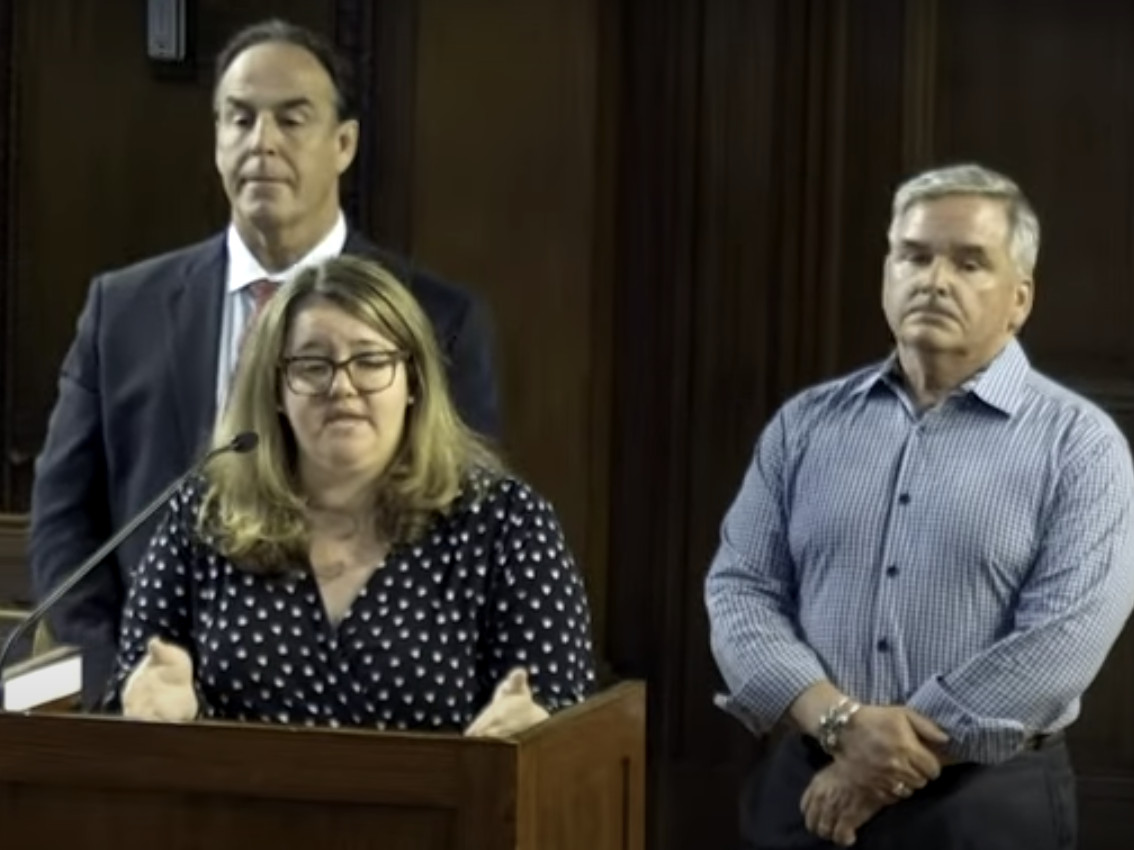
Quagliato-Sullivan in 2024. Back then, she and the feds were friends. Now she is pushing back on Trump’s attempt to take the city’s money. (still via YouTube/Focus Springfield)
In a declaration, Tina Quagliato-Sullivan, Springfield’s Deputy Development Officer for Housing, Community Development & Neighborhood Services, outlines public health challenges in the city and Hampden County more broadly. She points to poor air quality, unfriendly pedestrian infrastructure, poverty and diminished tree cover from five nationally recognized natural disasters.
“These disasters decimated the City’s tree canopy, resulting in an approximately 30% reduction in the city’s tree cover,” Quagliato-Sullivan avers. “This contributes to increased urban heat island effect in the city, decreased air quality and increased energy usage and cost for residents.”
Quagliato-Sullivan goes on to lay out the process by which the city obtained the grant, the projects it would fund, their timelines and the feds’ reversal. Among the projects the $20 million would fund are vehicle and pedestrian safety improvements along West Street, home repairs to reduce mold risk and lead paint exposure and the planting of 1,500 trees. She describes the projects as shovel-ready.
Within a day of Trump taking office, EPA staff Quagliato-Sullivan interacted with told her to pause all activities pending further notice. The city seemingly received little more information after that. As late as April 8, EPA staff told Springfield there were no compliance issues. On May 1, the EPA sent the city a termination notice.
The plaintiffs’ argument rests on the notion that terminating the ECJBG is unlawful. In short, the EPA had no authority to terminate them simply because they did not fit Trump’s policies.
The main issues next week will likely be whether the case can continue and whether the plaintiffs deserve an injunction. The class in the suit will likely not feature prominently, based on the filings. The Justice Department posits three reasons the case must end, or at least that demonstrate the plaintiffs’ chance of success is too low to grant an injunction. It claims the EPA had the right to cancel the grant, the case is moot and that the court lacks jurisdiction (per a threadbare Supreme Court opinion).
The first of these is probably the weakest, at least right now. As the plaintiffs note in their opposition, the EPA had a command from Congress to disburse the funds. It just refuses to do so.
“EPA cancelled the entire Environmental and Climate Justice Block Grant program without any individualized review of specific grants, and without any intention to spend the funds Congress appropriated on any other grantees, and Plaintiffs provided evidence to support those claims,” the plaintiffs write.
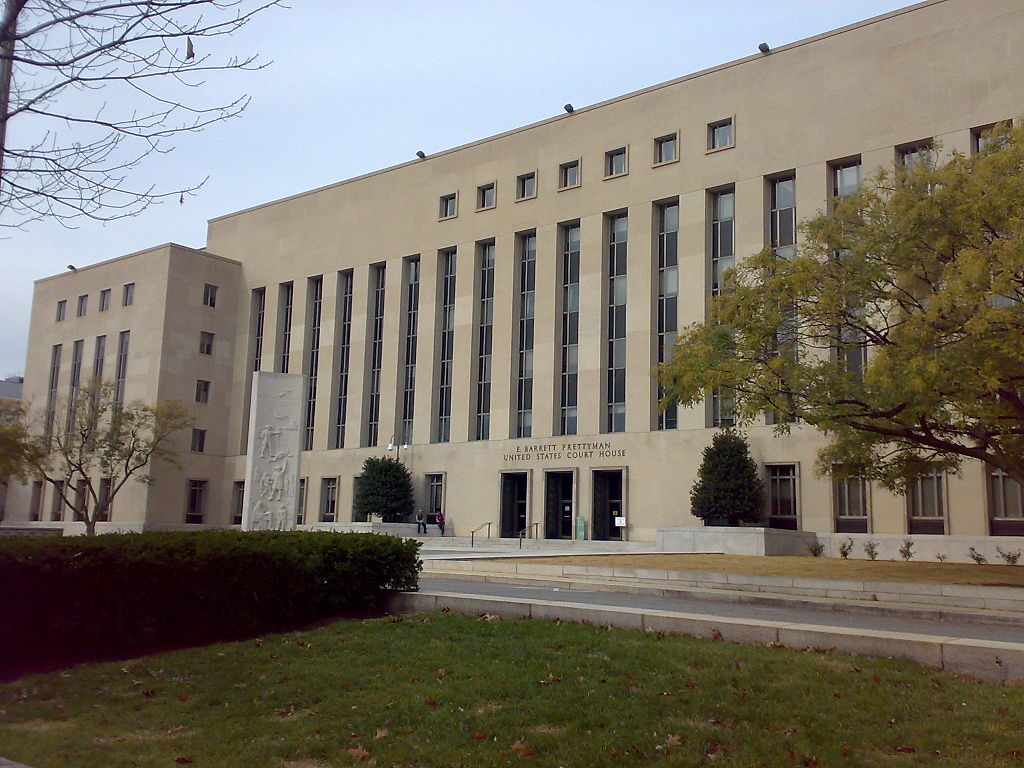
Where Judge Leon lives. (via wikipedia)
The feds have a more plausible, if still wrong argument thanks to Congress. Trump’s bill to cut Medicaid to fund a tax cut also rescinds many “unobligated” grants. That, the Justice Department argues, moots the case as Congress rescinded the funds whether the EPA could or could not do that. They do not claim Congress actually abolished the ECJBG.
Funds are obligated or not depending on whether funding is out of Uncle Sam’s hands or not. Once the government releases money, it belongs to the recipient. Taking it back requires a process.
The plaintiffs replied that the EPA did not go through the process of “un-obligating” the funds. Nor did it even begin the process in any meaningful way. They point to records that show Republicans in Congress did not account for ECJBG funds the EPA had previously awarded. In other words, the grants at issue in this case are still “obligated” and not subject to Trump’s legislation. Judge Leon can still rule on them.
The last argument the government makes leans on a brief Supreme Court decision that reversed an injunction ordering the Department of Education to release funds. SCOTUS said the plaintiffs in that case could not use the Administrative Procedure Act and should instead file in claims court because the grants were akin to contracts.
The plaintiffs here point out that they also raised APA claims and Constitutional claims. Springfield and its co-plaintiffs also argue their APA claims connect to the constitutional claims, seek relief beyond payment of funds owed and relate to a broader violations of law.
Essentially, the plaintiffs do not fault the process the EPA used to terminate the program. They argue the feds cannot terminate it at all.
Technically, only the preliminary injunction and class certification are scheduled for next week. Nevertheless, it is unlikely that Judge Leon can avoid the issues in the feds’ motion to dismiss. After this article posted, the court announced it would hear the governments motion to dismiss in tandem with the preliminary injunction on Tuesday. To secure the injunction, the plaintiffs must also show irreparable harm. That could be tougher. They have been operating without these funds for months now. The DOJ will argue waiting longer will not hurt the plaintiffs much. The other factors of balance of equities and public interest are likely less of a concern.
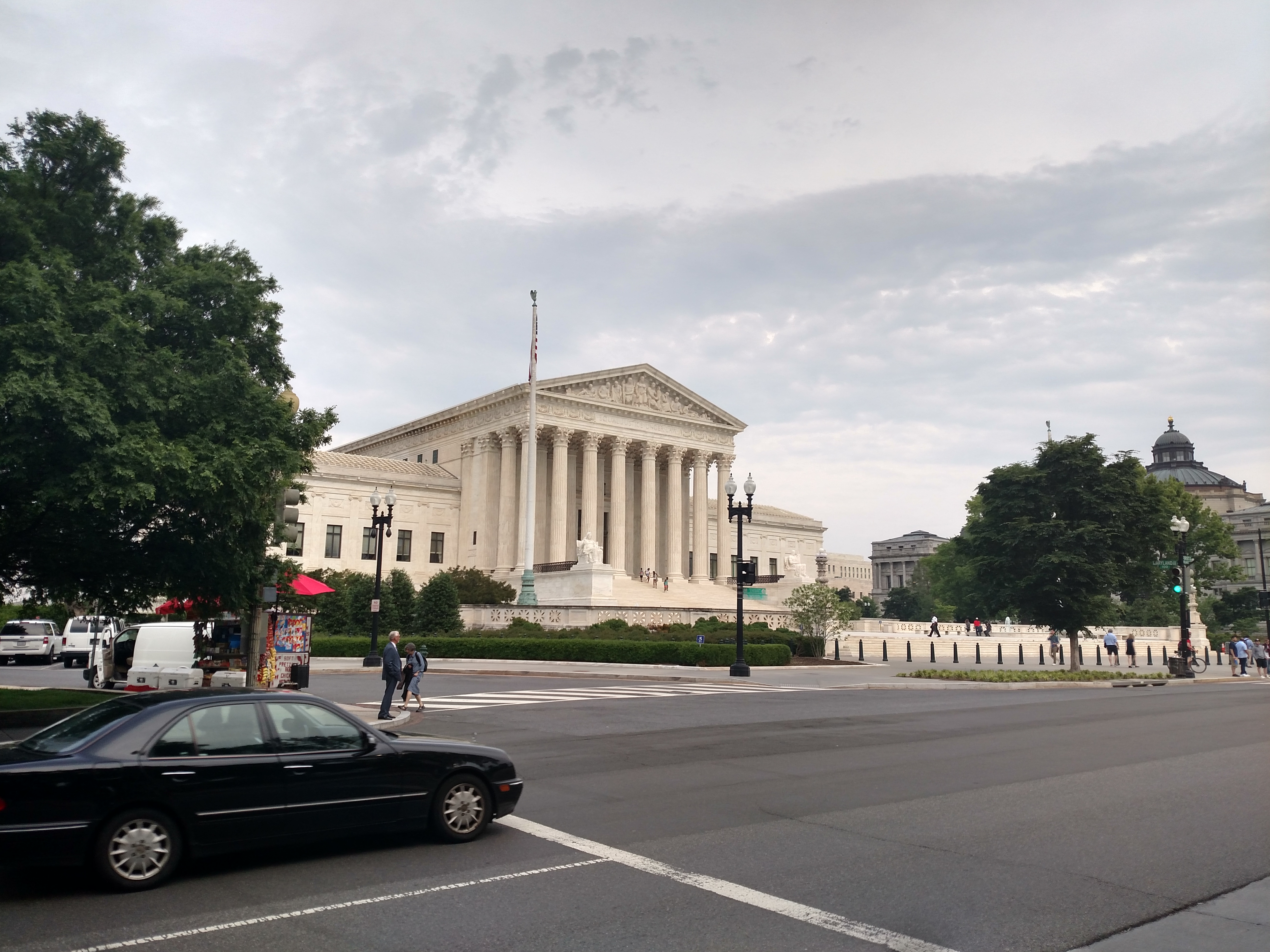
SCOTUS…groan. (WMP&I)
Since the Department of Education ruling, Trump’s DOJ has impotently waived that opinion in judges’ faces for months like a limp weapon. Courts have made the same distinctions Springfield and its co-plaintiffs have made.
That could change if the Supreme Court gives the Trump admin a lift. The DOJ recently asked for an emergency stay of an injunction a Boston federal judge issued. That ruling had reversed the feds’ cancellation of grants because they have that icky DEI (diversity, equity & inclusion) on them.
Judges and the ECJBG plaintiffs appear to be right under existing law. Of course, SCOTUS cons love to make up law as they go along. After drawing a line on renditioning people to foreign countries, SCOTUS has granted nearly all emergency stays DOJ lawyers have sought.
Unless and until that happens, all eyes from Springfield to Sacramento will be on Judge Leon. A preliminary injunction would force the release of at least some of Springfield’s $20 million grant and continue some work.
Given the breadth of the Trump administration’s push to turn the clock back 60 or even 100 years, it is not surprising that Springfield would get caught up in it eventually. Yet, how the city came to battle Trump still boggles the mind.
In effect, Zeldin cancelled Springfield’s grant because, apparently, planting trees is woke. Incompetence and indifference, all of which Zeldin oozes, explain how one comes to this conclusion. However Leon or SCOTUS rules, it will not change how lawless and absurd this episode is.

Ready for battle. (WMP&I)