Inside the 413’s Congressional Primary Finances, from Accounts to Airwaves…
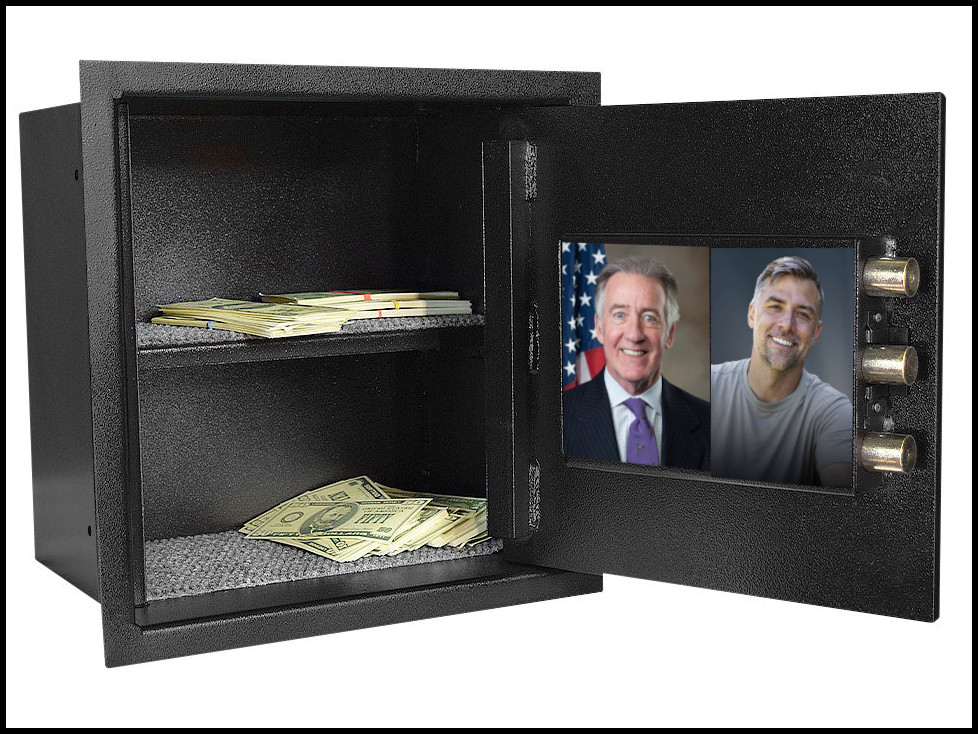
So what’s in there? (created via Google image search and candidate/official photos)
As primary season rolls to a close, the action on the campaign finance side of the races begins to ramp up. Federal law typically breaks down reporting periods into quarters. However, in advance of the state primary, Massachusetts candidates will have to file a report later this month. It will only include data through the middle of last week. That is not to say there is a death of data out there.
Third quarter reports became available on July 15. Candidates for the Democratic nomination in the 1st Massachusetts Congressional race hit the airwaves in July, after the deadline for the third quarter report. The second three months of 2026 also saw another kind of financial report: the candidates’ personal financial disclosures.
Springfield Rep Richard Neal faces high school teacher Jeromie Whalen of South Hadley in the September 1 primary. The filings reveal that Neal has maintained a stomping advantage in the money race. Generally speaking, the challenger has tried to counter this with ubiquity across the district.
Nevertheless, Whalen’s campaign has moved to get in front of even more people via their screens. Last month, he announced he was hitting the airwaves and social media to reach more people. Neal, who generally buys ad time whenever he has a challenger, has followed.
As of posting time, no third-party groups (i.e. SuperPACs) have intervened in the race in support of or in opposition to either candidate.
Massachusetts’s 1st Congressional district covers Berkshire and Hampden counties, the western fringes of Franklin County, the western and southern edges of Hampshire counties and the southwestern edge of Worcester County.

The money is getting around–at least to all of the 1st district’s media markets. (via Wikipedia)
On the federal level, Massachusetts is seeing substantial competition in Democratic primaries. The marquee race is Congressman Seth Moulton’s challenge to Senator Ed Markey. Several of the Commonwealth’s representatives in Washington face a primary challenge this year. However, the 413’s other Congressman, James McGovern, does not. His Worcester-anchored district reaches west into Franklin and Hampshire counties, including Amherst, Greenfield and Northampton.
The third quarter filings show that Neal raised $447,705 to Whalen’s $105,257. Neal spent (or disbursed) $543,490 while Whalen spent $69,773. They ended June with $4,052,063 and $65,509 respectively.
As his previous opponents have, Whalen has criticized Neal’s fundraising, particularly his acceptance of political action committee funds. Indeed, some $220,500 of Neal’s Q3 funds came from PACs. Many are plainly corporate. Yet, several PACs donating to Neal are either union-affiliated or serve a particular political interest such as J Street, a liberal group that promotes peace between Israel and Palestine.
Neal’s Massachusetts third quarter donations from individuals include ex-politicians like Valerie Barsom and Eric Lesser and Springfield bureaucrats like Parks & Rec chief Thomas Ashe and Chief Administrative & Financial Officer Cathy Buono. Several local business and community luminaries also gave.
Since the beginning of 2025, Neal raised over $571,000 from individuals. Of that, to date at least $191,975 came from Massachusetts residents per Federal Election Commission data. Washington, D.C. comes in second with $81,850 raised, with New York just behind at $63,250.
Whalen’s third quarter donations were almost entirely from individuals. Several activists in the region were among those who donated to him. Out of the roughly $256,000 Whalen has raised after entering the race last year, at least $118,000 came from Massachusetts. New York donations were a distant second at $7,250.
Historically, Neal’s challengers have blasted his fundraising. Whalen has does that, too. However, after the third quarter reports became available, he posted a video of him poring through the most recent filing—and ostensibly many from years past.
“These are real numbers here,” Whalen says in the video. “This is what we’re talking about. We’re talking about actual out of district, nothing to do with the people here. Just spending it frivolously.”
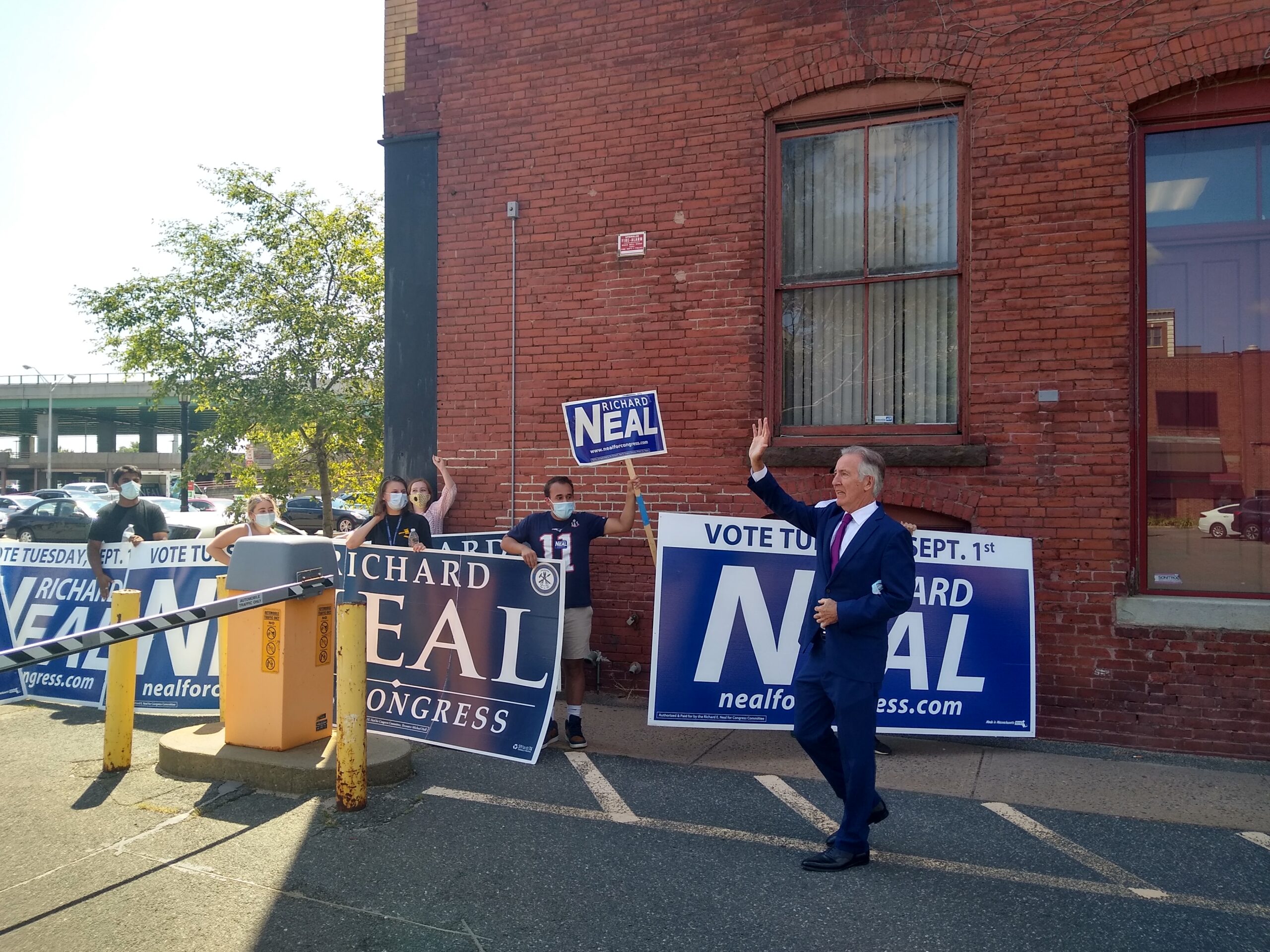
Neal’s campaign finance reports are often a feature of primary campaigns against him. (WMP&I)
Whalen’s video cited figures over the sweep of 15 years and WMP&I did not verify this claim.
In the third quarter of 2026, food and lodging were significant spending categories for Neal, although not the largest. By far, Neal’s largest item was $250,000 he transferred to the Democratic Congressional Campaign Committee, the entity that support Democrats running for the House. Campaign credit card payments aside, the next biggest expenses were fundraising and polling consultants, payroll, expenses at the West Springfield Irish Cultural Center’s restaurant and a suite rental at a DC-area sports venue.
Whalen’s largest Q3 expenses were rent and staff.
Neal’s campaign rejected any suggestion that something untoward was afoot. Rather, it emphasized the amounts the Springfield Democrat transferred to other Democrats.
“Anyone who donates to Richie is buying into his agenda, not the other way around,” Neal campaign manager Peter Panos said in a statement. “He’s also one of the largest supporters of Democrats around the country and has raised or contributed more than $5.5 million this cycle to the DCCC and competitive congressional races. Supporting his colleagues and helping elect a Democratic House majority has always been a major priority for him.”
What will not appear in this report is the ads both candidates have been running since July 1. According to reports filed with the Federal Communications Commission, both candidates have bought broadcast airtime. The buys stretch across the district and have seeped into radio as well as television.
Whalen announced a $50,000 television and social media advertising push in mid-July. FCC data shows that Whalen has reserved roughly $31,800 on NBC affiliate WWLP through the primary, largely during news programs and Saturday Night Live reruns. Another $14,000 was reserved on ABC affiliate WGGB, its sister channel CBS affiliate WSHM and their subchannels.
The discrepancy is typical. WWLP is the more-widely watched broadcaster in the Springfield-Holyoke market.
Neal went up on air shortly thereafter, but has not limited himself to Springfield broadcasters. The incumbent has reserved nearly $70,000 on WWLP and its subchannels, mostly on news programming. His reservations on the WGGB-WSHM channels run up to about $35,000. However, Neal has also reserved $25,000 on WNYT, the NBC affiliate in Albany, and $30,000 on WTEN, that city’s ABC affiliate. The New York Capital District is a more expensive market than Springfield’s, but it includes Berkshire County.
Available FCC data suggests that Neal also reserved at least $19,000 worth of ads on cable in the Springfield area.
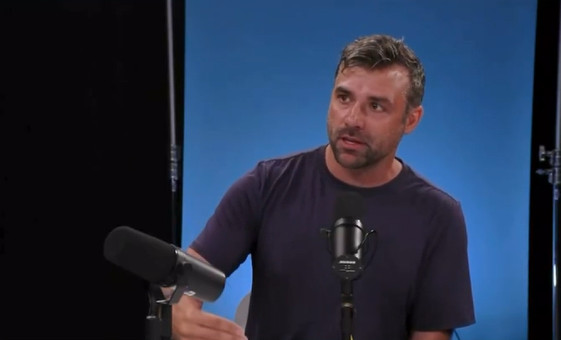
Whalen hit the airwaves first, starting on TV and then moving to radio. Neal was close behind. (still via Bluesky/Whalen Campaign)
In August, both Neal and Whalen went onto radio. Radio provides a broader range of geographic options as stations are peppered throughout the district. Available FCC info shows Neal has reserved upwards $3,000 on Berkshire County radio stations and another $16,000 across the top Springfield area stations, WAQY, WHYN and WMAS. Whalen’s reservations run up to about $10,000 and cover WAQY and WMAS in Springfield, Spanish-language station WHLL and Eastampton-based WWEI.
Very generally speaking, this spending is in line with historical trends in the district for a race with this tempo. The race lacks the outside spending, name recognition and fundraising that then-Holyoke Mayor Alex Morse had in 2020 and the pandemic complicates comparisons further. In broad strokes, this campaign mirrors Neal’s race against Springfield lawyer Tahirah Amatul-Wadud. By that metric, Neal is spending considerably less. FEC records show he dedicated over $400,000 to media buys in the run up to that primary.
Online spending has become more common over the years, too. Neal has spent between $50,000 and $60,000 on ads on Google platforms, ostensibly in video form. Whalen has spent between $400 and $700 on Google ads. The ad library for Meta, which owns Facebook and Instagram, reports that in the last 90 days Neal has spent over $20,000 on ads while Whalen has spent $3,100.
Whalen’s total Meta ad spending. may be slightly higher. The ad library shows that before May he ran dozens of Facebook and Instagram ads that cost less than $100. Neal had not run any other ads on Meta platforms.
As for personal financial disclosures, candidates and sitting members file similar forms with the House clerk albeit in different ways. Neal filed a report for 2025 this past May. Whalen also filed a report in May 2026 that dates back to the beginning of last year and runs through April. The reports do not show exact figures but rather ranges. Statements includes details of spouses’ assets, too.
Neal’s statement shows that he has between $100,000 and $250,000 in a bank account and a capital appreciation account in the same range. Both yielded income. Other than that, he received $27,662 in pension payments from Springfield—he had been its mayor and a councilor—and $28,400 for a class he teaches at UMass-Amherst. There is another $12,001 pension payment that likely came from his late wife. Prior financial statements show she had been retired. Neal also has a congressional credit union account worth between $1,000 and $15,000 and shares in two other funds worth less $1,000 each.
Whalen lists a bank account in his name worth less than $1,000, some crypto assets valued between $1,000 and $15,000 and tax-deferred Vanguard fund valued between $100,000 and $250,000. He has a joint checking account with his wife worth between $1,000 and $15,000. The report notes his leave from the Northampton School Department and his balance with the Massachusetts Teachers’ Retirement System.
Whalen’s form identifies two bank accounts in his spouse’s name, one with between $1,000 and $15,000 and another with between $15,000 and $50,000. The form lists two tax deferred tax accounts, one valued between $1,000 and $15,000 and another between $250,000 and $500,000, and a 401k worth between $50,000 and $100,000. Whalen’s spouse, a FINRA-registered stockbroker, also has a diversified brokerage account valued between $500,000 and $1 million.
The challenger reports their primary residence as valued between $500,000 and $1 million. The form also indicates the home is in Whalen’s spouse’s name. There are two other properties, also in his spouse’s name, on the form. Public records indicate these adjoin the couple’s residence. The town assesses their home at about $935,000. Neal’s home does not appear on his form, although he may not have needed to include it. The city of Springfield values his home at about $436,000.
There are unlikely to be any further personal financial statements before the primary. However, FCC advertising filings will continue to come in, should the candidates buy more ad time.
As for FEC filings, the pre-primary reporting period closed on August 12. That report is due Thursday. The passage of the pre-primary period also means that donations over $1,000 must be reported with 48 or 24 hours of receipt, depending on how close to the election they come in. Should third-party groups like SuperPACs involve themselves, they must file their spending with similar one or two-day timelines.
The winner of the primary will face independent Nadia Milleron in November.
The primary is not the final word–technically. (WMP&I)