Briefings: Springfield & Co-Plaintiffs Try to Be Appealing in Another Court…

Still standing up for itself (and potentially others) on appeal. (WMP&I)
They’re not giving up yet.
On September 19 the parties attempting to restore the Environmental and Climate Justice Block Grant (ECJBG) filed an appeal with an appellate court in Washington. Some weeks before, a federal judge in district court dismissed the class action lawsuit, which the city of Springfield had joined.
Springfield was among several municipal plaintiffs seeking to certify a class of grant recipients who lost the money when Donald Trump’s Environmental Protection Agency illegally and effectively ended ECJBG. The city itself lost a $20 million grant. Recovering the funds has not been easy, especially as the US Supreme Court has blocked recovery of such grants. It was on that basis that Judge Richard Leon dismissed the suit.
Springfield City Solicitor Stephen Buoniconti acknowledged that the city “not optimistic” given the precedents. “But,” he added in an email, “the City will pursue all legal means based on the significance of the grant.”
Public Rights Project (PRP), a legal advocacy group representing the suit’s municipal plaintiffs, emphasized that the suit was about fighting for “clean air, safe homes and fair treatment.”
“In cities like Springfield, where asthma rates are among the highest in the country, these grants were lifelines,” said Jonathan Miller, Chief Program Officer at PRP. “The appeal is about restoring evidence-based programs that protect people’s health and holding the administration accountable to follow the law.”
The municipalities in the suit include cities and towns from across the country. However, nonprofits are also part of the suit. The lead plaintiff is Appalachian Voices, a North Carolina environmental group.
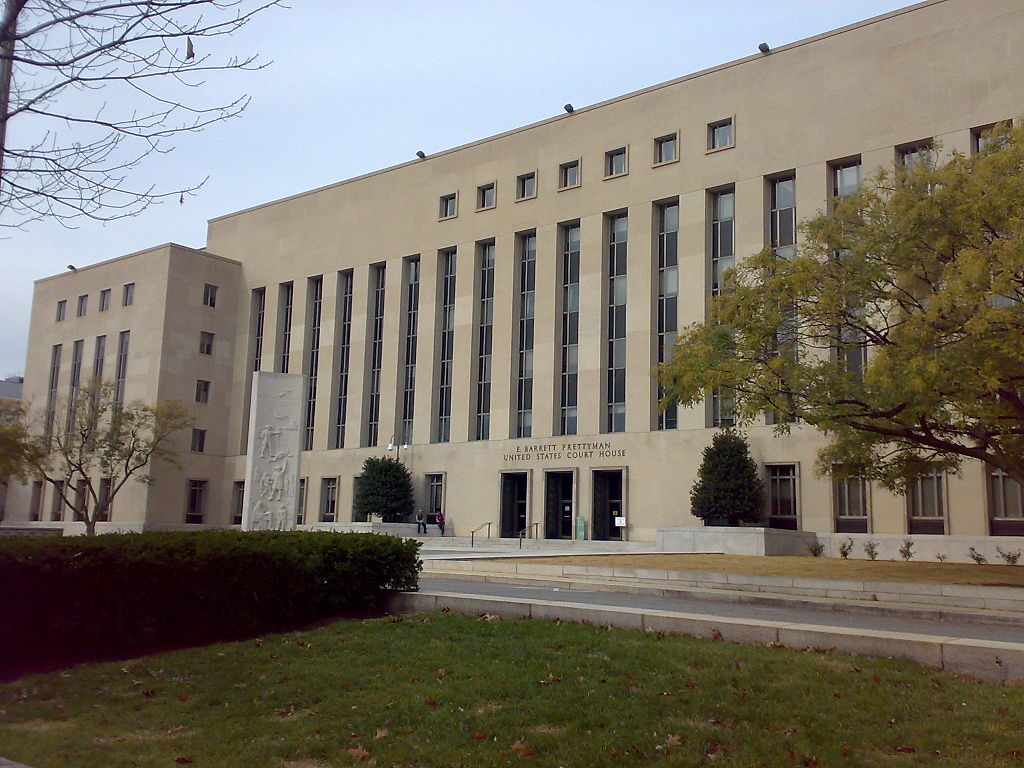
At least it’s not a long walk. US District Court and the DC Circuit both convene in the same building. (via wikipedia)
PRP did not comment on what legal arguments it might use to get the Appeals Court for the DC Circuit to revive the case. Leon largely relied on the Supreme Court’s recent shadow docket rulings that had turfed cases based on the Administrative Procedure Act (APA). SCOTUS said such claims belong in the Court of Federal Claims. Leon dismissed the plaintiffs’ constitutional claims as unavailable under longer-standing precedents.
Despite the adverse rulings from SCOTUS, in particular its conservative members, there may be some ways forward. Justice Amy Coney Barrett joined her fellow right-wing justices to block a revival of health research grants. However, she left open the possibility of the case proceeding without an early injunction restoring the money.
The plaintiffs in Springfield’s suit might also argue that Judge Leon misapplied other precedents to dismiss the remaining claims. Harvard University saw some success in clawing back grants the administration had cancelled. The university’s case centered on more than a generic APA claim. (The APA regulates how administrative agencies act and when they can be sued for breaking the law.)
The headwinds may not have deterred the plaintiffs, but a resolution may take some time. The plaintiffs moved for expedited review, but the DC Circuit may not rule on that for several weeks. That court, to which many cases involving the feds go, is already quite busy these days (obviously).
The stakes are high, as PRP said in its statement. The group noted that Springfield with its minority-majority population, has the fourth-highest asthma rates in the country. While there are parts of the city are verdant with trees, other areas have little arboreal cover. Many homes are energy inefficient or have mold and lead in them.
“Springfield’s EPA Community Change grant would have funded shovel-ready projects to plant 1,500 trees, retrofit homes to remove mold and lead, create resilience hubs and train residents for good-paying green jobs,” PRP noted in its statement to WMP&I.
“When the EPA terminated that grant, they abruptly stopped initiatives to lower asthma rates, protect children from lead poisoning, and reduce energy costs for low-income families,” the group continued. “The harm is being felt in missed paychecks, stalled construction and families living in unhealthy homes.”