Springfield and Feds Move to Close the Lid on Pearl Street Oversight…
UPDATED 5/1/26 11:00PM: For clarity and to include confirmation from the federal government.
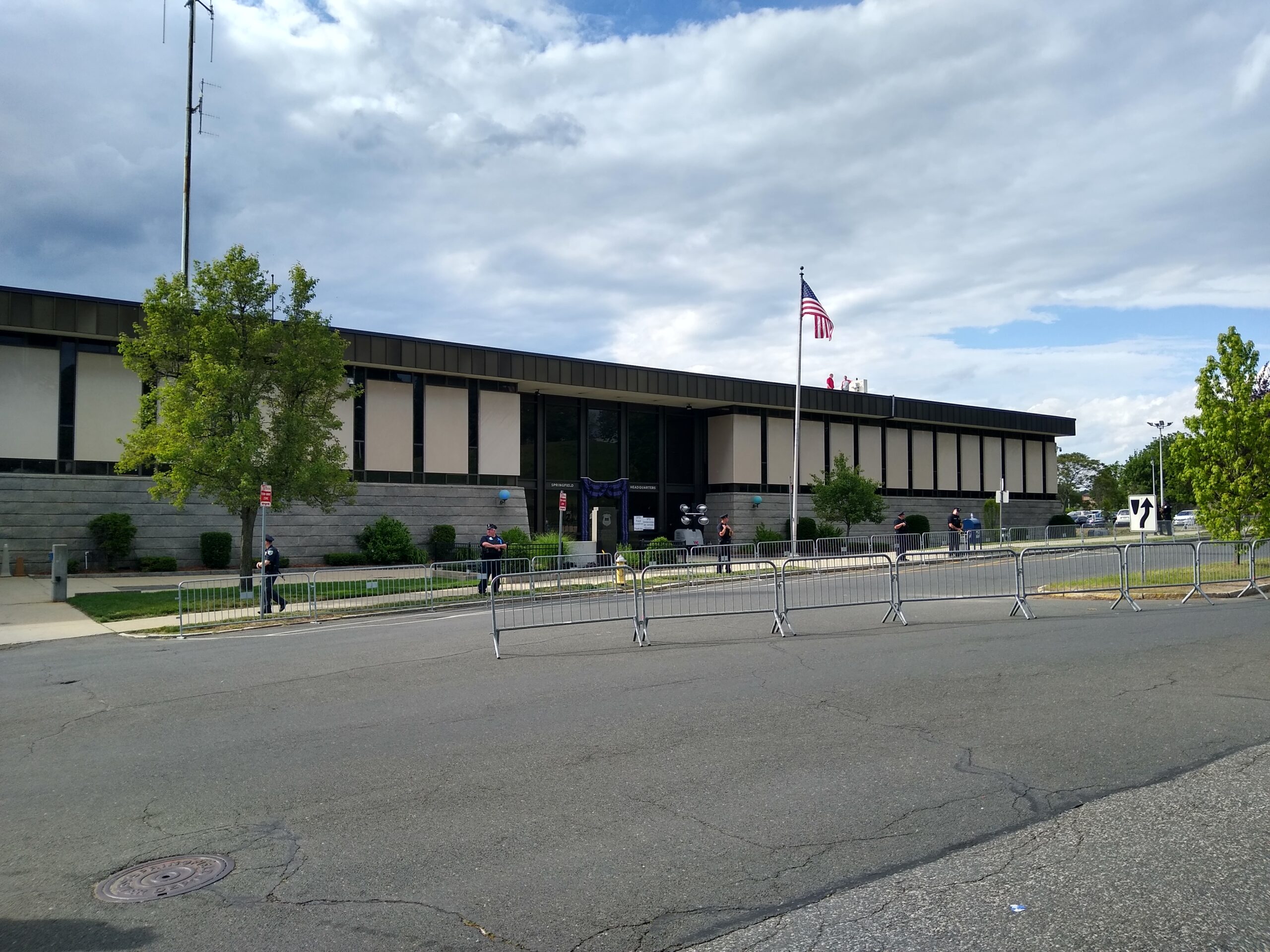
Pearl Street says it is ready to see the feds and a monitor go. (WMP&I)
Just over four years after the City of Springfield, the Springfield Police Department and the federal government reached a court-monitored settlement, the pact may be coming to an end. Springfield and the feds jointly have filed a motion to terminate the agreement. If the court agrees, it will end a saga that has cast a pall over Pearl Street—the SPD’s headquarters—and City Hall for years.
The Department of Justice and the city entered into the agreement in 2022 about a year and a half after the feds released a damning review of the Police Department. The probe, which then US Attorney for Massachusetts Andrew Lelling oversaw, slammed the narcotics unit for violating civil rights and panned the operations of the Internal Investigations Unit (IIU). The city agreed to major changes and regular monitoring to ensure compliance. The motion filed Monday largely deems that process complete.
“Due to these collective efforts, the [Compliance Evaluation Team] has concluded that SPD and the City have satisfied all the terms of the Agreement and that the Agreement should now be terminated,” the city and the feds said in the motion. “The United States and the City agree and now jointly request that the Court terminate the Agreement.”
The filing included more than a dozen exhibits and referenced many of the CET’s reports from the last few years. Kathleen O’Toole, a former Boston Police Commissioner, led the CET.
Among the exhibits are affidavits from Springfield Police Superintendent Lawrence Akers, the commander of the Professional Standards Unit (PSU) Captain Brian Beliveau, and former Deputy City Solicitor Kathy Breck. Although she retired, Breck’s affidavit notes she has advised the city on the consent decree settlement on a contract basis.
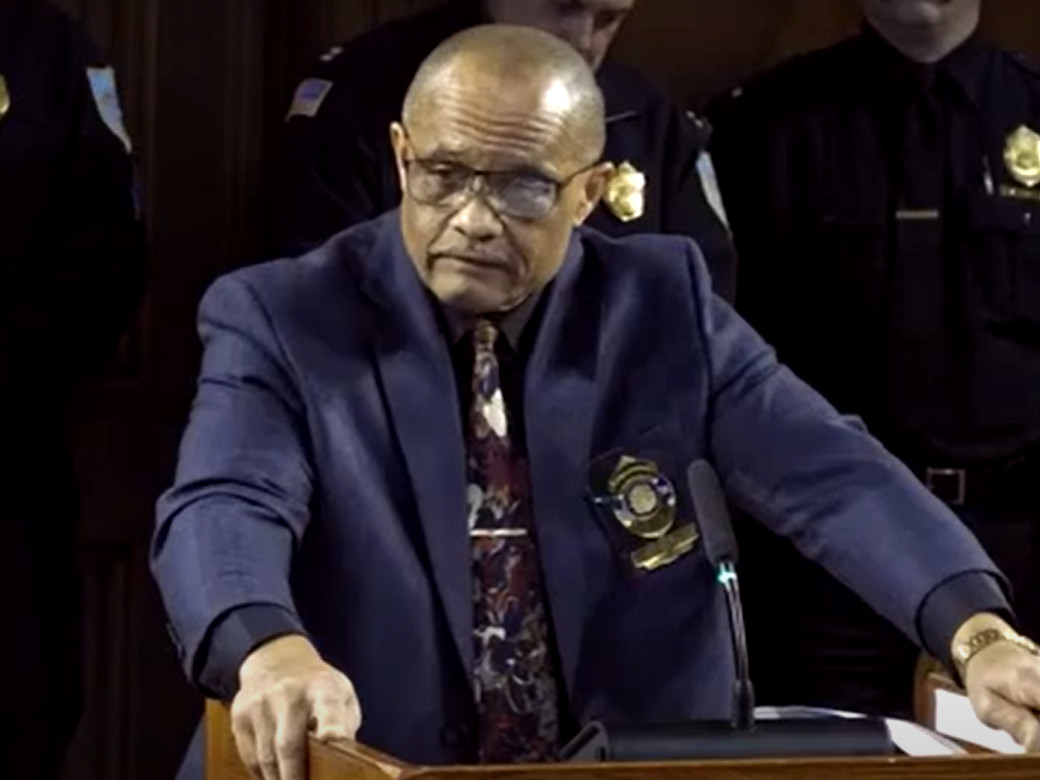
Superintendent Akers endorsed the reforms in his affidavit and said claimed they would stick. (still via YouTube/Focus Springfield)
Akers, in his affidavit, praised the progress. Yet, he added that his department would need to stand on its own without oversight.
“In the eight year journey that began in 2018, the Springfield Police Department has transitioned from externally mandated compliance to internally sustained accountability,” he said.
“In my experience, a credible and consistent internal accountability system is a key driver of organizational culture,” Akers continued. “The reforms described, combined with the sustainability framework reflected in the CET reports and Affidavits reinforce the expectation of constitutional policing and deter conduct that could lead to constitutional violations.”
At first glance, some may question the completeness of the motion. It has a “DRAFT” watermark and contains conspicuous scrivener’s errors. Court records show the US Attorney’s office in Boston filed motion on behalf of both the feds and the city. The Civil Rights Division in Washington, which has undergone, ahem, upheaval since January 2025, also appears on the filing.
City Solicitor Stephen Buoniconti, in an email, confirmed that the city and US government had agreed to the joint motion. Spokespeople for Mayor Domenic Sarno and the US Attorney’s office did not immediately respond to a request for comment.
Reuters federal courts correspondent Nate Raymond first reported the motion.
The 2022 settlement came after years of tension between Pearl Street and Springfield residents. The minority-majority city had seen plenty of police controversies over the years. However, a few high-profile events drew federal attention this time. Gregg Bigda’s on-camera threats to minor suspects and the fracas that began at Nathan Bill’s Bar and Restaurant were among them.
Lelling, Donald Trump’s first US Attorney for Massachusetts, convinced his bosses in Washington to open a patterns & practices investigation. It was the only such probe that began during Trump’s first term. When the report came out in the summer of 2020, then-US Attorney General Bill Barr—hardly a figure known to criticize cops—condemned the conduct identified at Pearl Street. Some kind of consent decree or agreement became inevitable.
The change in administration and the litigation around the Police Commission—Mayor Sarno refused to recognize an ordinance the City Council passed until the state Supreme Judicial Court ordered him to do so—led to delays. In 2022 city and federal government unveiled the consent decree settlement. The Justice Department’s top civil rights official at the time, Kristen Clarke, traveled to Springfield for the announcement.
Trump II has seen the Justice Department retreat from almost all traditional civil rights enforcement. In its current incarnation, the Civil Rights Division has mostly focused on witch hunts. Last year, The Republican reported the US Attorney in Massachusetts was reviewing a Trump order that all but demanded an end to federal efforts to arrest police violence. The feds declined to pursue a similar consent decree for the similarly troubled Worcester Police Department.
However, this agreement was always scheduled to terminate this month. Breck, the former deputy city solicitor, noted in her affidavit that the CET’s contract expires this month. Given current political realities, an extension was unlikely.
Main Justice had been more involved before, but now it has bigger stakes to burn. The local feds in Mass lend this motion some credibility. (WMP&I)
Furthermore, the docket suggests the Hathornes and Abigail Williamses running the Civil Rights Division in DC have little direct involvement. Rather, career staff at the Boston and Springfield offices of the US Attorney appear to have done much of Uncle Sam’s work here. The Republican‘s report, however, did say many staff that had been working on the Springfield consent decree were exiting.
The reports from the CET filed with the court show that Springfield Police had made progress since 2022. In addition to the much-publicized changes like body-worn cameras, the motion cites CET’s observation of better use-of-force tracking and more audits and quality assurance within the IIU. The motion also notes the ostensibly seamless changes in leadership. Both Akers and Buoniconti took on their respective roles in 2024.
The filing notes but does not dwell on areas the CET found lacking last December. These included deficiencies in required training, enforcement of body camera policies and the execution of procedures for serious use-of-force events. However, the newest CET report observed progress and supported the end of the settlement agreement.
“The CET acknowledged and supports a motion soon to be filed to terminate the Settlement Agreement,” the CET wrote in its final report. “Independently, the CET finds that SPD has demonstrated sustained and continued improvement in constitutional policing. This conclusion is supported by consistent patterns observes across multiple reporting periods.”
The motion also assures that Pearl Street has more entities looking over its shoulder. Among these are the PSU, the Police Commission, which imposes discipline, and the Peace Officer Standards and Training (POST) Commission. The POST Commission, which the legislature created in 2020, can decertify cops. It did exactly that in 2024, allowing the city to finally take Bigda off Pearl Street’s payroll.
Taken together, such mechanisms, the motion argues, leave the city in a position to ensure reforms will continue and endure.
“Based on the record in this case and steps taken over the last several years, the CET concludes that the City and SPD have demonstrated ‘a meaningful and credible commitment to sustaining reform,’” the motion argues, citing the final CET report.
The court will likely hold a hearing on terminating the consent decree. The court had scheduled a status conference for April 29, but that later moved to May 9. Whether the court is inclined to accept the parties’ joint motion will likely become clearer then.