First Round of Springfield Courthouse Lawsuit Comes to a Head, but the Battlefield Has Grown…
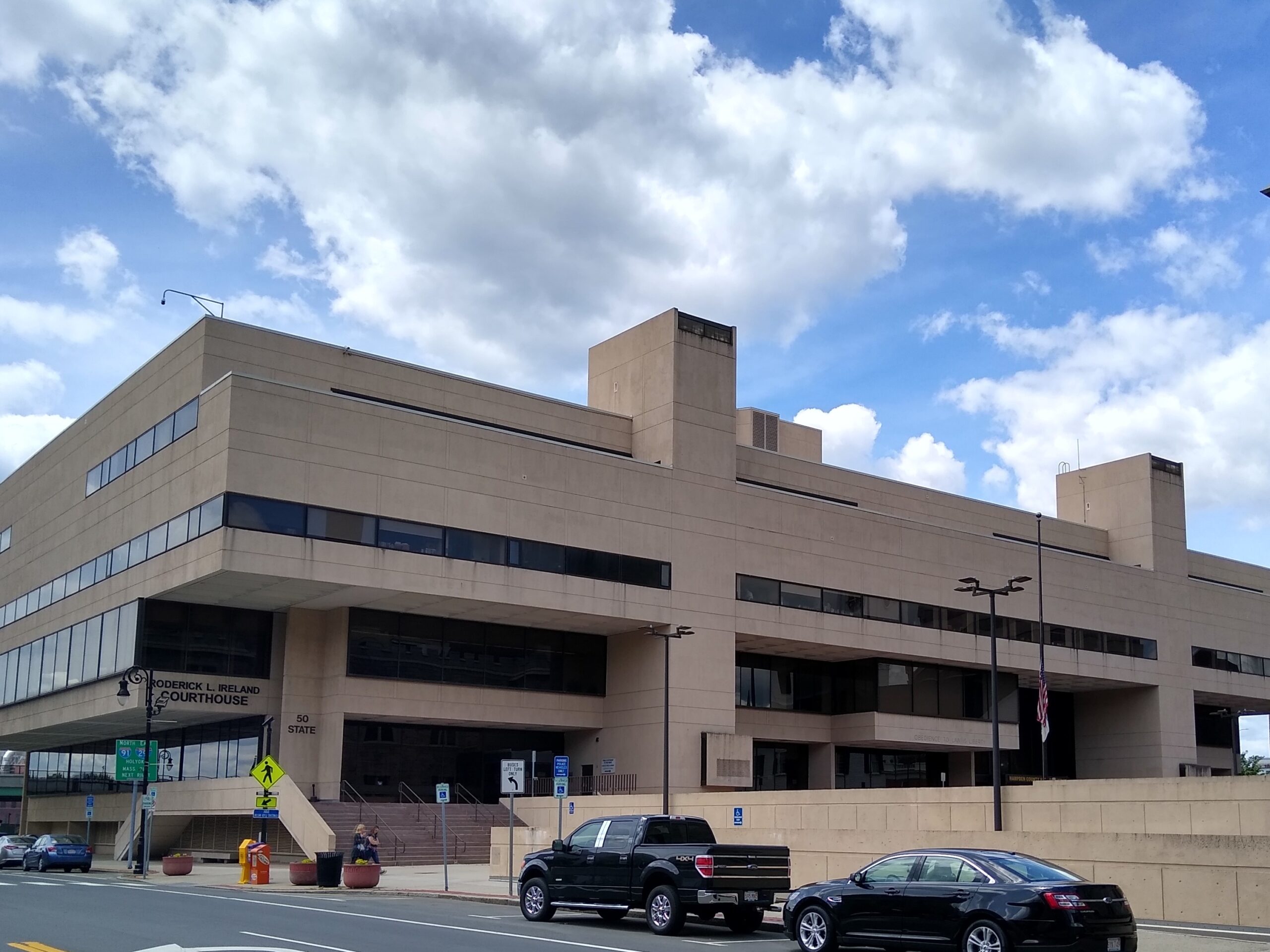
A detour to the new place before going to the new place. (WMP&I)
Since selecting the site for the new Springfield Regional Justice Center, the Commonwealth has had a fight on two fronts. In the public relations war, the Commonwealth has been releasing more information about the bid and process that led to the selected developer, Liberty Junction. John Barros, a principal of CoJo, an entity behind Liberty Junction, also said he would step away amid concerns his state job raised conflicts.
Then there is the lawsuit unsuccessful bidders USPB JV, LLC and Springfield Tower, LLC have filed. They allege Barros’ involvement tainted the bid.
The Attorney General’s office (AGO) and the selected developer have filed oppositions to the injunction the plaintiffs seek.
“Plaintiffs’ Complaint is nothing more than a fever dream of imagined malfeasance in aid of Plaintiffs’ attempt to elevate their own financial interests over the public’s interest in a newly constructed judicial center that will serve the public for decades and would save taxpayers hundreds of millions of dollars,” the AG’s office wrote in its opposition. “Plaintiffs’ disappointment and furious speculation, however, cannot stand up against the facts: DCAMM’s procurement was proper.”
The plaintiffs responded to Barros’ announcement with a supplemental memo and also replied to the AGO and Liberty’s Junction’s opposition memos. A hearing on the injunction is scheduled for Tuesday.
Last week they upped the ante and called for the Inspector General to get involved.
On July 2, the Massachusetts Division of Capital Asset Management & Maintenance (DCAMM) announced Liberty Junction would build the new Springfield courthouse at 125 Liberty Street. While not in the middle of nowhere like some proposals, it would be a dramatic shift in the location of Springfield’s courthouse.
At first, the announcement only prompted a rending of garments on the part of Springfield Mayor Domenic Sarno. He had publicly—and controversially—backed Peter Picknelly’s ludicrous proposal to wedge a courthouse between I-91 and a derelict stretch of riverfront. There was grumbling about DCAMM choosing a developer from outside the region, but nothing that could fire up a real opposition.
Then on July 9, USPB JV and Springfield Tower, the development vehicles for James Balise and Dinesh Patel respectively, filed suit. The complaint zeroed in on Barros’ involvement, his status as the interim executive director of the Massachusetts Convention Center Authority and the ethical implications.
The plaintiffs’ lawsuit itself was as much a public relations tool as it was a legitimate legal dispute. Whether it succeeds generally or in securing an injunction Tuesday, it has begun inflating opposition to the choice.
To that end, DCAMM’s release of information was clearly an attempt to establish that Liberty Junction was the best proposal. The documents, in DCAMM’s telling, emphasize the savings, fairness of process and speed of delivery.

DCAMM, essentially: Liberty, Liberty, Liberty! Liberty! (DCAMM)
“These records detail the fair, thorough and competitive process that resulted in the selection of the bid that was the lowest cost to taxpayers by nearly $300 million, had a team with strong experience and qualifications, and was the Trial Court’s clear top recommendation,” a DCAMM spokesperson said in a statement. “This project will deliver a safe and modern Court House that residents and workers deserve, while delivering the best value for taxpayers.”
If the documents were intended to bring more sunlight, Barros divesting has a whiff of damage control. Even if the suit sputters and the Ethics Commission does nothing, his interest in the project, were it to remain, would become a malodorous distraction for DCAMM and the Commonwealth.
Not that it resolves the legal issue the plaintiffs raised. Indeed, in a supplemental memo filed on July 30, they argue that additional documents show deeper conflicts and inconsistencies. It cites records that purport to describe Barros’ role as not passive and even critical to Liberty Junction’s selection. Yet, his statements of financial interest did not include CoJo, as WMP&I previously reported.
“[T]he notion that Liberty Junction could somehow cure that conflict of interest after DCAMM selected their proposal is fanciful-an ex post disclosure obviously could not erase the indelible taint of a sitting high-level state official serving as one ofthe named principals,” the plaintiffs’ state in the supplemental memo.
Furthermore, there was no mention of ethical guidance until the selection occurred on June 30. Barros disclosed his stake in the project to the MCCA the day before DCAMM revealed Liberty Junction won the bid. The memo directly attacked the notion that after-the-fact resolutions to ethical issues would not help.

Barros is out, but was he ever really in? Or could they have not done it without him? (via bc.edu)
“Divestment from the project after the selection process, where Liberty Junction’s RFP heavily relied on his presence on the team, cannot cure the conflicts that occurred during the bidding and selection process,” the supplemental brief continues. “If anything, this after-the-fact divestment only underscores the deficiencies that existed during the bidding process and that formed the basis for the selection decision.”
The brief cites the public records request the plaintiffs had made for records of correspondence between the MCCA and DCAMM. They purportedly found upwards of 4,000 responsive documents. The plaintiffs claim, undermines assertion that contact between Barros and DCAMM was minimal.
The brief also observes that Secretary of Administration & Finance Matthew Gorzkowicz’s department is the parent agency to DCAMM and he sits on the MCCA’s board. A spokesperson for the Department of Administration & Finance told WMP&I last month that Gorzkowicz had no role in the Springfield Regional Justice Center procurement process.
A week later, the AGO arrived with backup. The office’s memorandum takes aim at all elements of a temporary restraining order (and/or preliminary injunction).
Broadly speaking, the Commonwealth tries to underscore that the process of aboveboard and that Liberty Junction was the best option.
“In this case, Plaintiffs’ Complaint and request for a preliminary injunction rests on speculation and assumption and cannot overcome the record evidence provided by DCAMM and the Trial Court establishing that the discretionary decision to choose Liberty Junction’s proposal was not arbitrary, capricious, illegal, or made in bad faith,” the AG’s office writes.
The AGO dismisses the ethical claims as inapplicable because Barros does not work for DCAMM or the contracting agency, the Trial Court.
Critically, the brief also, in effect, previews a motion to dismiss. It asserts that only the Ethics Commission can adjudicate violations directly. As for the claim based on certiorari—judicial review of administrative action—the AGO states there was no quasi-judicial process nor substantial injury. Both are necessary to adjudicate a certiorari claim.

The AGO, DCAMM, Ethics & the Inspector General, all under one roof. How convenient! (via wikipedia)
Attorneys for Liberty Junction also filed opposition briefs on August 3 and 10. Those memos echoes many of the AGO’s points. However, they largely focus on defending Liberty Junction, CoJo and its development partner FD Stonewater.
The same day the AGO filed its brief on behalf of DCAMM, the plaintiff dropped another surprise. They have asked Inspector General Jeffrey Shapiro to investigate the procurement process. A spokesperson for the Inspector General said his office cannot comment on any communication it receives.
With first test of this case set to arrive before Judge David Hodge on Tuesday, the situation continues to evolve. On Monday, the plaintiffs filed a reply to the defendants’ oppositions.
The reply brief restates many issues but also emphasizes many questions the plaintiffs still need answers. Among these is the Schrodinger’s investor role Barros played as both a passive owner and critical to the selection.
The plaintiffs also directly attack DCAMM and Liberty Junction’s assertion that the latter proposed the best bid. Reciting facts from the comparison of bids, the plaintiffs’ contest the claim that Liberty Junction was definitely cheaper or faster—if that even matters.
“Neither the RFP nor Massachusetts conflict-of-interest laws contain an exception allowing an agency to overlook conflicts and procurement irregularities because a proposal appears less expensive,” the reply brief reads. “Even if Liberty Junction was the lowest cost or best value proposal (which it is not), that would still not justify selecting a bid tainted by unresolved conflicts of interest.”
The reply hits back on the implication plaintiffs failed to state a claim. The reply leads with highlighting how the Commonwealth has given courts wide berth to hear declaratory judgment cases. As for certiorari, the plaintiffs say it is flexible enough to fit this situation. They largely dance around the limitations on directly enforcing state ethics law.
Certainly, the legal ping-pong between the sides will make the hearing less predictable than it might have been. Regardless, this first outing before a judge could make clear whether the plaintiffs and other critics of Liberty Junction’s selections can find relief in the courts.
That may not be the last word, though. The court of pubic opinion will very much remain in session after Tuesday’s hearing. It is not just at battle of press releases either. The issue has broken containment from the present courthouse and spread across Court Square to City Hall.
On Thursday at 5:30PM, the Springfield City Council’s Intergovernmental Affairs Committee will hold a hearing. The Committee chair, Ward 2 City Councilor Michael Fenton, has invited the bidding developers to discuss their proposals.
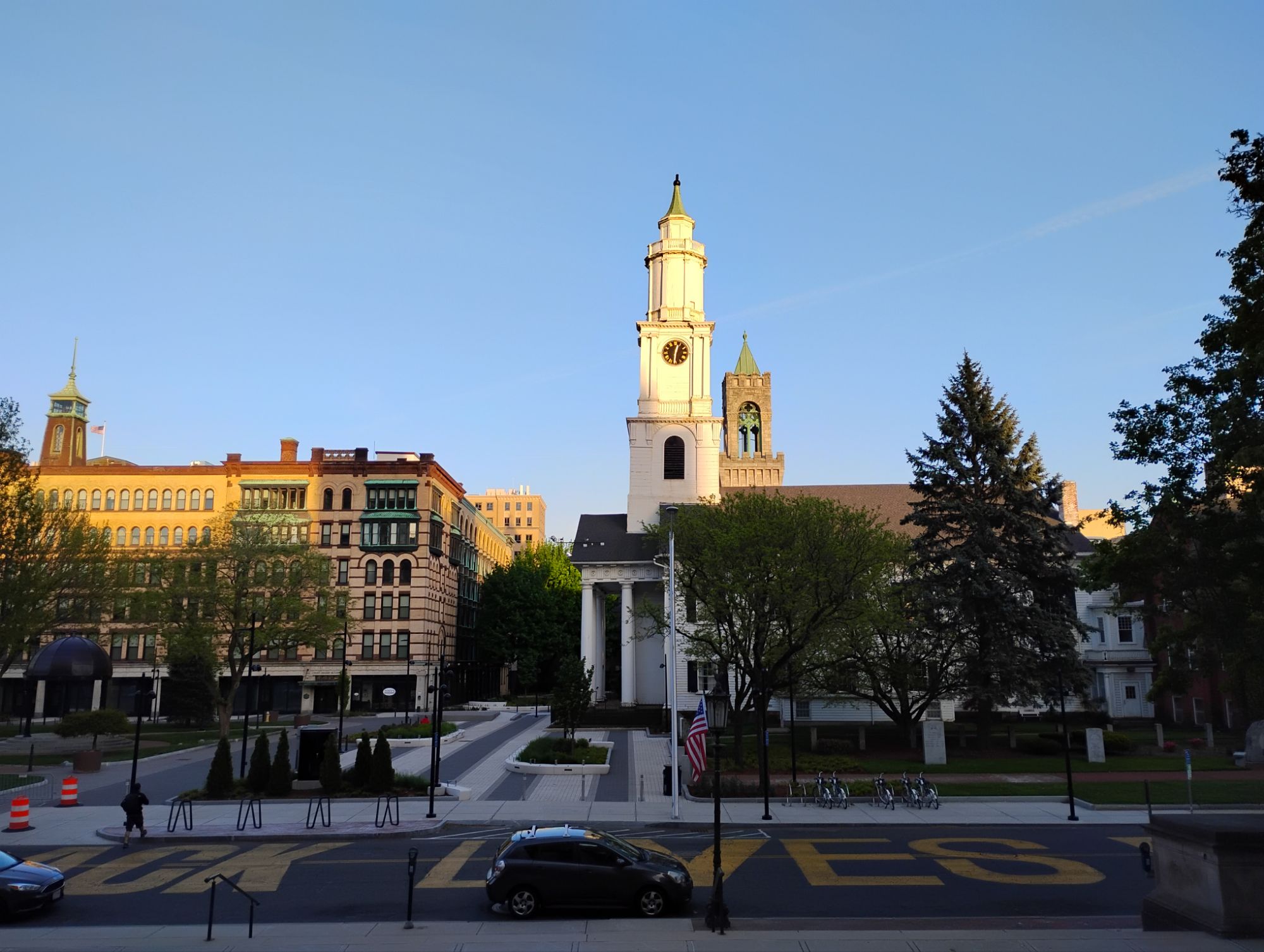
And soon we’ll see how City Hall sees it (beyond yelling at a lectern) (WMP&I)