Briefings: With Judge’s Nod, Federal Oversight of Pearl Street Concludes…
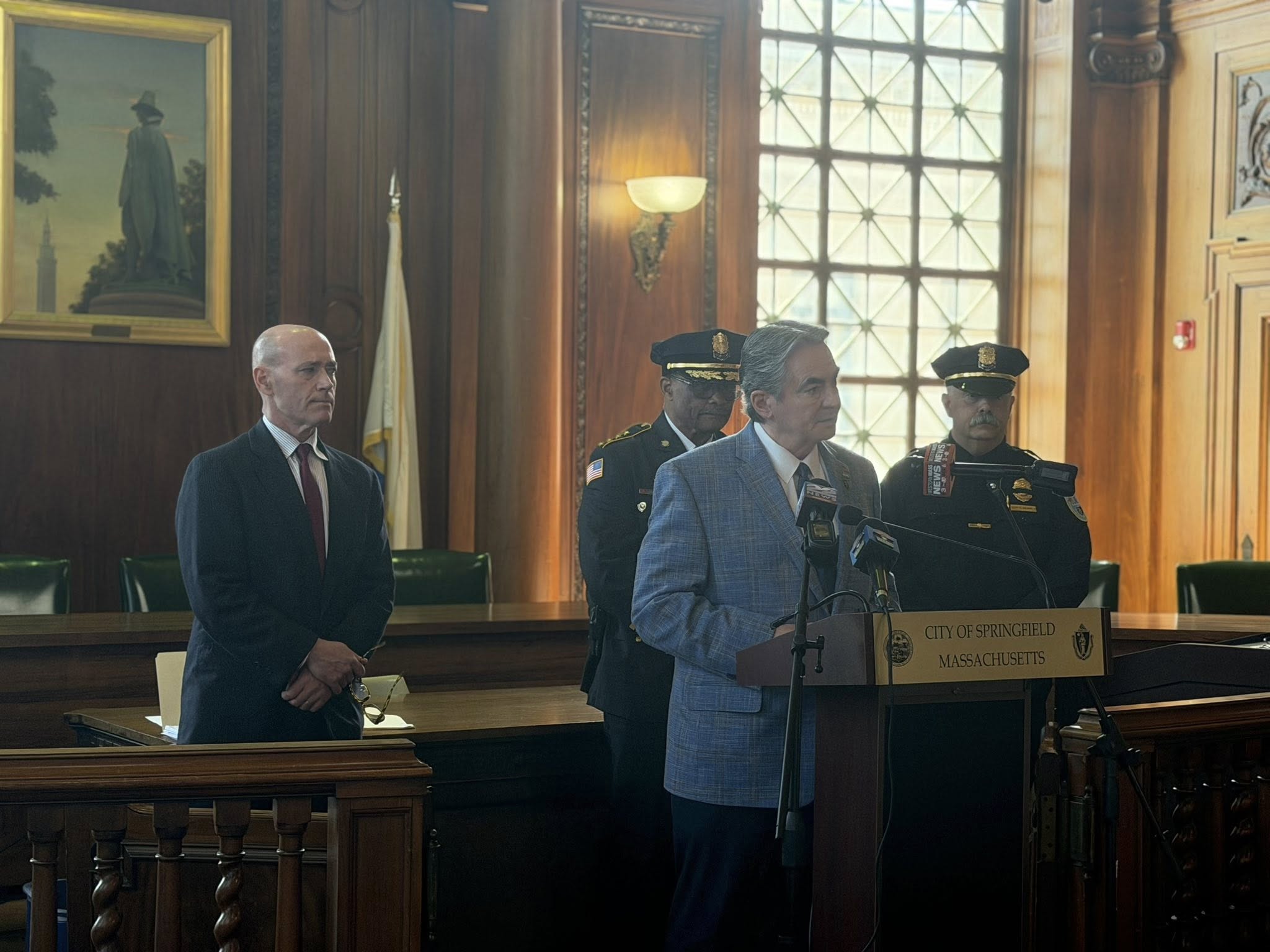
Mayor Sarno took a victory lap for, well, something. (via Springfield City Hall)
A federal judge in Springfield has agreed to dissolve the consent decree that the city of Springfield and the federal government had agreed to in 2022. On Thursday, Judge Michael Ponsor granted the joint motion to end the agreement, which the parties had filed about 10 days ago. The ruling was not a surprise.
Beyond the current federal administration disdain for police accountability, Springfield Police had hit the necessary benchmarks. The 2022 agreement called for reforms to several units, including the Internal Investigations Unit (IIU). The monitor overseeing Pearl Street—where Springfield PD is based—found they had made sufficient progress. At that point, Ponsor’s decision was largely a given.
“I want to thank everyone involved for their continued efforts working around the clock in continuing to enhance our city and improve our policing practices for the betterment of our residents and business community,” Mayor Domenic Sarno said in a statement.
The mayor’s statement, although a superb demonstration of patting one’s self on the back, elided what led to this moment in the first place. This began when the first Trump administration opened its only patterns and practices investigation. That came at the insistence of then-Massachusetts US Attorney Andrew Lelling. The investigation produced a report that flamed Pearl Street both for abuses that made news and other that did not.
The findings were such that they earned the condemnation of then-US Attorney General Bill Barr, who otherwise likely never met a hippie he found undeserving of a punching. When President Joe Biden took office, his administration negotiated the consent decree.
The second Trump administration is generally less sympathetic to civil rights, often abusing them itself directly—and fatally. For that reason, it was always unlikely that the consent decree would receive an extension. However, the joint motion does lay out a decent case for the city and the feds to move on.
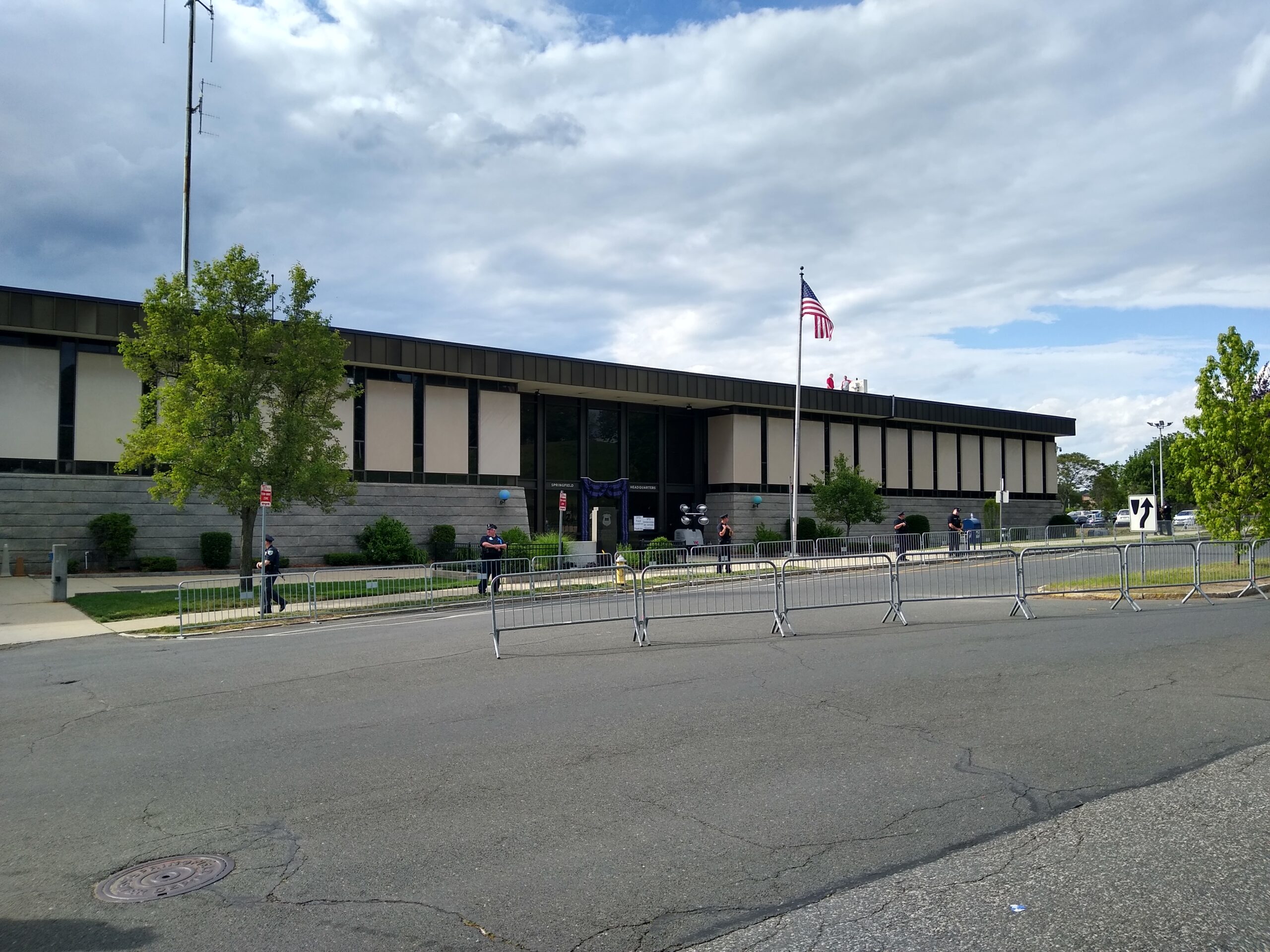
In fairness, Pearl Street has made considerable progress, if at the insistence of the prior federal administration and changes to state law. (WMP&I)
Beyond dissolving the scandal-laden narcotics unit, Pearl Street reformed the IIU and improved record keeping. The agreement recognized the value of civilian review. Sarno had vehemently resisted this until the Supreme Judicial Court ordered him to follow city ordinance once and for all.
The challenge going forward will be ensuring cops who do abuse their authority receive discipline. The Police Commission is part of that. However, a significant backstop that exists today and which did not before is the Peace Officer Standards and Training Commission. While not perfect, a state agency that can decertify police may be able to remove some of the worst offenders.
Indeed, the city and the feds cited its establishment in their motion to terminate last week.
Lawrence Akers, who is currently the top cop at Pearl Street, has the confidence of many outside the mayor’s circle. The challenge going forward will be maintaining these improvements not just during Akers’s term as Police Superintendent but for many decades to come.