Singular Debate between Neal and Whalen Arrives at Campaign’s Pique…
UPDATED 8/28/26 8:54AM: To correct a transcription error. Whalen claimed Neal’s last town hall was in 2017, not 2019.

Awww! Friends! But no hugging it out. (still via YouTube/WWLP)
CHICOPEE—The first and only face-to-face debate in the 1st Congressional District’s Democratic primary saw some heat and a bevy of accusations. US Representative Richard Neal and challenger Jeromie Whalen, an educator from South Hadley, traded blows on healthcare, Social Security and, arguably, the very essence of the democratic process itself.
While there were substantive moments, a range of disdain, from controlled to palpable, hung over the 30-minute verbal duel. Whalen repeatedly characterized Neal as absent, out-of-touch and beholden to corporate money.
“We normalize a do-nothing Congress and the corporatization of this entire American system. Who is the poster child of that?” Whalen asked, rhetorically. “It’s our current absentee congressman”
Neal pushed back, often correcting Whalen and portraying him as an empty vessel sloganeering through the campaign.
“Again, The Berkshire Eagle is correct,” Neal said, summing up the paper’s case for his reelection and critique of Whalen, “Light on facts, empty on promises, big on platitudes.”
Over the past year, Whalen has taken a be-everywhere approach and painted Neal as out of touch. It also reflected a practical reality. His campaign has raised a fraction of what Neal has. Neal, both directly and by implication, has emphasized his seniority as well as results for the district and on key legislation he shapes as the top Democrat on the House Ways & Means Committee. If Democrats recapture the House, he will be its chairman again.
The debate, held at the studios of WWLP, is the only faceoff the two candidates agreed to. Outside, two small armies squared off on the perimeters of the station’s property and along Chicopee Street, hoisting their candidates’ signs.
Patrick Barry, the host of WWLP’s InFocus program, moderated the debate. The rules let Barry ask follow-ups seemingly at random. He pressed the candidates when they did not answer to his satisfaction.
There were other congressional candidate forums this month that Neal did not attend. Organizers of those events invited Nadia Milleron, an independent who will not appear on the September 1 ballot, though.
Whalen had spent many of the last few weeks blasting Neal’s absence from these and other events. The challenger intimated that Neal was afraid to debate and all but accused him of only agreeing to on a station whose corporate parent had donated to his campaign. (The corporate political action committee (PAC) of WWLP’s parent company, Nexstar, gave Neal $10,000 from 2020 to 2024, out of $8.3 million he raised in those two election cycles.)

Glam! But does it win the argument? (WMP&I)
That approach continued into the debate. Whalen’s opening featured a zinger, or at least a slather of irony, when he thanked Neal, who had “generously donated 30 minutes of his time to us.”
Although the incumbent appeared to find Whalen’s claims frustrating, he was unflappable as usual. Neal swatted down claims he was out of touch and dismissed any suggestion his fundraising influenced his work on Capitol Hill. If anything, he seemed disappointed there was not more discussion of tariffs, Iran, Ukraine or violence immigration agents are committing. Indeed, on immigration, Neal has made a concerted effort to make his views known, putting his opposition to Donald Trump’s policies on recent mailers.`
Still, it was clear that Whalen was eager to be there facing Neal. He came in hot at numerous points, itching to confront Neal on fundraising from PACs and campaign spending. Neal, however, was ready for this, averring, as he has for years, that donors buy into his agenda, not the other way around. He also pointed to support from organized labor and brushed off Whalen’s claim that he used campaign funds for Washington Nationals’ games. It was an AFL-CIO event, Neal said. He accused Whalen of benefiting from dark money, referring to a sum a San Francisco SuperPAC spent on the challenger’s behalf.
Neal also defended his fundraising as necessary to win the House majority. He stated that it supported committees that elect Black, Latino and LGBTQ+ Democrats. When Whalen tried to downplay that, saying the Democratic National Committee is broke, a point of some contention, the incumbent corrected the challenger.
“It’s not the DNC, Pat, it’s the ‘D Triple C.’ That’s a misstatement,” Neal cut in, referring to the Democratic Congressional Campaign Committee.
Whalen also tried to downplay the loss of seniority the district would experience if Neal lost. Having blamed Neal for the do-nothing Congress Republicans control, he said the congressman’s pull was overrated.
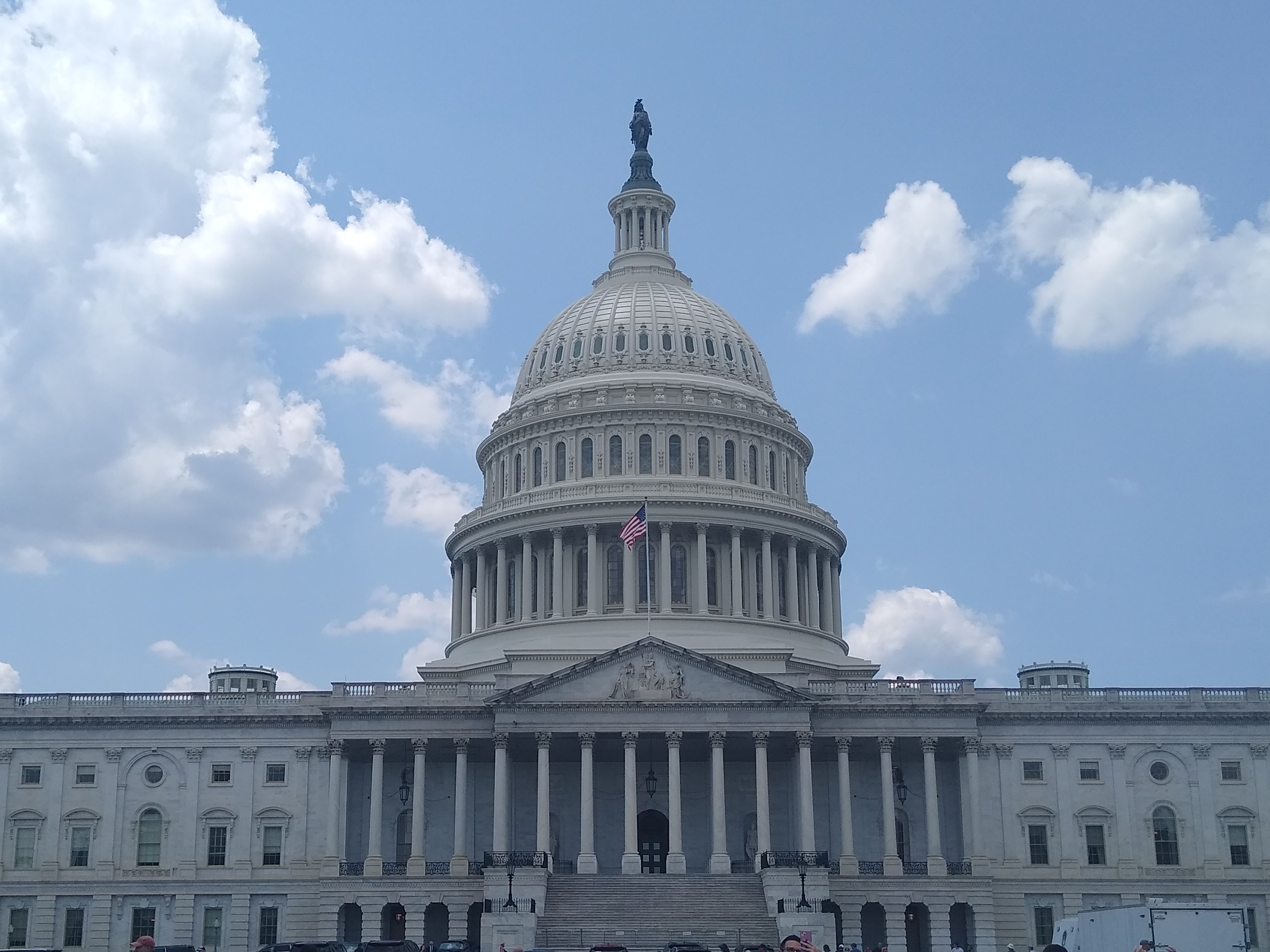
Who broke Congress? Who runs it now? Bueller? Bueller? (WMP&I)
“I think this is a good time to talk about some myths. We do not bring in more money into the district comparatively,” Whalen said.
Neal returned by pointing to funds the region received from legislative packages former President Joe Biden passed. He featured other achievements like funding for more rail service in the 413 and the reopening of North Adams Hospital, a decade after its closure.
Their other major clash was over healthcare. Neal chided Whalen for never explaining what he meant by Medicare of All. Although he did not rule out a federal healthcare guarantee, Neal prefers allowing people to keep plans they like. Whalen countered that he was referring to Seattle Congresswoman Pramila Jayapal’s bill, which has a little over 100 cosponsors. This legislation is more comprehensive than previous single-payer bills. However, it does appear to unload a lot of discretion onto the executive. That may not be as desirable after Trump’s abuses this term.
There were areas of agreement, though. A question on Social Security’s solvency saw both candidates support scrapping the annual cap on Social Security taxes—after earning a certain point, a person pays no more. Yet, the question also became an invitation for Neal, whose parents died when he was young, to remind voters of the role the program’s survivors benefits played in his life. (It also features in a new ad of his.)
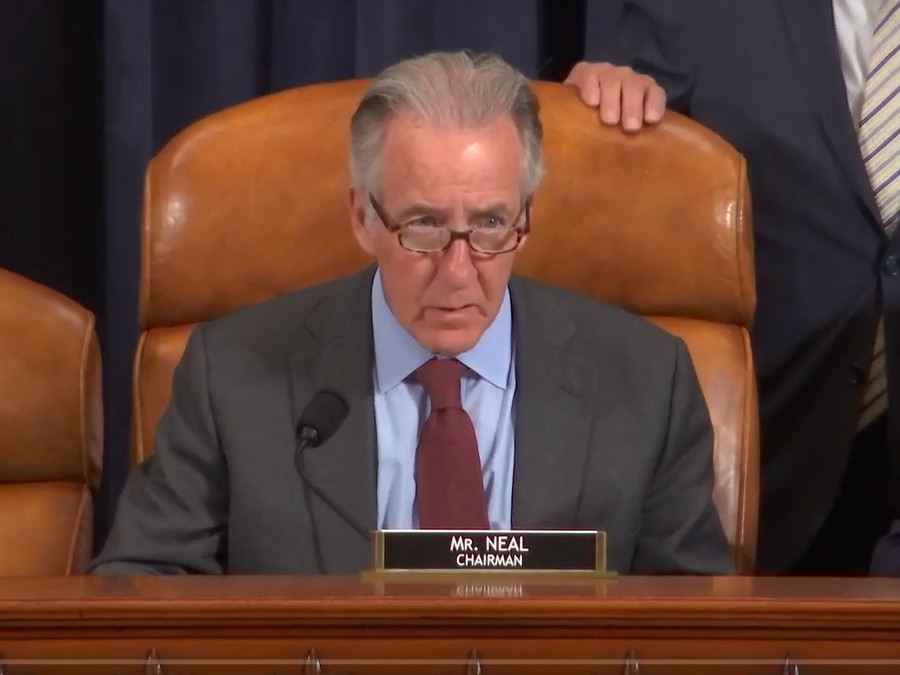
Ways & Means oversees Social Security. If he gets the gavel back, he’ll be key to saving the program from insolvency. (via YouTube/Ways & Means Cmte)
“I know something about Social Security. I was raised on survivor benefits by my aunt and my grandmother,” Neal said before restating his opposition to efforts to privatize the program.
Barry also asked the candidates about the successes of Democratic Socialists of America (DSA) in several recent Democratic primaries.
Whalen, who in broad strokes is challenging Neal from the left, noted that he was not in the DSA himself. However, he said many of the issues that animated his campaign, including affordability, fueled many DSA candidacies. Neal, by virtue of being the top Democrat on Ways & Means, is a part of House Democratic leadership. He was philosophical saying the party has always been a big tent and has debates. His comments were markedly less hostile than those of other establishment Democrats.
Speaking to the press afterward, Whalen again blasted Neal for not participating in more public events.
“He hasn’t participated in any candidates’ forums. He hasn’t had an in-person town hall since 2017, and so to be on stage for 30 minutes, you can’t get in really deep into policy and the things that matter to the people of Western and Central Massachusetts,” Whalen said.
Neal rejected any suggestion he is absent and waved off his lack of town halls.
“I’ve been all over this district, and there was a pandemic in between for four years. My visibility in this district is very clear,” he told reporters. “And by the way, every challenger across the country raises those issues. It’s almost a throwaway line in many instances. I’ve been very, very vigorous.”
One item that did not appear during the debate was The New York Post’s reporting on Whalen’s indiscretions in his late teens to early 20s. Speaking to reporters afterward, Whalen blamed Neal for that “smear.”
“You can’t help but to look at the past smear campaigns that are associated with Neal and a young gay mayor from Holyoke, whose life was destroyed, the congressman tried to destroy my life,” he said.
Whalen, 39, was referring to Neal’s last primary challenger, then-Holyoke Mayor Alex Morse. He subsequently became the Town Manager for Provincetown and, a year in, was “enjoying” it.
Neal rejected any connection to that or reporting on Whalen’s attempt to work with a brewery to raise money. That would have been in apparent contradiction to law. (The plans never got off the ground.)
“That’s below me, as evidenced in the past by other suggestions,” Neal said when asked if he was involved in the Post story. He declined to comment on its substance. “And I don’t…I just don’t do that stuff. I mean, by the way, in the debate today, it’s pretty obvious. I don’t think I needed to do it either.”
As Neal finished speaking with reporters, Whalen had gone outside to gather with his supporters for a photo. By the time the press was leading, he was helping volunteers piles signs back into his bright yellow van. Neal rallied briefly with his supporters who crowded around the Interstate sign. In big bright letters, “Springfield” loomed overhead.

Critical Mass. (WMP&I)