Take My Council, Please: For Brutus Is an Honorable Man…
Cry Havoc! (WMP&I and Google images)
The September 8 Springfield City Council agenda was straightforward. There were grants. The body took initial steps on several ordinances. Things were moving along swimmingly. The only odd thing about the meeting was it was on Tuesday, thanks to Labor Day. Then Ward 6 City Councilor Victor Davila summoned an item that had been languishing in committee.
The item was a Community Preservation Act (CPA) grant. Months ago, the Council had referred it to the General Government Committee because the grantee has ties to City Clerk Gladys Oyola-Lopez. The item has become a lightning rod, escalating to salacious claims about Oyola-Lopez. Given that history, it was unsurprising the debate collapsed into sniping and vitriol before councilors referred it back to Committee—albeit, a different one.
Ward 4 Councilor Malo Brown was absent. At-large City Councilors Brian Santaniello and Tracye Whitfield participated remotely. Council Vice President Jose Delgado presided.
The meeting opened with committee reports. The Environment & Sustainability, Finance and Public Safety committees provided updates.
Councilors received the revenue and expenditure report for the first month of the fiscal year. Comptroller Pat Burns said expenditures had outpaced revenues because July is when the city makes its pension contribution payment to the Springfield Retirement Board.
The Council accepted small donations for the Library Department and Bass Pond. It also accepted grants of $100,000 and $250,000 for Thomas J. O’Connor animal shelter. The latter grant will let the city hire a full-time veterinarian for the first time in two and a half years. Another $490,523 approved grant funds senior educational programs.
The city also received a $765,803 community mitigation grant for the impacts of the casino. Deputy Development Director Brian Connors explained that the city had expected the program to end, but the legislature extended it. The award is much smaller than in past years. It will fund a problem gambling coordinator under the city’s Department of Health & Human Service.
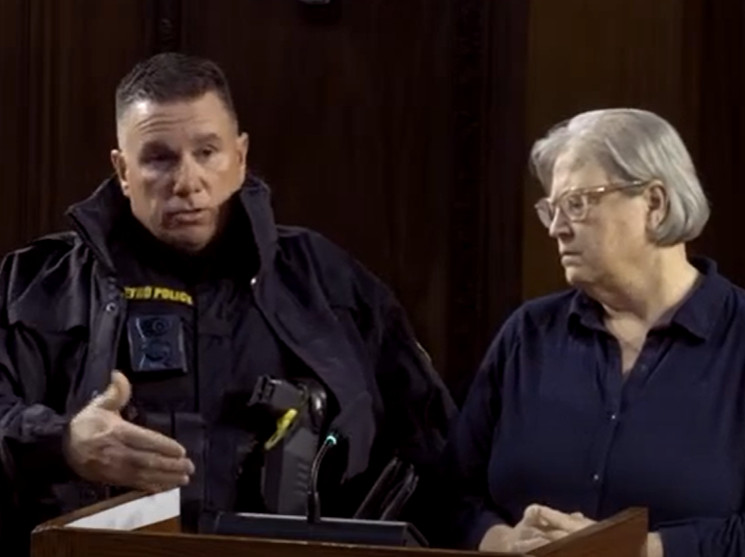
McCafferty seen here at a 2024 meeting alongside Lt. Brian Eliot. (still via YouTube/Focus Springfield)
Another $827,432 grant came from the feds under its Housing Opportunities for Persons With AIDS (HOPWA) program. Housing Director Gerry McCafferty explained that the city received funding on behalf of several Valley communities. Due to federal tinkering, the state will be the future recipient of the funds. McCafferty said in the future, the state may opt to use passthroughs like Springfield or directly award grants.
HOPWA funds rental, mortgage and utility assistance and other aid for at-risk HIV+ persons. McCafferty said the recipients were New North Citizens Council (NNCC) and Cooley-Dickinson Hospital. A third regular grantee declined to participate this year. Under questioning from at-large Councilor Justin Hurst, McCafferty could not immediately say how much each organization received. The grantees receive awards after responding to a request for proposals.
The grant passed 10-1. Ward 7 Councilor Gerry Martin missed that vote. Hurst voted no, which was not a surprise. He had been the lead critic of the CPA grant at issue later in the meeting. The CPA awardee is a subsidiary of the NNCC. Oyola-Lopez is an officer of the NNCC’s board.
The Council accepted $1,176,843 from the state for post-winter road repair. It approved a resolution formally submitting the Springfield Central Cultural District to the Massachusetts Cultural Council for state designation. The body greenlighted payment of $810.22 in assessors’ office bills from prior years.
After some debate about the declining funds from Comcast for public access programming, the Council approved the quarterly $116,466 payment to Focus Springfield. Councilors also authorized a new agreement for the Springfield Business Improvement District.
Councilors approved first step on the door-to-door sales ordinance. The ordinance does not target school fundraisers or the like. Rather, it would rein in more insistent tactics door-to-door salespeople sometimes employ. The bill limits soliciting hours, requires salespeople to carry licenses and imposes penalties. Councilor Martin said it would mimic rules Chicopee and West Springfield have adopted. Hurst indicated the bill was more in line with Westside’s stricter rules.
Ward 2 Councilor Michael Fenton requested a document showing how this would change the existing peddling ordinance. First step passed without dissent.
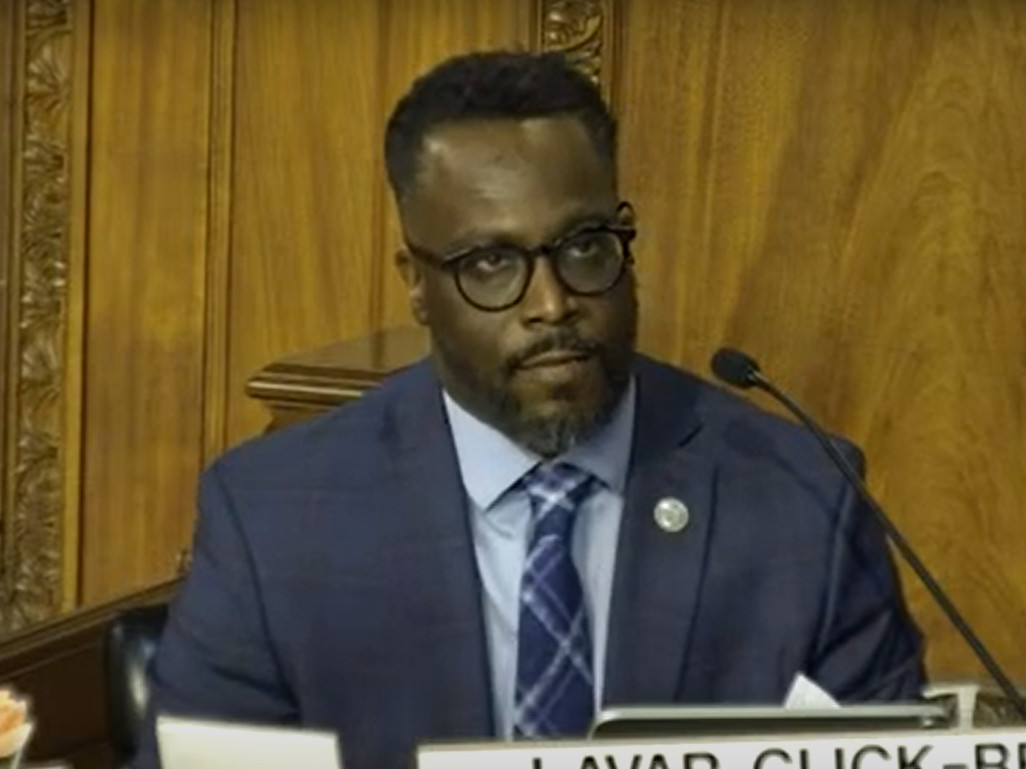
More food truck deja vu for Click-Bruce. (still via YouTube/Focus Springfield
The Council also passed second step on an ordinance that effectively pauses the new food truck ordinance. This past spring, the city enacted the new ordinance, which imposes rules on food trucks operating on private property. Once the city began enforcing the law, operators raised objections.
In July, the Council reopened the ordinance and proposed several changes. There was also interest in simply suspending the ordinance. That, too, would require legislation that follows the ordinance process. The body did not actually enact the suspension in July, though. It just passed first step on it.
At Tuesday’s meeting, Ward 5 Councilor Lavar Click-Bruce, who had been shepherding the food truck ordinance through the Council suggested the Council table it again to allow for negotiations. Councilor Whitfield asked about the changes that passed last time. Once it became clear that the suspension had not become law, there was a push to pass the bill as is. That would prevent people from being fined for the time being. However, the Public Works Department was not enforcing the new rules.
Second and final step passed without dissent, although Councilor Santaniello did not vote.
Councilor Hurst called up the Youth Commission ordinance, which had been in committee, too. He announced that the mayor had agreed to changes to the ordinance, which, as originally drafted, removed the Council President from the commission. The Council President, or the president’s designee, will again sit on the panel. He also said the mayor, HHS Commissioner Helen Caulton-Harris and others agreed to give the Council President three additional designees.
The ordinance appeared before the Council in June. Caulton-Harris had framed the bill as an effort to revive the moribund body. The Commission’s members include city students and focuses on youth issues in Springfield. The new ordinance added the Park Commissioner or his designee at the expense of the Council President. As Hurst outlined, the amendments to this ordinance will restore the Council’s voice on the commission by way of the President.
The ordinance passed first step unanimously, although Santaniello did not vote.
The final item on the regular agenda was a resolution in support of state bill pertaining to speed cameras. The Council sent that item to committee.
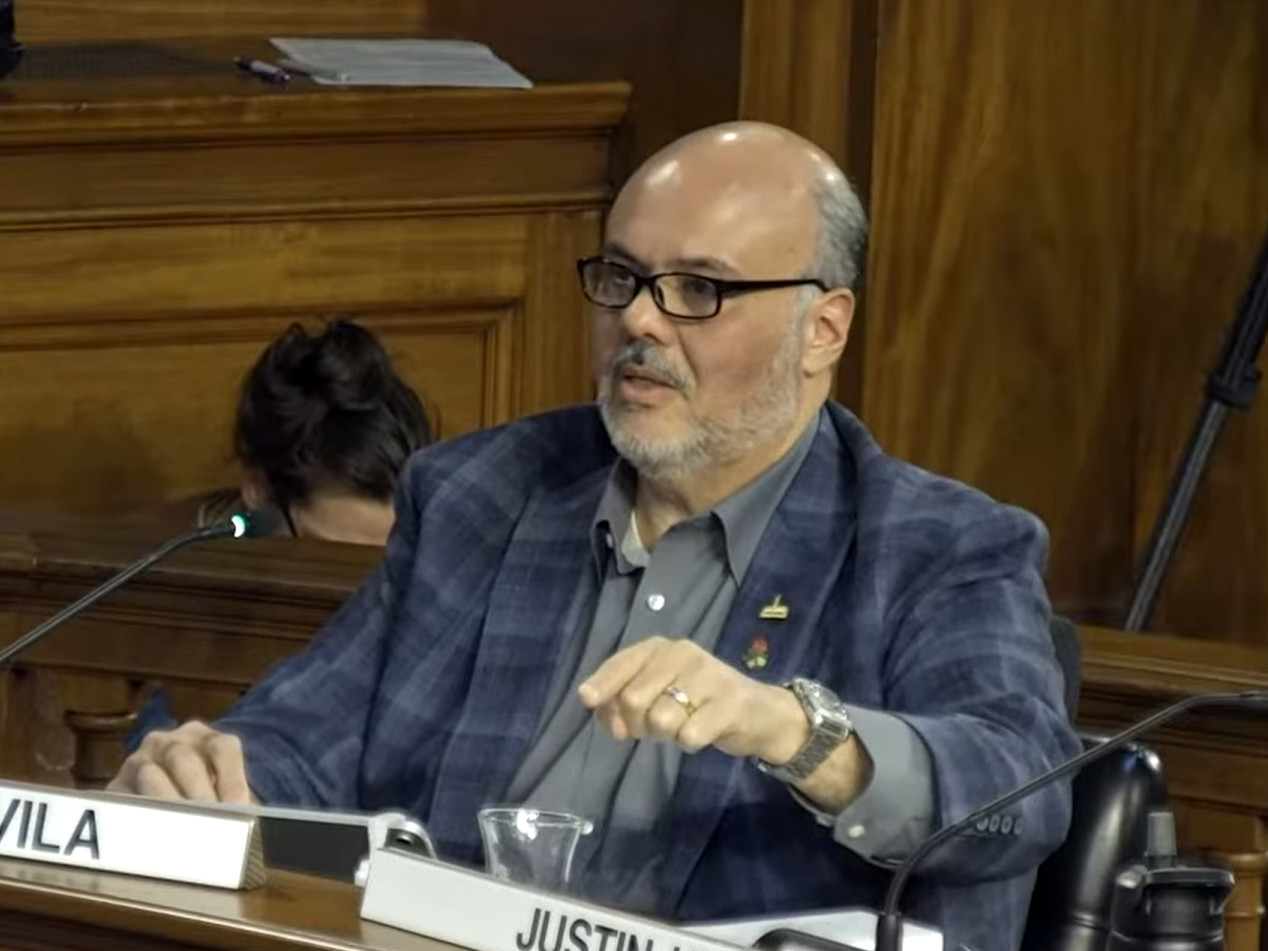
Victor Davila… in Total Recall 2. (still via YouTube/Focus Springfield)
Before the Council adjourned, was when Councilor Davila recalled the CPA grant.
“The reason I’m making that call is because time is clicking and we need to dispose of this one way or the other,” he said. Davila alluded to the fact that after 180 days without action, the item would die procedurally.
The item went to the General Government Committee, which Hurst chairs, on June 22. Enough time had elapsed such that any councilor could recall it.
Hurst said that an assistant clerk should be present if the Council voted on this item. He also said the NNCC had met to revise the structure of the subsidiary that would receive the funds. Hurst also claimed that voting on it now would make the Council part of the problem.

Hurst was not a fan of Davila’s take on the sequel. (still via YouTube/Focus Springfield)
“So you will risk that you are involved knowingly in what we all know to be a conflict of interest at the very least,” the at-large councilor said.
Davila blasted Hurst’s suggestion of character assassination. He asked the City Council’s lawyer, Ken Shea, what the nature of the conflict was. Shea said none existed because as clerk, Oyola-Lopez only keeps records. Hurst rejected this and said Shea should take a closer look at the documents.
Councilors debated the rule Davila invoked before he was recognized again, but Whitfield objected as Davila had already spoken twice. Davila persisted insisting that since he had been mentioned by name he could respond.
“I was mentioned by name. I do have a right to answer,” he said.
“You do not, ” Whitfield replied thrice.
That went on for a bit before Vice President Delgado recognized Councilor Fenton. He urged movement on the grant. Fenton also observed that Hurst had not objected to the HOPWA funds going to NNCC.
“I do think that there’s a need to act on it,” Fenton said. “Whether or not it needs to be tonight at this exact moment, I’m not sure, but months have passed without action.”
In her remarks on the item itself, Whitfield opposed taking up the item. She styled her concern as protecting Oyola-Lopez. However, she dismissed any determinations from the Law Department. Whitfield said she “did not trust” anything from City Solicitor Stephen Buoniconti on the ethical issue.
When Davila got to speak again, he said he did not know why there had been no meeting on the item. He insisted any review would need to happen quickly.

Martin, essentially: I once thought we’d have a legislative record this big. (still via YouTube/Focus Springfield)
At that point, Councilor Martin rose to lament the state of the Council since he became a member in January.
“When I put my name on the ballot, I never thought it would be like this between everybody. It’s been a brutal year of people calling people names, throwing accusations. It’s politics as usual,” Martin said. “We should be better than this. We should be serving the people of Springfield and this is just a distraction. I was almost impressed that we were going to go through a whole meeting without this drama.”
There was more back and forth between Davila and Hurst. The former’s reasserted his right to call the item. The latter assured he would have info before his committee. Debate continued until President Whitfield and Shea both confirmed that Davila’s procedural invocation lets the Council do what it wants with the grant.
Its desire was to send the item back to Committee—the Finance Committee. The vote was 10-1 with only Fenton in dissent. Santaniello did not vote. Finance Committee Chair Zaida Govan scheduled a meeting on it for Monday September 14.
Martin’s lament may betray some freshman naivete and objective observers may disagree that both sides are to blame. However, he hints on a festering problem. The body’s output has not matched its ambitions of the past.

(WMP&I)
Some argue personalities are to blame for the breakdowns, which date back to before this particular Council took office. More generously, the pandemic may have disrupted bonds and left frayed nerves.
Perhaps a raw appeal to the common good is the stuff of Sorkinesque fantasy. However, the Council does not need to go that far to vastly improve upon its status quo.