The Money and the Meditations within the 11th Hampden Dem Primary…
On the cusp of a transition? (via malegislature.gov)
Perhaps against better judgment, one scrolls through Facebook or Instagram. Amid the stunning vistas and global miseries and AI swill, a user in Springfield may find a video. The Massachusetts Teachers Association (MTA) paid for it and they’re plugging a candidate. Public records show the union has dropped at least $30,000 on his campaign since.
The candidate the MTA and the Working Families SuperPACs are pouring money into is not the arguably higher-profile, van-driving teacher running for Congress. Rather, it is Johnnie McKnight, who is locked in a rematch with incumbent 11th Hampden Rep Bud Williams. The shower of outside money—benefiting both candidates—is only one dimension of a race in a district that historically represented the heart of Black Springfield.
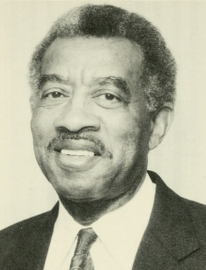
The race is notable in another subtler way. It comes after some of the last of Springfield’s Civil Rights-era leaders have passed away. Williams’s predecessor, Ben Swan, died at age 92 in May. He was the last of three civil rights leaders who eventually secured political office. In the years before his death, Swan’s predecessor Ray Jordan and Ward 4 City Councilor E. Henry Twiggs had passed away.
Even before this year, there had been some jockeying to fill the leadership gaps within Springfield’s Black community as its older leaders left this earth. Then there was an attempt by some to lay claim to Swan’s legacy and declare Williams his true heir. That has been met with sharp pushback from members of the Swan family.
Two years ago, McKnight came within 250 votes of dislodging Williams, who has held state or local elective office in Springfield for 31 of the last 33 years. The relative tightness of that contest drew other candidates. Joining McKnight and Williams on the ballot is Nicole Coakley, a community activist who has sought office before. Motivational speaker Donnell Wright is running a write-in campaign.

Three out of four on the ballot but many, many more with a hand in the election. (clockwise from top left, McKnight, Williams, Coakley, Wright, images from candidates, WWLP & WMP&I)
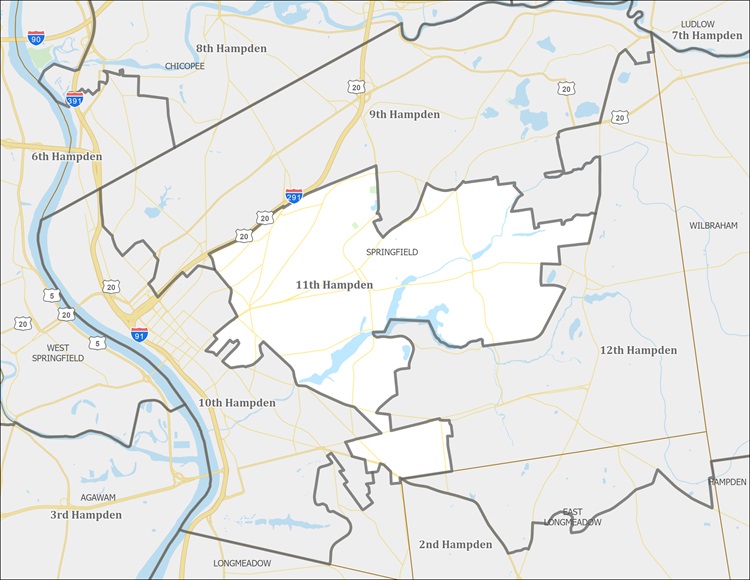
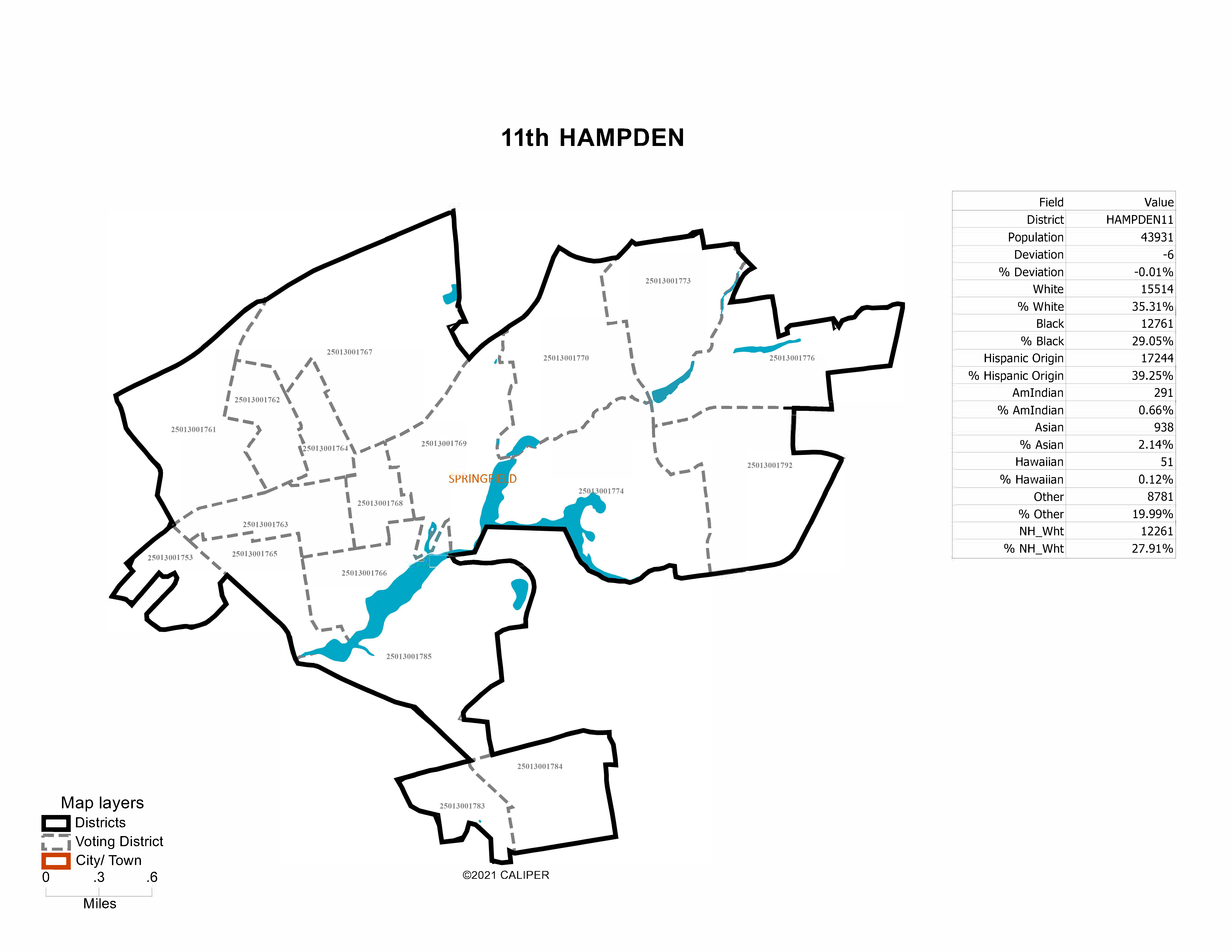
The 11th Hampden covers Bay, McKnight, Old Hill and Upper Hill neighborhoods as well as a sweep of East Forest Park and Pine Point. Its periphery reaches into East Springfield, Forest Park and 16 Acres. The district is entirely within Springfield.
The cash situation in the 11th Hampden primary is straightforward. Williams entered this year with just under $171,000, a stomping financial edge. He has raised $21,450 since January 1. McKnight formally began his reelection bid last December. He had less than a $1,000 then and has raised $10,438 since. Coakley began the year with about $1,150, much of that left over from her unsuccessful City Council campaign. She has raised $1,300.
Despite Williams’s huge cash advantage, he has been reluctant to spend much. Spending $28,200 through July 31—campaign finance records for August will not be fully available until after the September 1 primary—would be a decent sum in an open rep race. It is peanuts for an incumbent with a six-figure war chest and two credible opponents, one of whom nearly won two years ago.
For context, Rep Angelo Puppolo, in the neighboring 12th District, also faces a challenge. He has spent $110,000 since primary opponent Michael Lachenmeyer announced last summer. Nearly $80,000 of that has been since January. Puppolo had a larger cash reserve than Williams, but the disparity stands out.
Certainly, Williams’s opponents can only spend a fraction of what he did. Through July, McKnight has spent $5,396 and Coakley has disbursed $2,552. Yet, McKnight is not without backup.
The SuperPACs—formally called independent expenditure political action committees—for both the MTA and the Working Families Party (WFP) have unloaded tens of thousands of dollars boosting McKnight. In the WFP’s case, that spending includes attacks on Williams’s record. Legally, SuperPACs cannot coordinate with the candidate.

The Mass. Teachers Association have spent as much on McKnight as some successful rep candidates do in their whole race. (via Bluesky/@massteacher.bsky.social)
Unlike candidates, SuperPACs and PACs often must disclose expenditures shortly after disbursement. Therefore, their August spending is more visible. Since January, the MTA’s SuperPAC has spent north of $30,000 on no fewer than three mailers and the video ads on Facebook and Instagram.
The WFP SuperPAC has spent $3,600 backing McKnight. Just as significantly, the WFP has spent over $7,500 blasting Williams’s record. One WFP mailer highlights his record on reproductive freedom. As it happens, McKnight won the endorsement of Mass Reproductive Equity Now, a group that supports women’s reproductive rights. (Williams has opposed abortion access legislation before, but he did vote last month to end Massachusetts’s remaining late-term abortion restrictions.)
Williams has some outside help. The PAC for Service Employees International Union, Local 1199 has spent nearly $8,000 on two mailers backing the incumbent.
While Williams’s August spending will undoubtedly balance the equation, data available now show that, in fact, McKnight and his allies have outspent Williams and the third-party groups backing him.
This is entirely apart from the ground game. There are indications unions supporting McKnight are helping there, too. He has received non-monetary support from other unions, including a local council of the United Auto Workers, and from State Senator Adam Gomez.
The spending battle will play out somewhat uniformly districtwide. The ongoing generational transition in the city’s Black community may be more consequential in precincts that remain largely Black.
To a degree, the impact in this Democratic primary may be limited. The district and its predecessors have historically represented the heart of Springfield’s African-American population. Yet, the 11th Hampden is now slightly less white than Black more Hispanic than it is African-American per the 2020 census. The Black population in Springfield has been stable over the decades, but it has spread out from Mason Square to neighborhoods across the city.
Nevertheless, the city’s Black voter base, one of its most reliable, remains key in this district.
Like any demographic cohort or constituency, Springfield’s Black voters are not monolithic. For some, Williams was not the preferred successor 10 years ago. Ben Swan tried to maneuver his son to succeed him. After 2016 however, there had been little opposition until 2024’s shock result.
Williams’s edge in the 11th Hampden’s historically Black precincts delivered him victory that year. If that support cracks, sending support to either McKnight or Coakley, Williams could easily lose.
Darryl Moss, the former mayoral aide and now-publisher of the Metro Record website, alluded to community dissatisfaction with Williams in April. Yet, the fractures became even more apparent weeks after Swan’s death. Former Springfield Mayor, Williams ally and now-Longmeadow resident Michael Albano posted that “Bud Williams is the unquestioned torch holder for this community.”
Even in death, Civil Rights era leaders like Swan are influencing Springfield politics. (via Wikipedia)
That set off a furious backlash with replies from Swan’s brother Fred, Coakley and others. Fred Swan, in particular, corrected Albano to say that in his view the social justice torch had passed to Bishop Talbert Swan II, in part by virtue of succeeding Ben Swan as head of the Springfield NAACP. Talbert Swan is the son of Fred Swan.
“Nicole Coakley and Johnny McKnight deserve respect and every consideration come September 1, 2026. That’s not a torch to be passed, but a seat in the MA House to be decided by voters,” Fred Swan wrote on Facebook.
Writing in the pages of the Afro-American Point of View—which via owner Rick Hurst had endorsed Williams in May—Talbert Swan said Albano had no place to say who “carries the torch” for the city’s Black community.
“I believe you crossed a line when you appointed yourself the person to declare who now carries the torch of Black leadership and the Black freedom struggle in Springfield,” the Bishop wrote.
While these replies were to the former mayor’s absurd declaration, they link back to the rep race. The Swans and others said plainly that Albano was trying to help his old friend.
In his posts, Fred Swan, who would go on to endorse McKnight, also alluded to a standard he says his brother set. The term “standard” would appear in Moss’s later musings about the race. In a recent post, he spoke about the “standard” the late Ray Jordan set. That drew a response from Talbert Swan on Medium and Masslive, who chided the Metro Record for neglecting Ben Swan’s standard. Moss all but apologized for the omission.
Such editorial ping-pong may seem insignificant, but it reflects flux within Springfield’s Black political circles. The discussion of a standard, whether Jordan’s or Ben Swan’s, necessarily implicates the one Williams has set. Perhaps there are fewer incentives now to paper over critiques of Williams, many of which have been debated quietly inside (and outside) Springfield’s Black community for years.
This comes amid a broader argument among Democrats about generational change. Notably, Williams is closer in age to Springfield’s late civil rights leaders than to either Coakley or McKnight.
If the debates between dueling keyboards feed into the broader electorate, the consequences could be substantial. Residents across the 11th Hampden House district may find a lot has changed in two years.