Climate Grant Showdown for Springfield and Its Allies Reaches Appeals Court…
UPDATED 3/16/26 4:58PM: Following arguments, the case was submitted shortly after noon. There was no indication how soon they would rule. Full report on the proceedings to come on WMP&I.
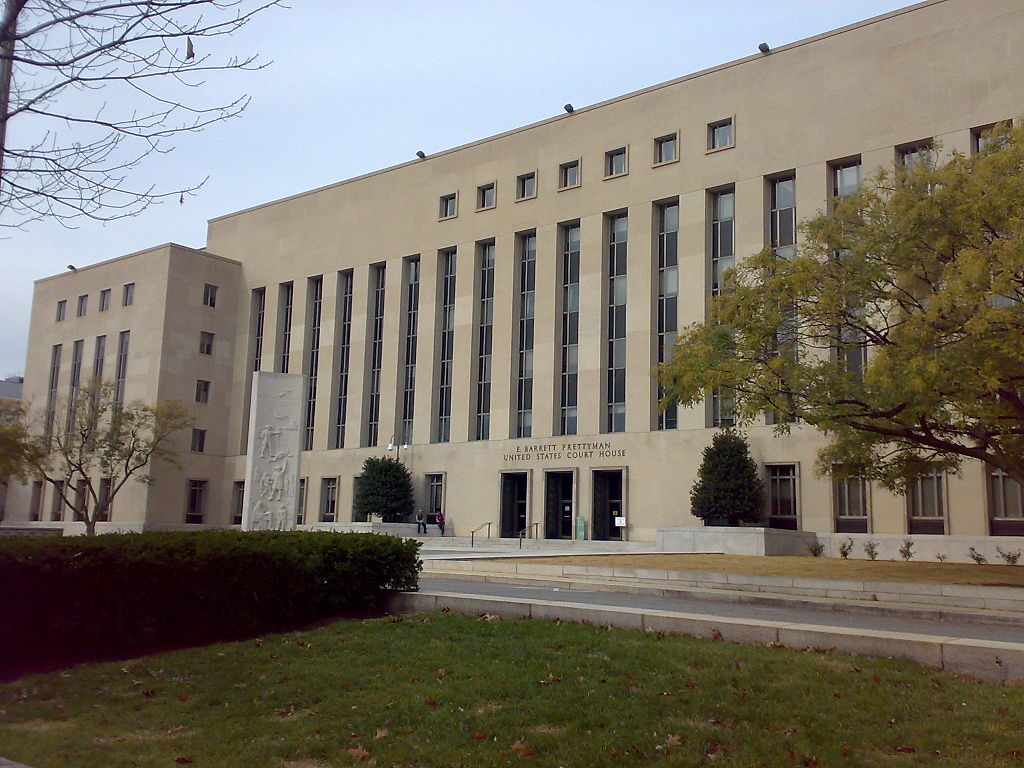
Same building as before, but a different court. Will Springfield and its allies get a different outcome? (via wikipedia)
The City of Springfield, several fellow municipalities and environmental groups will try to convince a Washington appeals court on Monday to revive a lawsuit to restore climate grants the Environmental Protection Agency illegally eliminated. Springfield was one of the first recipients of the Environmental and Climate Justice Block Grant (ECJBG) program. Yet, the city like many others lost its grant amid the chaos of the Trump administration’s slashing last year.
The Plaintiffs face an uphill battle. They are attempting to shoehorn their claims into an order that would, essentially, reactivate the program. Plus, the panel will likely not be sympathetic. Complicating matters further, the briefing shows the case is caught in a vortex of similar but separate litigation at the Court of Appeals for the DC Circuit.
The ECJBG program was part of the Inflation Reduction Act, which then-President Joe Biden signed in 2022. Springfield won a $20 million grant that would pay for, among other things, mold and lead paint mitigation, the West Street project and improving the city’s tree canopy.
Upon returning to office, Donald Trump opposed not only renewable energy projects but even efficiency initiatives or efforts to mitigate climate change at all. The EPA was acting on a Day 1 Executive Order of his when it paused and later terminated all ECJBG funds. The government has since claimed the issue was moot as Congress rescinded ECJBG funds as part of Trump’s tax cut.
Springfield and its allies filed a class-action lawsuit on behalf of all grantees. Cities from Kalamazoo, Michigan to Sacramento joined to represent municipal plaintiffs. Several environmental groups, like Appalachian Voices, the lead plaintiff in the case, also joined. The municipalities principally have legal representation through Public Rights Project while various legal environmental groups represent other plaintiffs. Both groups of lawyers are working in tandem and presenting a united front.
The original suit essentially argued that the EPA acted in violation of law when it terminated the grants. The EPA both failed to follow the Administrative Procedure Act and violated the Constitution by ignoring Congress’s command to spend money on the ECJBG.
When the case came before US District Court Richard Leon last year, the Supreme Court had just ruled on a stay for another grants and administrative law case. Five justices voted to block an order requiring the feds to pay out funds. Individual claims must go to the Court of Federal Claims (CFC). Yet, the fifth vote, Justice Amy Coney Barrett ruled in a concurrence that the actual policy that shut down the grants could continue.
Judge Leon did not see an administrative claim of the kind Barrett said was appropriately in a district court. Rather, he dismissed the case stating the Plaintiffs were just bundling individual claims that must go to the CFC. He similarly dismissed the Constitutional claims.
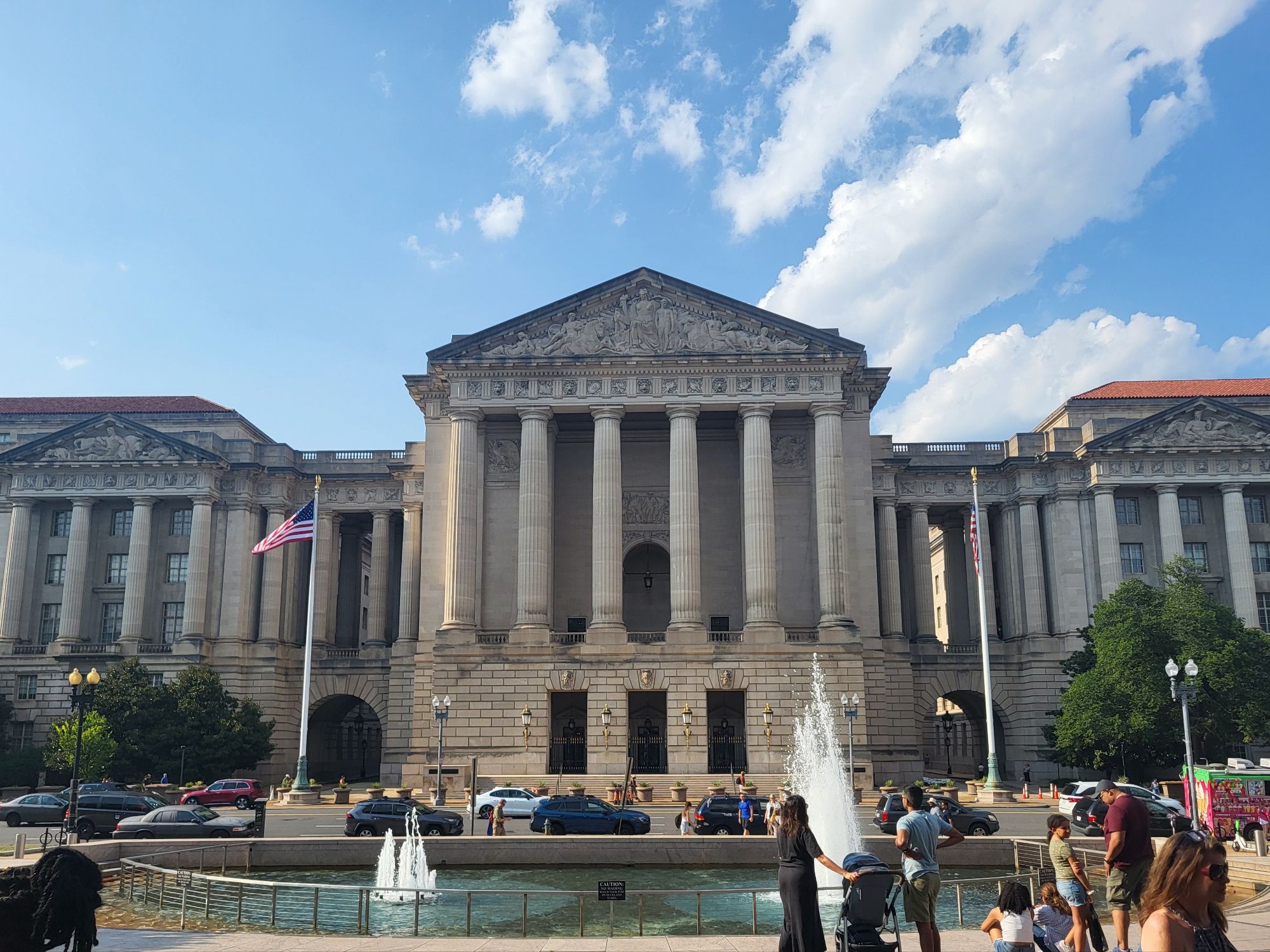
The EPA won round 1 with Springfield and its allies seeking to recoup their climate grants. (WMP&I)
In filings to the DC Circuit, the Plaintiffs essentially argue Leon misunderstood Barrett’s concurrence and its application to this case. Rather, Plaintiffs say on appeal the case is almost exactly like the case with Barrett’s concurrence. That case revolved around terminated National Institutes of Health grants.
In essence, the EPA illegally shut the ECJBG program down and the court has jurisdiction to reverse that. Plaintiffs are not asking for immediate repayment of grants to the grantees—for now anyway. The briefs even imply there must be an administrative ruling before individual municipalities and groups could seek relief from the CFC. They also try to revive the Constitutional claims.
The feds seemingly talk past the Plaintiffs in their own briefs.
The EPA and its administrator Lee Zeldin rest heavily on the idea that Congress rescinded the money. This comes from a part of the tax bill that used unobligated funds from the ECJBG program to finance the overall legislation. However, the Plaintiffs counter that the wrongly-rescinded ECJBG funds were never un-obligated and thus available to swept up as pay-fors in Trump’s tax bill. (Judge Leon dismissed the case without addressing this issue.) To fully revoke the funding, Congress would need to be far clearer. In fact, the tax bill leaves the ECJBG’s statutory language intact.
The government also tries to claim that the Plaintiffs’ original complaint never raised “vacatur,” a term for when a judge voids an agency action. The argument is somewhat risible as the complaint lays out several counts and seeks relief that is consistent with vacatur. The Plaintiffs’ reply argues as much.
However, the briefs also make clear that the case is happening amid churn at the DC Circuit. Cases are usually held in three-member panels, but in extraordinary circumstances the full 11-member court can make a ruling “en banc.” Two such en banc cases involve another climate program and Trump’s attempt to shut down the Consumer Financial Protection Bureau.
Before the en bance hearings were ordered, three-judge panels with Trump-appointee majorities had ruled for the government. The full DC Circuit consists of seven Democratic nominees and four Republican nominees. That means the panels’ value as precedent is questionable and their impact on cases like Springfield’s far from clear.
Indeed, the panel hearing Springfield’s case is before Chief Judge Sri Srinivasan and Judges Neomi Rao and Justin Walker. Srinivasan is an appointee of President Barack Obama. Trump appointed the other two during his first term. Not all of Trump’s judicial appointees have been inflexibly predisposed to rule in his favor. Those on the DC Circuit generally have.
These pending en banc cases touch on legal issues that could affect this case. Monday’s court hearing may reveal whether Springfield and its allies’ argument even have a chance on their merits. However, the fluid state of the law in the DC Circuit means the oral arguments may only be next step of many more before cities like Springfield get their money back.