Briefings: Longmeadow Town Meeting Pulls Plug on Municipal Internet…for Now…
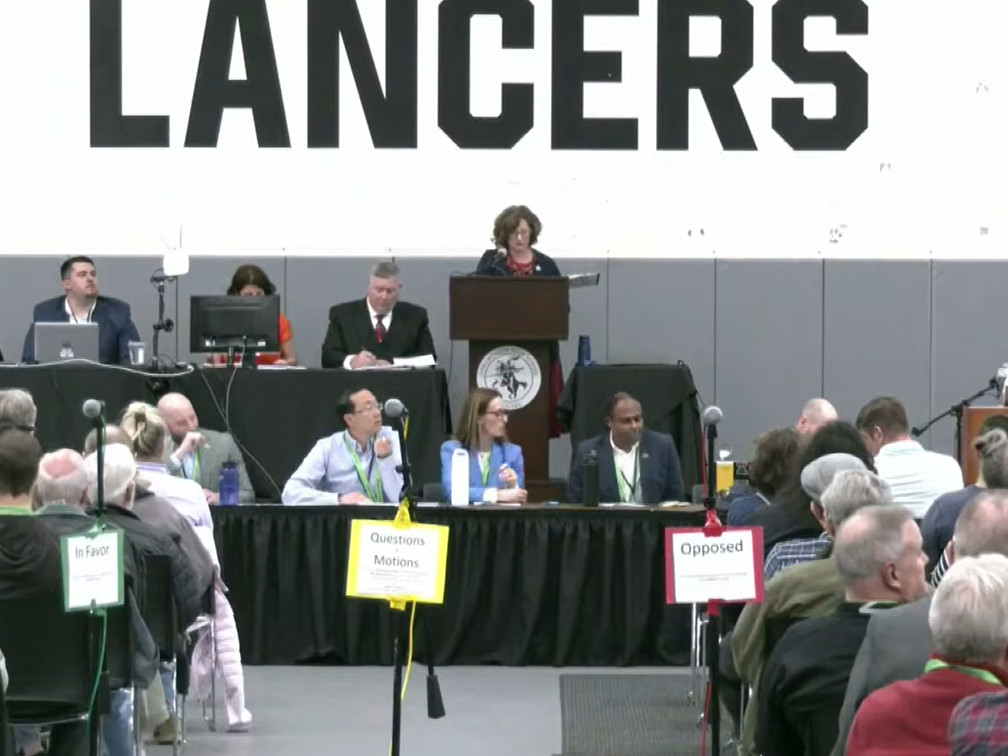
Town Meeting chooses a low fiber diet. (via YouTube/LongmeadowTV)
During Town Meeting Tuesday night with just under 650 voters, Longmeadow rejected a $8.6 million debt exclusion that would have financed the build out of a municipally-owned Internet provider. At the meeting, backers, which included the Select Board, mostly jousted with the Finance Committee. The Committee, a volunteer advisory panel, had given the project a thumbs-down.
The Committee took pains to say that it did to oppose the concept, but just the financing. Supporters emphasized that the town would be investing its future, not unlike the library or other infrastructure. However, there were more than a few speakers who clearly rejected the idea of a town service or indicated that technology moved too fast for it to be worthwhile. Hovering over all of this was the intense, shadowy interest lobbying campaign that had, successfully it seems, dampened support.
The final vote was 270 to 374, well short of the 2/3 necessary to advance the question to voters. Had it succeeded, voters would then vote on a debt exclusion referendum. This would have allowed the town to borrow money outside Proposition 2 ½.
The plan called for town funds to pay for the initial buildout, although future subscriber revenue could pay some debt, too. The town could decide on how to provide for future expansion from there.
The proposal would have cut into the business of Comcast, the principal incumbent internet service provider. The main opponent of the measure was Mass Priorities, the Massachusetts offshoot of the Domestic Policy Caucus, an ostensible advocacy-for-hire group in Minnesota.
Mass Priorities tried to paint the project as a boondoggle that would sap funds from other town priorities. The strategy worked in Southwick, but failed in West Springfield. A key difference is that West Springfield has a town council whereas both Longmeadow and Southwick hold open town meetings. Every registered voter in town can attend and become, in effect, part of the municipal legislature.
Select Board member Vineeth Hemavathi, who had been leading the Board’s role in the project, had sounded the alarm about the influence of the special interest money trying to sway Town Meeting attendees. Indeed, some residents saw Mass Priorities’ head Christopher Thrasher handing out literature outside Longmeadow High School where the Town Meeting took place.

Buffering. (via Wikipedia)
Ben Brown, who spoke in favor of the measure, emphasized that it could provide vastly better service. The town would team up with Fiberspring, which provides municipally-owned internet service in South Hadley. In other words, everything would be local. One resident underscored the importance of having a reliable connection for his telehealth practice. Another marveled at the $90 monthly cost, which appeared to include home equipment costs.
Erica Weida, the chair of the Finance Committee, presented much of the official opposition. She said the Committee was concerned that the setup for this was unorthodox—something supporters deny—and that other financing measures and models should be considered. Weida indicated that pushing to have a subscription rate below Comcast’s going rate contributing to doubts. Indeed, some opponents urged the municipal fiber task force go back to the drawing board.
Weida suggested the promised $90 monthly subscription fee would inevitably rise, perhaps quickly. Yet, she conceded that the Committee had not sought out information from Comcast about its regular increases. Hemavathi said he and fellow members sought official input from those with experience at Fiberspring. He implied the Committee relied on unauthorized, freelanced input. Hemavathi noted that towns that went this route also quickly found customer interest.
It is impossible to know if Mass Priorities’ claims or the Finance Committee’s handwringing were decisive. However, there were some early signs a disproportionate number of doubters or outright anti-spending grumps were in attendance. Fairly uncontroversial items received several votes. Funding for roof work on Center School attracted even more opposition, if not enough to derail things.
After about an hour of debate, the Town Meeting overwhelming accepted a motion to end debate. The measure’s fate was sealed soon after.
It is unclear if this spells the end of the proposal for the foreseeable future. Brown said there was the engineering work would effectively expire at some point—which other potential internet providers could do but have not done so—but he did not say when.
A refined funding mechanism could resurface, if town interest perseveres through this setback.