Take My Council, Please: The Room Where It Happens…
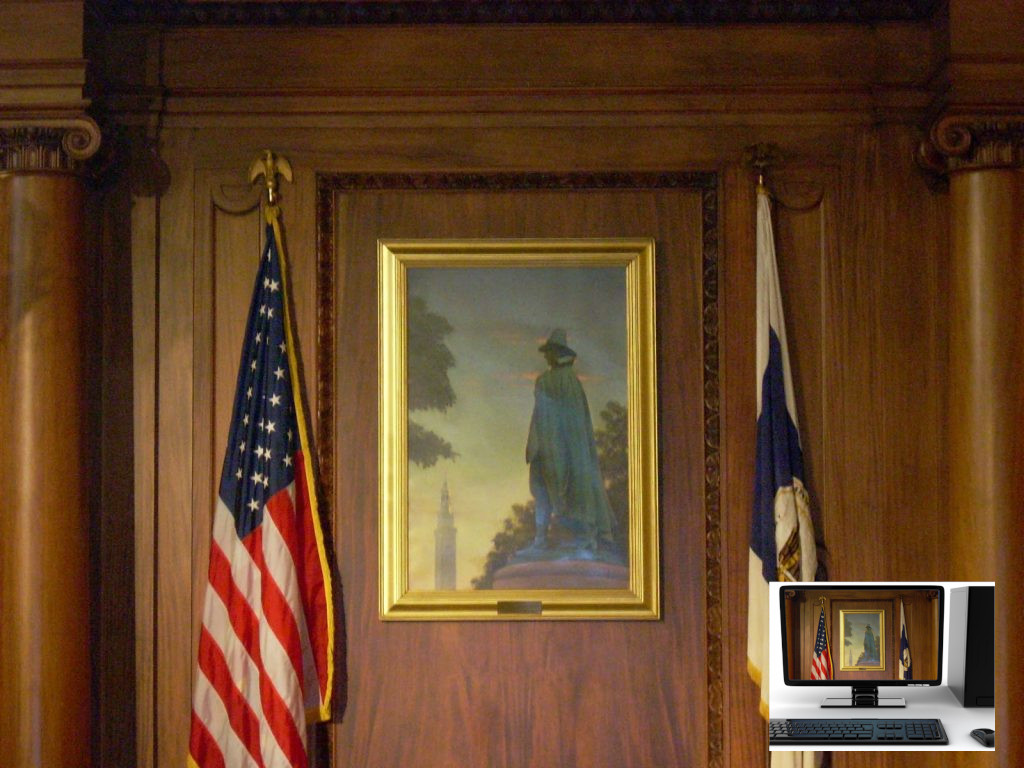
To preserve and protect. (WMP&I and Google images)
SPRINGFIELD—There was no arithmetic grinch to upend at-large Councilor Tracye Whitfield’s march to the council presidency Monday night. Indeed, despite the doubt heading into the evening, the informal election of the body’s leader for 2026 occurred quickly and with little fanfare. As a result, Whitfield is on track to become the first woman of color to serve as City Council President here.
The substance of 2025’s last meeting, however, had its twists and turns. One controversial ordinance that had seemingly vanished reappeared Monday and passed. Another, less questionable ordinance faced opposition from the department that would enforce it. That bill did not move. Both were initiatives of outgoing at-large Councilor Sean Curran. His impending exit hung over the debate.
Councilors Lavar Click-Bruce, Zaida Govan, Maria Perez and Brian Santaiello participated in the meeting virtually.
The meeting opened with committee reports. The Finance Committee summary was of note because its chair lost reelection. This would be the final report Ward 7 Councilor Timothy Allen would deliver.
The agenda began with the completion of a zone change. It was a citywide amendment to the zoning ordinance that will change marijuana dispensary rules. Among other things, the new rules would let adult use dispensaries sell medical marijuana. Final approval was unanimous, but Councilors Malo Brown and Melvin Edwards dissented on one vote in the series.
The ordinances came next. Curran’s two bills were regulatory in nature. One introduces an oversight regime for kratom, an herbal remedy the Mayo Clinic calls “unsafe and ineffective.” Technically, the ordinance focuses on 7-hydroxymitragynine (7-OH), a compound associated with kratom.
The other bill sets minimum square footage for new apartments. Although this ordinance was plugged as a truth-in-advertising rule, it functions as a mandate on housing construction. The square footage ordinance faced opposition earlier in the year. Indeed, since then, one vote flipped to no from yes.
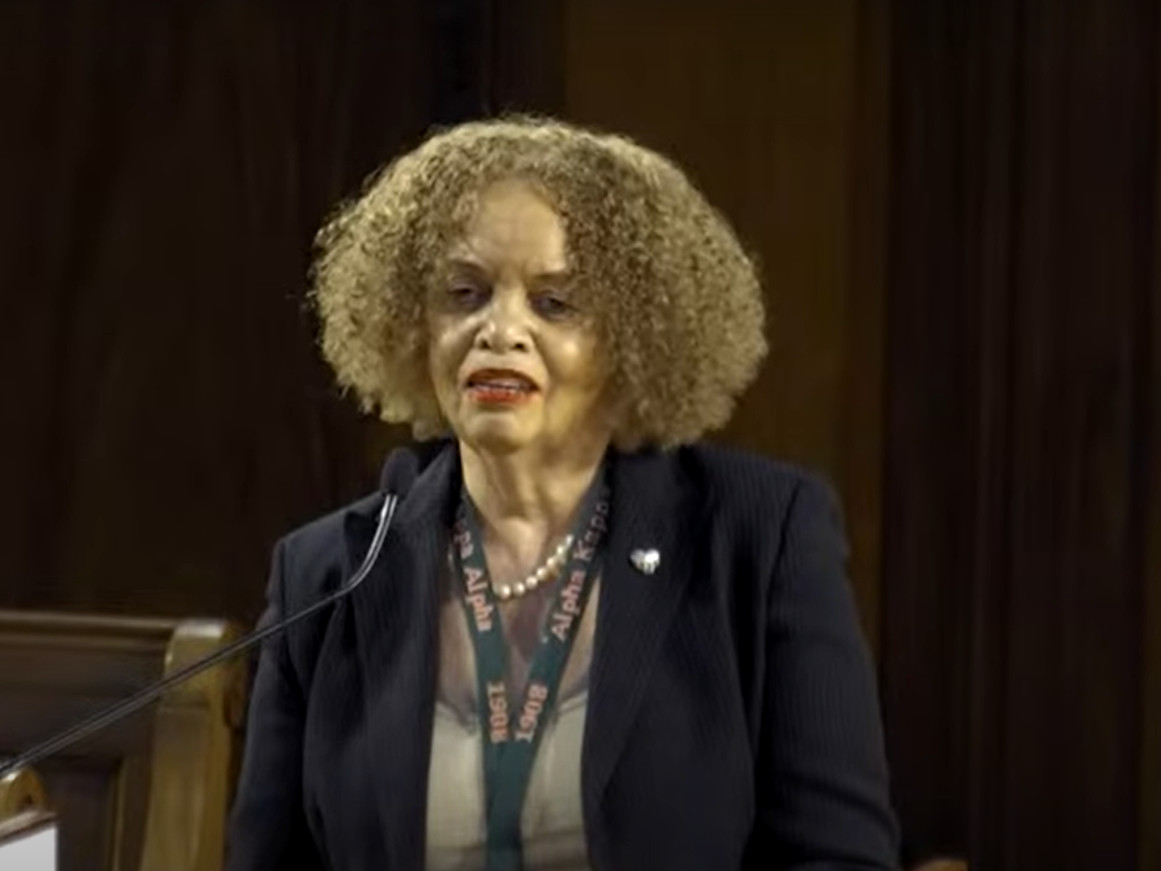
Caulton-Harris’ opposition is not easily brushed aside. (via YouTube/Focus Springfield)
The kratom ordinance looked like it would easily pass—until Health & Human Services Commissioner Helen Caulton-Harris spoke. Invited up by at-large Councilor Jose Delgado, Caulton-Harris said she shared Curran’s concerns about kratom but her agency could not enforce the ordinance as written.
“While I understand the importance of talking about the danger of the product, it makes no sense to put legislation in place that we know, initially, that the department cannot enforce,” she said.
Specifically, Caulton-Harris said her department lacked the ability to meet the testing and labeling mandates in the ordinance. Curran and other councilors emphasized urgency. They argued that passing the bill would send a message to kratom retailers and Beacon Hill, which is considering action of its own. Setting up the testing could wait.
“We’re going to figure out the testing,” assured Curran, whose term ends in weeks.
Curran, dubiously, asserted restarting the committee process could draw out passage by a year.
Caulton-Harris was adamant. A motion to send the bill to committee passed 7-6. Councilors Allen, Brown, Curran, Victor Davila, Michael Fenton and Brian Santaniello opposed the referral. The vote’s narrowness belies what happened. The well of respect Caulton-Harris has cultivated during a lengthy municipal career gave her the benefit of the doubt among councilors.
The need for speed is suspect, too. In response to a query, the Massachusetts Department of Public Health produced data on kratom, mitragynine, or (7-OH) appearing within the “literal cause of death” on death certificates. From 2020 to 2025 (so far), there were 77 such deaths. Twelve occurred in the Commonwealth’s four western counties. The great majority occurred in Hampden County, but deaths there and statewide peaked in 2023.
Whitfield, who voted for the committee referral, however, seemed to cut to the chase and characterize speed as serving an alternative purpose.
“I think it’s irresponsible for us not to do our due diligence because someone is leaving the city council,” she said. “I’m not saying that he didn’t do a good job. I’m not saying that this is not an important issue, but I think there is more to be done.”

Seeking a bare minimum or something more? (still via YouTube/Focus Springfield)
The square footage ordinance fared better. The minimum size for apartments includes a mechanism to allow for smaller units. However, the wavier requires Council approval. Curran suggested the applicant must “at least notify us.” In fact, waivers require an affirmative Council vote. He has also indicated that Boston has this rule. However, a spokesperson for the Housing office in the Hub told WMP&I that only applies such standards to subsidized housing.
Springfield already suffers from a lack of housing. Recent estimates say the city is 11,000 housing units short. The waiver process will also leave projects for needier populations vulnerable to additional political interference. Opponents described the rule as adding additional costs for homebuilders. Many projects have units just a hair smaller than the sizes in the ordinance.
“To have people come in for that little bit of a variance just really doesn’t make sense,” said Brown, who represents Ward 4.
Supporters couched the ordinance in almost melodramatic terms, suggesting setting an arbitrary term was about dignity for tenants. Some rejected the risk of perpetuating homelessness the bill posed.
The ordinance passed 8-4. Councilors Brown, Delgado, Edwards and Whitfield dissented. Ward 5 Councilor Click-Bruce missed the vote, but he opposed the ordinance before. Delgado had voted for it before.
WMP&I could not confirm whether Mayor Domenic Sarno had signed the bill. City departments had telegraphed concerns. Housing Director Gerry McCafferty attended Monday’s meeting in person, leaving just after the Council voted.
The rest of the agenda was fairly ho-hum. The Council approved parking and stop signs on Girard Avenue and Park, Pratt and Windemere streets. It granted an easement to the Springfield Redevelopment Authority for Bruce Landon Way (formerly East Court Street).
Councilors also approved 10-year tax increment exemptions for a trio of properties along Main Street south of State Street. McCaffery, a Chicago-based developer, plans to convert the former Masonic Building at that corner as well as two adjacent buildings to housing.

Your domicile here? For the right breaks, perhaps… (via mccafferyinc.com)
The city has agreed to forgo roughly half of the taxes it would otherwise collect on the improvements McCaffery will put into the buildings. It would receive taxes on their current value, but only half of the added value post-renovation. Brian Connors, the city’s Deputy Director for Economic Development, said the exemption would not apply to the buildings’ commercial spaces. McCaffrey intends to retain the structures’ street-level retail spaces.
There were questions about whether prevailing wage rules would apply. City officials said no, but it was not clear that was correct as of Monday night. The tax breaks passed without dissent.
The Council cleared the sale of 135-155 Lyman Street to the property development arm of Balise Auto. BAR Belmont, LLC will consider reuse options for the structure, according to The Republican.
Chief Administrative & Financial Officer Cathy Buono presented transfers from free cash, the unspent pool of funds from prior years. One sets aside a $1 million match for a land and water conservation grant the city is seeking. If successful, the grant will finance improvements to Five Mile Pond.
Another $1.5 million will replace gas pumps for city vehicles at the Tapley Street facility. A final $500,000 finances special legislation for an employee’s retirement. A previous appropriation order to the same effect had expired pending the legislature’s approval of the special act.
All transfers passed without dissent.
William Mahoney, the city’s HR/Labor Relations Director, presented a labor pact with the city’s public works engineers. The agreement with Service Employees International Union, Local 888 runs from July 1, 2025 to June 30, 2029. The engineers will receive a $1.50 per hour raise in the first year and 2% raises in each succeeding year. The pact received unanimous approval.
The Council approved three small grants for various departments and a $468,150 grant for Elder Affairs. The latter funds the senior work program, which gives older residents jobs.
From there, the Council moved onto recognitions of outgoing councilors Allen and Curran. The departure of colleagues usually provokes warm feelings and memories among councilors. Those that lost reelection often inspire even more heartfelt reflections and comments.
However, there was palpably more emotion when councilors reflected on Ward 7’s Allen. This is not surprising. Allen entered the Council, alongside Councilors Edwards and Fenton, in 2010, the year ward representation returned. They are the most senior councilors after at-large Councilor Kateri Walsh.
“This one is personal, very personal for me,” Fenton said, who went on to describe Allen as a close friend and ally on the Council.
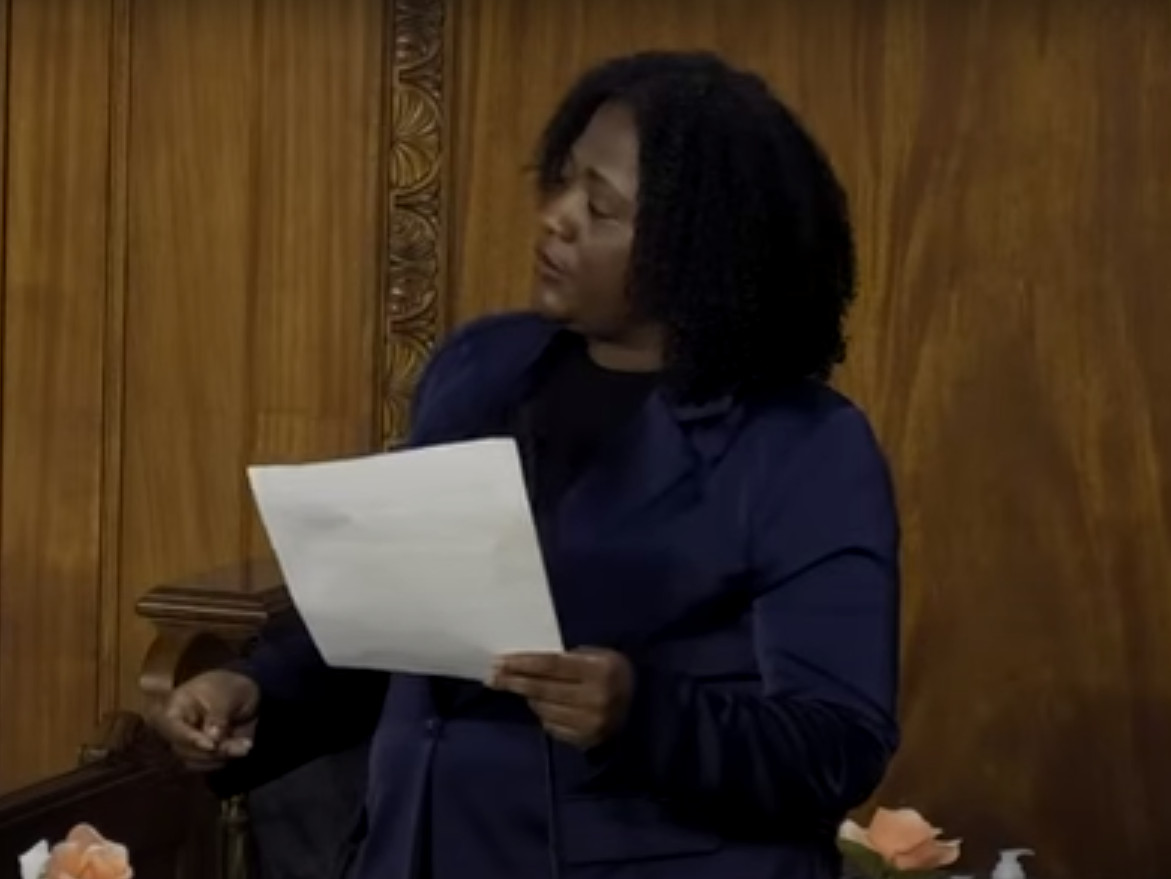
Woman of the year? At least in the Council chamber for 2026. (still via YouTube/Focus Springfield)
Allen would later in the evening give Fenton the traditional send-off gavel to the outgoing Council President.
After that, Allen and Curran left the chamber. Incoming councilors Justin Hurst and Gerry Martin took their seats to vote in the informal caucus. Councilor Delgado had faced no opposition for vice-president and won unanimously.
Edwards had been vying for Council President, just as Whitfield had. She had declared she had sufficient votes weeks ago, but there was a question on the firmness of her support. Furthermore, Delgado had not declared his vote publicly. He ultimately cast his vote for Whitfield. She cleared the caucus with eight votes. Edwards had five: himself, Click-Bruce, Davila, Fenton and Perez.
Whitfield will be formally voted in on January 5, when the full Council takes the oath for the next term.
The main takeaway from the final meeting of 2025 is how political power affects policy. Caulton-Harris had the political capital to shut down Curran’s end-of-career legislation—for now at least.

(WMP&I)
It may seem blasphemous for a blog proud of its bleeding-heart liberalism to mock the dignity argument on the square footage bill. Yet, paving the bill’s road to passage was plainly misplaced good intentions.
Whether it draws Springfield deeper into a housing hell remains to be seen.