Take My Council, Please: Conversant in Residential Conversions…
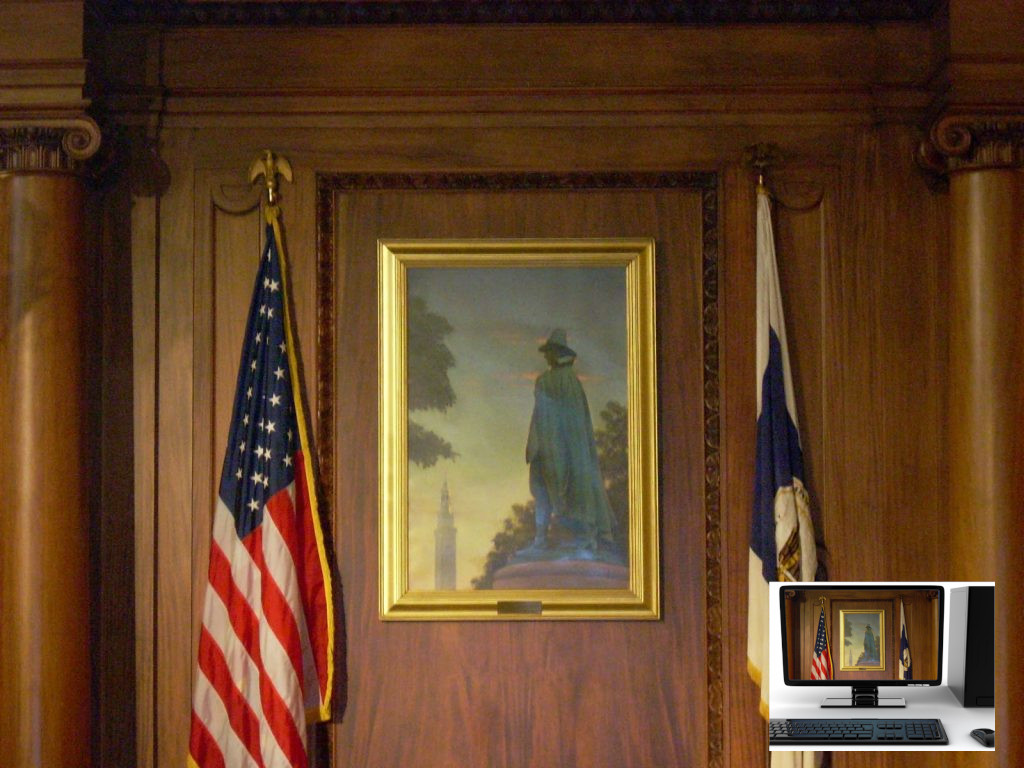
Conversions with friends. (WMP&I and Google images)
SPRINGFIELD—The City Council digested a light agenda Monday, although one land use approval did stand out. Councilors’ approval was necessary to allow a large redevelopment of buildings at the corner of State and Main streets. McCaffery Interests, Inc., a developer based in Chicago, has plans to convert the group of buildings from commercial use to residential units.
The proposal is not without criticism. Several councilors inquired about affordable units and there are looming questions about what subsidies the city must provide. Still, it was a welcome reprieve from heavier issues. Perhaps more importantly, for councilors facing contested elections on November 4, it is facially positive news to close out the campaign season.
Councilors Sean Curran and Zaida Govan participated virtually. Councilor Malo Brown was absent. Councilor Victor Davila appeared virtually late in the meeting.
The project at State and Main streets required Council approval because of its nature and size. McCaffery, a Chicago-based development firm, intends to convert three buildings to residences. Ground-level commercial spaces will be marketed to store-front businesses.
These buildings include the former masonic building with the clocktower, the Colonial Block just down Mian Street and 21 Stockbridge, a low-slung building behind the Colonial Block.

The Colonial Block in 2011 with the old Masonic Building to its left. (via Wikipedia)
Based on the representations of McCaffery and its architects, the project should come online about two years from now. Construction will begin in spring with construction taking between 13 and 15 months. The developer indicated that it would seek to expand the historic districts that already encompass some of the properties to include the entire site.
Company officials were cagey about subsidies beyond those historic tax credits and potential redirection or reduction of tax revenue that would be raised as the property increases in value. The Republican reported last year that McCaffery may seek direct subsidies as the Court Square Hotel, a Peter Picknelly project, did. In 2022, the city appropriated $6.5 million from free cash to help complete that project.
Given the potential for direct subsidies and the expectation of tax credits, it was not surprising that some councilors lamented the project’s lack of below market units.
Councilors also heard from Chief Development Officer Timothy Sheehan about the parking garage the city and the Springfield Redevelopment Authority are planning. That is technically separate from the project. Sheehan said the project is still in its early phases, but a $24 million price tag is possible.
The Council approved the project without dissent.
There were few other major items on the agenda. The Council approved requests from Eversource for work on Claremont, Derby Dingle, Hampden and Lakeside streets. The body also accepted small grants for the Library, Police and Public Works departments.
Cignoli: Less eminent domain; less cost. (still via Focus Springfield)
The final item was an amendment to the takings for the “X” reconstruction project in the Forest Park neighborhood. The long-awaited, multi-million project has undergone several changes since its original unveiling.
Public Work czar Chris Cignoli said one such change in the last year was removal of a roundabout. This one would have replaced the intersection of Belmont and Commonwealth avenues. In the original design, the city would taken land from the CVS and TD Bank parking lot to fit the circle.
Upon reassessing traffic needs, the city agreed to remove the roundabout. That reduced the eminent domain costs by $93,000, Cignoli said.
The revised eminent domain taking passed without dissent.
Rehabilitating old buildings in Springfield, especially those with old, unattractive office space only makes sense. After reeling from the Great Recession and housing crash for years, the residential market in Springfield strengthened and grown tighter. The city now desperately needs more housing. Downtown cannot carry this burden alone. However, it may have a lot of low-hanging fruit, especially since multifamily housing may be less controversial there.
(WMP&I)
The Council has little power to impose affordable housing minimums, which can be controversial when other cities demand them. Certainly, councilors could have voted down the permit. However, it is not politically practical to shoot down a project that is bringing investment to the city absent a good reason. Market rate apartments will not spew toxins like a biomass plant would.
That is not to say the attention and scrutiny is improper and no councilor voted against it. There needs to be more housing at all price points, but a holistic approach is necessary. Now may be the time to identify one—not in a few years times when trainloads of commuters to Boston arrive at Union Station.