Take My Council, Please: A Curious George (Street) Project…
UPDATED 7:41PM: To reflect a correction in body of story. The Springfield CPC does not have a reserve fund for contingencies. Though off-cycle requests are discouraged, if funds are available, it will review emergency requests.
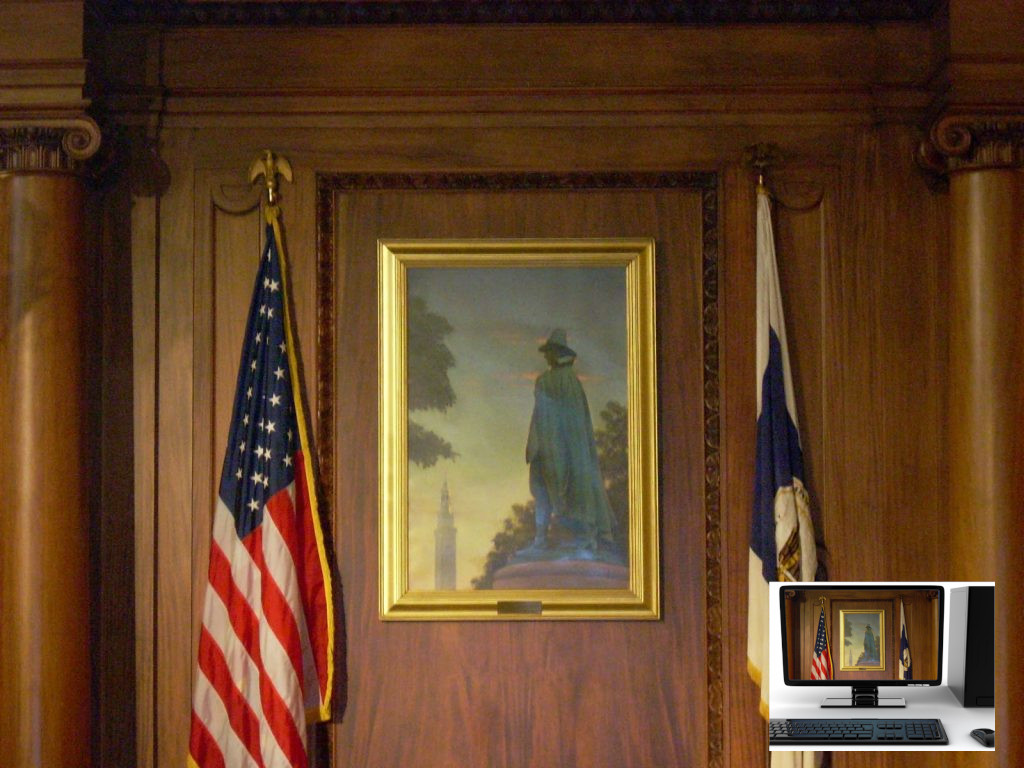
To preserve and protect. (WMP&I and Google images)
Since the Springfield City Council initiated the city’s adoption of the Community Preservation Act (CPA), the body has been widely supportive of it and the Community Preservation Committee created to identify projects to fund. By no means have councilors turned their back on the CPA or CPC, but the tension over an allocation at the December 1 meeting was notable.
The CPC had recommended some $300,000 for exterior improvements to a historic fire-damaged home on George Street. However, councilors questioned the process and the risk to the city. CPC chair Robert McCarroll and others offered assurances. Still, the property owners’ lack of insurance raised concerns on its own.
Councilors Malo Brown, Lavar Click-Bruce, Zaida Govan, Maria Perez, Kateri Walsh and Tracye Whitfield participated in the meeting remotely.
Other than the George Street CPA grant, the agenda moved at a brisk pace. The reports of committee were uneventful. Audit Committee chair Jose Delgado, an at-large councilor, noted the Auditor’s review of the ticketed athletic events involving the schools.
In his report, Finance Committee chair Timothy Allen, who represents Ward 7, did note the CPA grants were off-cycle. Usually, CPA grants receive Council approval earlier in the year. The CPC makes grant recommendations using money collected the previous fiscal year. Normally, the CPC does not take off-cycle requests, but it will in emergencies or to take advantage of market opportunities. These monies were funds which, for whatever reason, were available from previous CPA cycles.
CPA is a state program that allows municipalities to raise funds for housing, historic preservation and park projects via a property tax surcharge. It exists outside the normal budgeting process. Municipalities can set up the body that administers CPA locally however it chooses. In Springfield by ordinance, the Springfield Preservation Trust designates a member. Its designee, Robert McCarroll, a former city planner and Springfield history maven, became the CPC’s chair.
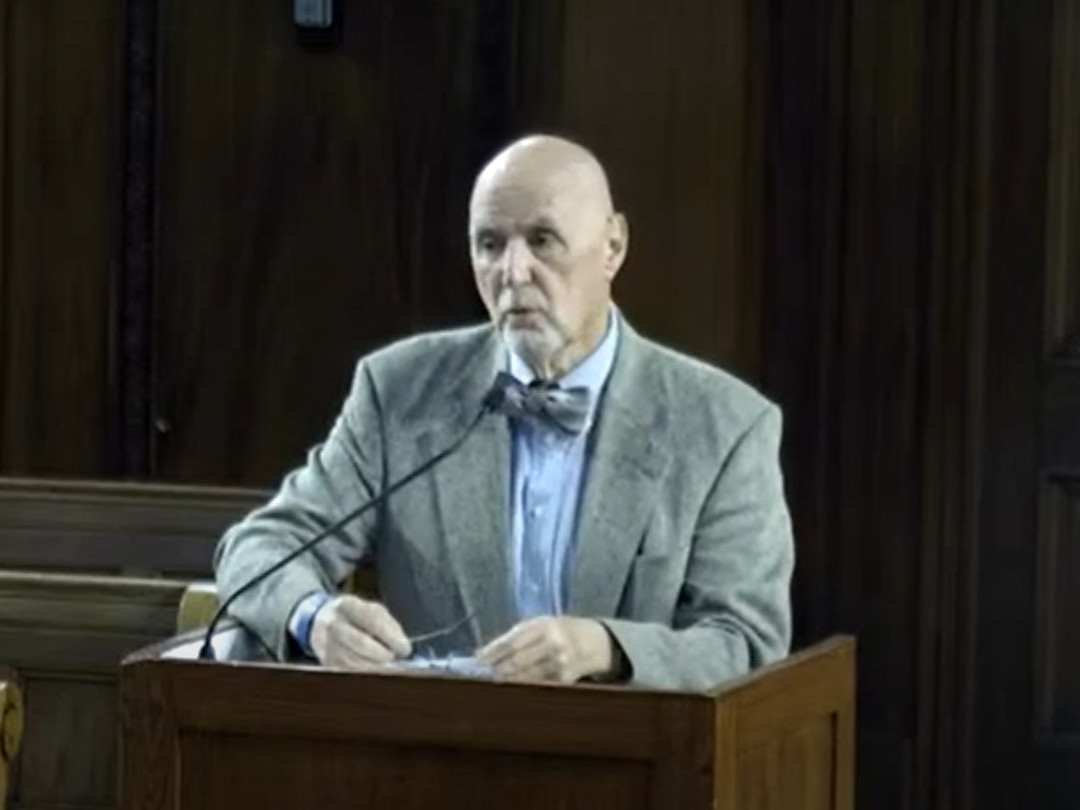
Bob McCarroll last year. (still via YouTube/Focus Springfield)
Questions for McCarroll are typical. However, last Monday there were worries about the house’s lack of insurance, the owner’s funds to complete interior repairs and when the city would disburse the funds.
The CPC chair opened with details of what the fire had done to the home’s historic elements. He indicated that the funds would only pay for exterior work. CPA funds generally cannot finance interiors work. The owners also had an advocate in former chair of the Board of Assessors, Richard Allen. He told the Council the house, as is, cannot get insurance.
Many councilors accepted these answers, as well as those the owner and their contractor provided. Ward 3 Councilor Melvin Edwards, who lives near the property in question, offered additional details about the recent ownership history of the house. He warned that failing to approve the funds would only lead to the home’s demolition.
However, Whitfield, an at-large councilor, objected to how this project got on the CPC’s radar. She also probed the speakers about when the funds would go out. The consensus was that typically CPA grantees, in this case the owners of the George Street house, cannot receive payment unless they fulfill all their obligations. Obtaining insurance is usually such an obligation.
Council President Michael Fenton ceded the dais to ask questions about the total cost of repairs and how closely they must follow historic guidelines. In the end, he, Whitfield and Councilor Brown voted against the George Street CPA appropriation. The other 10 councilors voted for it.
The rest of the agenda had few hiccups. In fact, another CPA items passed easily.
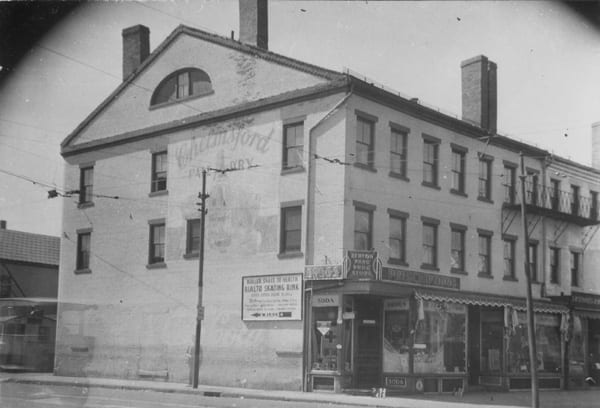
Don’t kid yourself. CPA is still popular and the eagerness to shoot money at the Gunn Block is proof. (via SPT/WPA archive)
McCarroll explained that the CPC was recommending $250,000 for the Gunn Block, one of the oldest buildings in the city. Located at State and Walnut streets, the Council and CPC had approved funds for the building’s previous owner. That owner never did any work. The new owner, an organization that activist Jynai McDonald heads, will move forward on the project.
Councilors lavished praise on McDonald and approved the funds unanimously. Unlike the George Street appropriation, the Gunn block award was not a new appropriation. Rather, the Council was transferring the old appropriation to McDonald’s group.
The Council also confirmed Kevin Coffee to the Historical Commission. He told councilors that a member of the Commission had approached him about serving. Coffee has a background in historic archeology and museums and has worked in facilities from San Antonio to New York.
Coffee’s credentials and his approach resonated with the Council. Councilor Whitfield noted that Coffee had emphasized the stories that go along with the buildings the Commission seeks to conserve. The confirmation vote was unanimous.
The Council also confirmed Geraldine McCafferty, the director of the city’s housing office, to the Mobile Home Rent Control Board. She was not present, but President Fenton encouraged the vote given councilors’ familiarity with her work and background. The confirmation proceeded without dissent.
Comptroller Patrick Burns presented an as-expected revenue and expenditure report for October.
After some debate and a motion to continue at least one item, the Council approved petitions to dig up streets for utility work.
The body also approved first step to a pair of marijuana dispensary ordinances. One will require the properties at which such establishments operate to be up to date on payment of taxes. The other harmonizes city rules about synthetic cannabis products to recently issued state rules.
“What we’re trying to get ahead of here today is trying to model the state language into the city’s ordinance code so that this will hopefully stand the test of time and be able to restrict what is being sold to children and to adults out there in the community,” City Solicitor Stephen Buoniconti said.
The Council approved small grants for the Library and Police departments and new parking restrictions for Sullivan and Orange streets. Hector Velez from the Department of Public Works said this would limit parking to one side along a narrow stretch of both streets. Presently, the change is for 90 days, but it could become permanent.
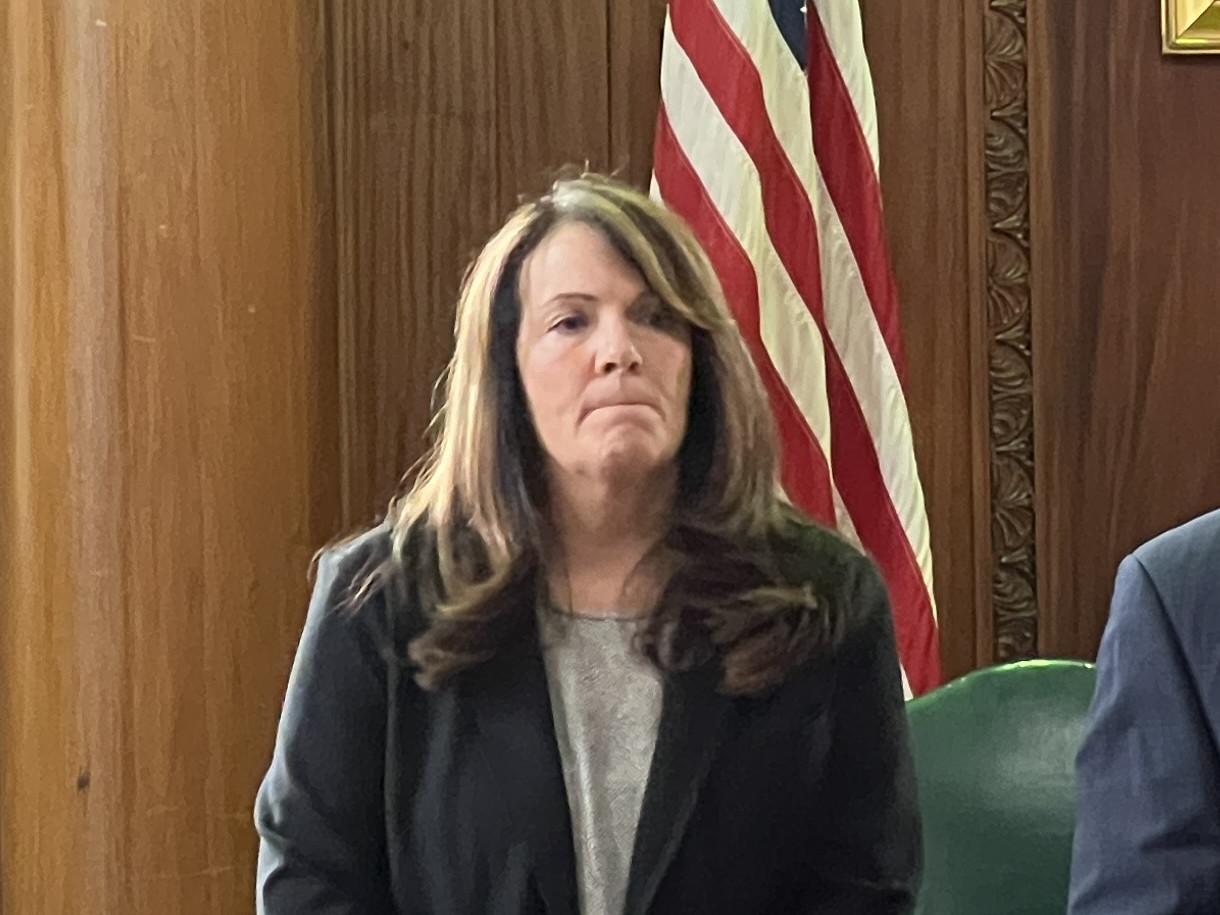
After everything the pandemic did, Buono reporting $2 million in unreimbursed costs ain’t bad. (via Springfield City Hall)
Councilors also made two $1,861,430 transfers to the city’s pension and retiree benefit accounts. The city tries to distribute 10% of its available free cash—unused funds from a prior fiscal year—to pay down these obligations.
The final financial order was $2,125,100—also from free cash—to retire all remaining COVID-19 expenses. Chief Administrative & Financial Officer Cathy Buono explained that the city had authorized emergency spending during the pandemic and the last reimbursements have come through. What remains the city must cover itself.
In an email to WMP&I, Buono said that the unreimbursed costs include things like testing kits and overtime for public safety workers. She said that the city’s consultant for federal reimbursement told officials it was very difficult to provide logs that prove the overtime was to backfill absences qualified as COVID-19 work.
All transfers passed without dissent.
The Council also approved a resolution supporting efforts in Congress to regulate child safety online.
During his remarks, Fenton took pains to thank McCarroll and others who volunteer for the CPC. Indeed, there was no indication there was any broad dissatisfaction with McCarroll or the CPC. Yet, the circumstances of the George Street property, namely its lack of insurance—regardless of its pre-fire condition—do merit attention.
(WMP&I)
The broader lesson may not be the CPC sought to fund repairs to this precarious structure. Rather, the situation raises a question about the stability and future of many Springfield historic structures in private hands. What care and protection—beyond rules about alterations—do they have when the owners do not insure their property?
The current George Street owners do not seem guilty of neglect per se. That cannot be said of every owner of property, whether historic or not.