Analysis: With Liberty Street Site for Courthouse, Springfield Faces Its Own Junction…
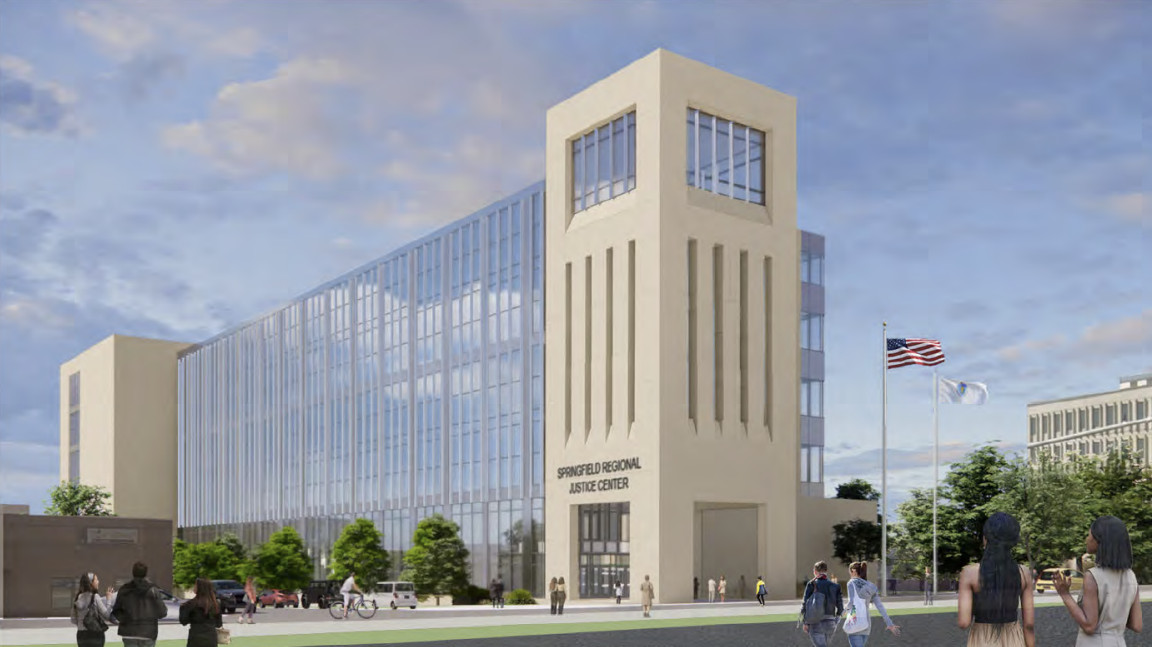
Meh, it’s fine. (Liberty Junction Proposal via DCAMM)
The selection of Liberty Junction, the proposal for a new Springfield courthouse at 125 Liberty Street, closes a contentious chapter in state-city relations. Replacing the ailing Roderick Ireland Courthouse was a major priority for officials from 36 Court Street to Beacon Hill. Yet, the basest of politics had contaminated the matter.
Springfield Mayor Domenic Sarno decried the selection for not being local and for not including any ancillary development. It is possible this mayor shares some blame given his brazen advocacy for one bidder. The choice is superior to some bids from an urbanist perspective, but it is not without its complications. Some of these, the Commonwealth and city must address.
“After a thorough and competitive procurement process with several strong proposals, the Liberty Junction Team emerged as the best value proposal in the eyes of the Trial Court,” Adam Baacke, the Commissioner of the Division of Capital Asset Management & Maintenance (DCAMM), said in a statement.
“Their experience, an efficient layout that effectively meets functional and security requirements, a downtown location that can catalyze revitalization, and the project’s comparative cost savings make this an excellent outcome for the Commonwealth and the Springfield community.”
DCAMM had put out bids for developers to build a new courthouse the Commonwealth would own. Yet, it cancelled that solicitation claiming that the procurement process would drag out construction. Given the Ireland Courthouse’s condition, this was unacceptable. Water infiltration and possibly diesel fumes from trucks carrying prisoners contributed to a spate of illnesses that may have even claimed some lives.
Meanwhile, motorcoach mogul Peter Picknelly shilled a cockamamie proposal to build a courthouse—with potential marina access, no less—on land wedged between the Connecticut River and I-91. Sarno sung the proposal’s praises from the get-go.
Inspector General Jeffrey Shapiro was fairly explicit that Sarno’s advocacy would undermine the competitiveness of the bid. He was also cool to the leaseback proposal and did oppose it, although the IG did secure additional guardrails and he was In the end, nearly a dozen submissions came in.
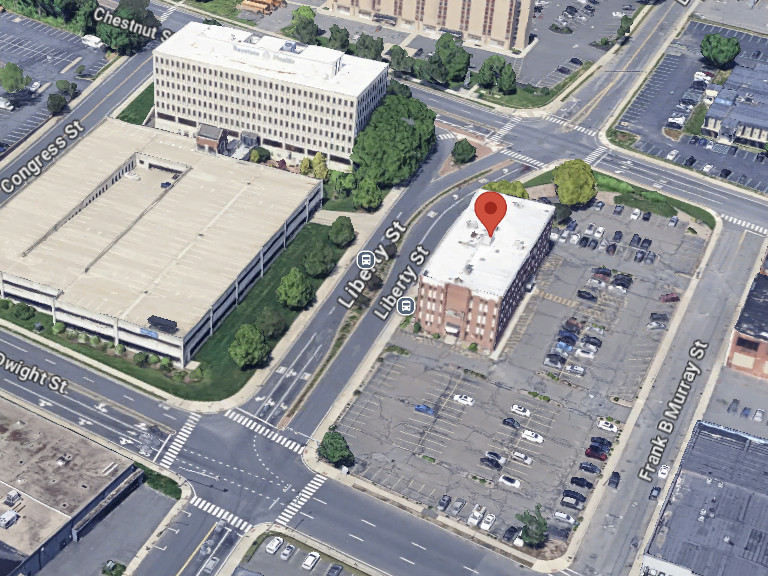
The Liberty Medical Arts Building (under pin) would make way for Liberty Junction. (via Google Maps)
In choosing Liberty Junction, DCAMM was quite blunt about why. The project was the least expensive; it was near transportation links; and the developers offered the fastest timeline. The state will enter into a 40-year lease with options for extensions.
Among the entities behind the project are FD Stonewater, a national firm, and CoJo Partners. One CoJo principal is John Barros, the interim executive director of the Massachusetts Convention Center Authority. The Boston Business Journal first reported Barros’ ties. The General Contractor will be Suffolk Construction.
The L-shaped structure will sit where the closed Liberty Medical Arts Building stands. According to project records, the developer is buying the property from Baystate Health Systems. The developers have obtained control of adjacent parking and other structures according to its proposal. Despite the proximity to Union Station, the plan indicates another parking garage will be built.
Several city officials praised the conclusion of the process.
“I extend my sincere congratulations to Liberty Junction on being selected to redevelop the Rodrick Ireland Courthouse site,” Springfield City Council President Tracye Whitfield said in a statement. She praised the transparency and interest in involving and hiring locals to complete the courthouse.
“This project represents a significant public investment, and I hope Liberty Junction will prioritize local hiring, workforce development, and contracting opportunities for minority-, women-, and locally owned businesses,” she continued. “Together, we have an opportunity to ensure the economic benefits of this development are felt throughout our community.”
Ward 2 City Councilor Michael Fenton, whose district abuts the property, welcomed the selection as well. The courthouse had featured prominently in the 2022 Governor’s Council race. Fenton had run in the race, but lost to Tara Jacobs. They will face off in a rematch September 1.
“Finally, after a decade of waiting, Western Massachusetts will have a new courthouse in our largest city,” he said in a statement. “A new courthouse will require a renewed focus on fully funding and staffing our court system in Western Mass.”
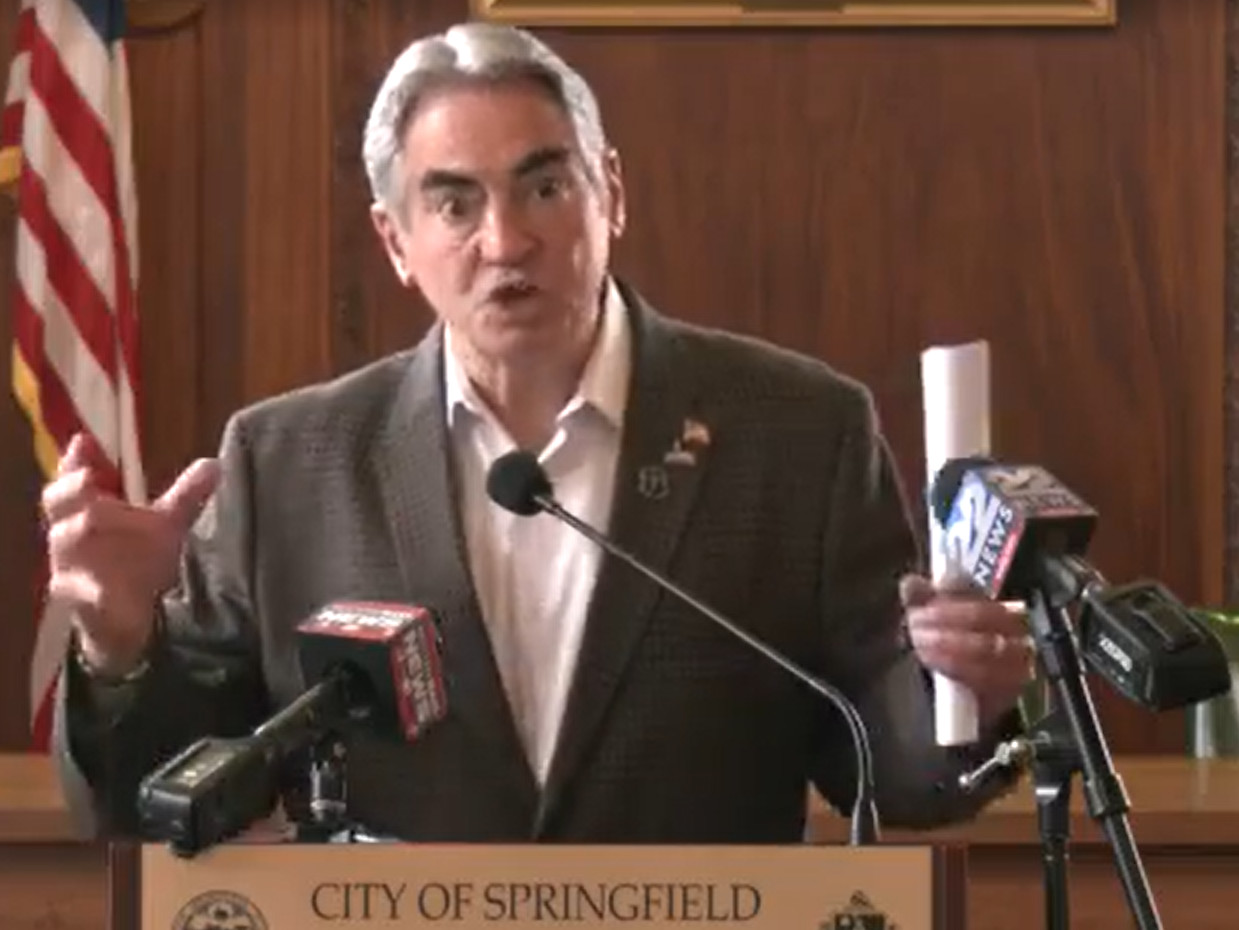
Look out he’s gonna blow! (still via Facebook/WWLP)
Sarno, however, was anything but amused. During a roughly 30-minute-long press conference, he again shilled for Picknelly’s proposal. He used the phrase “game-changer” no less than three times, as if it were an incantation.
“This one hurts. This one really hurts,” Sarno said in remarks posted on the city website. “It’s going to hurt our residents and business community.”
The mayor went on to claim Baacke also wanted a “game-changing” project. Only the oracle of Delphi could have predicted what Sarno said would change the game.
“The game-changing site is at the North Riverfront Area,” he said, rattling off its features as if a Picknelly press release were in front of him.
Sarno did mention proposals in the works on land that the Balise family had purchased. Perhaps, if Sarno had not tried to strong-arm the Commonwealth, DCAMM might have been open to pricier choices.
While it is good that Picknelly’s ridiculous proposal found its way into the dustbin, the choice of 125 Liberty Street is not without issues. Chief Development Officer Timothy Sheehan, while less vitriolic in his disapproval, claimed that the DCAMM was looking at the potential economic development impact. The selected proposal does not offer that, he argued.
That may be a bit short-sighted. There is a lot of potential to ripping out the errors of urban renewal that define the area between Union Station and I-291. Moreover, what probably made Picknelly’s proposal entirely uncompetitive was DCAMM had indicated it wanted a site in the city center. Plus, the Liberty Junction documents do suggest the developers are eyeing additional retail and housing opportunities.
At-large Councilor Jose Delgado emphasized the importance of keeping it in the city’s center in his statement on the selection.
“Throughout this process, many advocated for a new courthouse, to keep the courthouse in Springfield, and I strongly supported keeping this important institution in our downtown,” he wrote on Facebook. “A downtown courthouse continues to strengthen the heart of our city while creating opportunities for future growth.”
However, a courthouse on the other side of the railroad viaduct is a massive shift for the state courts in Springfield. While federal courts have bounced around the city, the state courts have resided off the aptly-named Court Square for centuries. Law offices downtown are generally closer to Court Square, if not right on top of it—Bacon & Wilson aside. Many lawyers walk to court. A longer path complete with dark underpass may deter them.
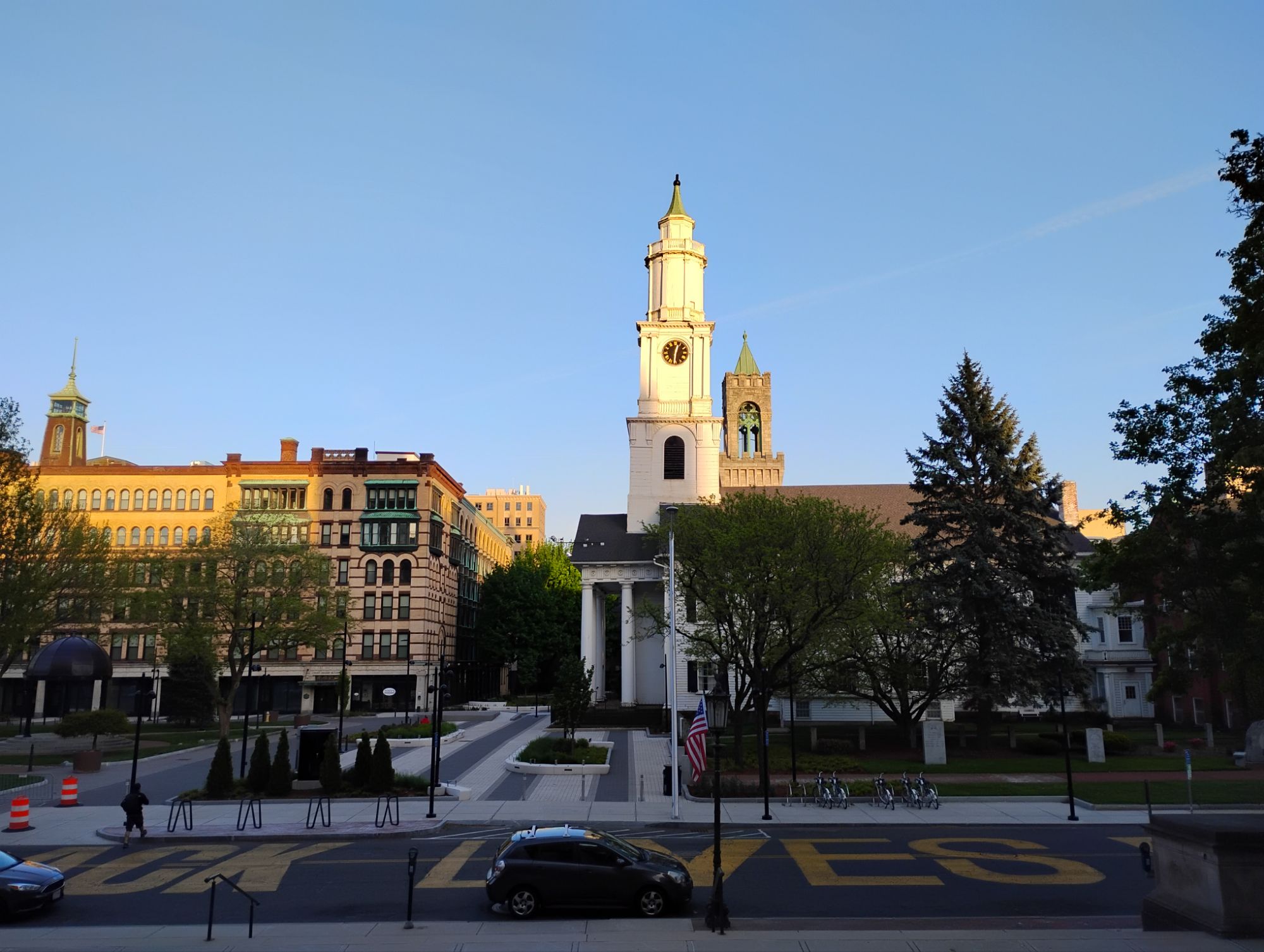
The (state) courts are bailing are Court Square. (WMP&I)
Gripes about the casino’s proximity notwithstanding, the current courthouse location combined with flex space in the interim may have been the best. It may have also been cost-prohibitive. Moreover, what happens to the current Ireland Courthouse and the historic old Hampden County Courthouse?
Among other proposals, Jeff Balise, of Balise Auto Group, had been buying up land and demolishing buildings along Lyman Street. Among those leveled were historic but supposedly rotted out building at Lyman and Chestnut. A bar and a service station facing Dwight Street were also taken down. If Court Square were not an option, a new structure could have complemented the stunning art deco State Office Building—itself once a post office and federal courthouse—across Dwight Street.
The space may not go unoccupied, though. Balise had made clear throughout the process that he and his associates had a Plan B, or at least a willingness to develop one. He all but hinted as much in an interview with The Republican after DCAMM’s announcement Thursday.
Sarno’s fury looks all the more absurd. Nearly 15 years after a gas explosion on Worthington Street left that area destroyed, he plugs the proposal nowhere near downtown instead of the area in need of a resurrection. Yes, he gave Balise a shoutout. Yet, maybe if he had been pushing a downtown site from the start—as downtown is allegedly the paramount concern of city leaders since the buck was stopping at Truman’s desk—one of the local alternatives may have had a better shot.
Whitfield knocked the mayor for his reaction to Liberty Street selection but in the same breath said it was time to face toward the future. This is correct.
The city will have work to do. The mayor can start by rebuilding bridges with Governor Maura Healey’s administration. Springfield will need the Commonwealth to help reuse the old courthouse site.
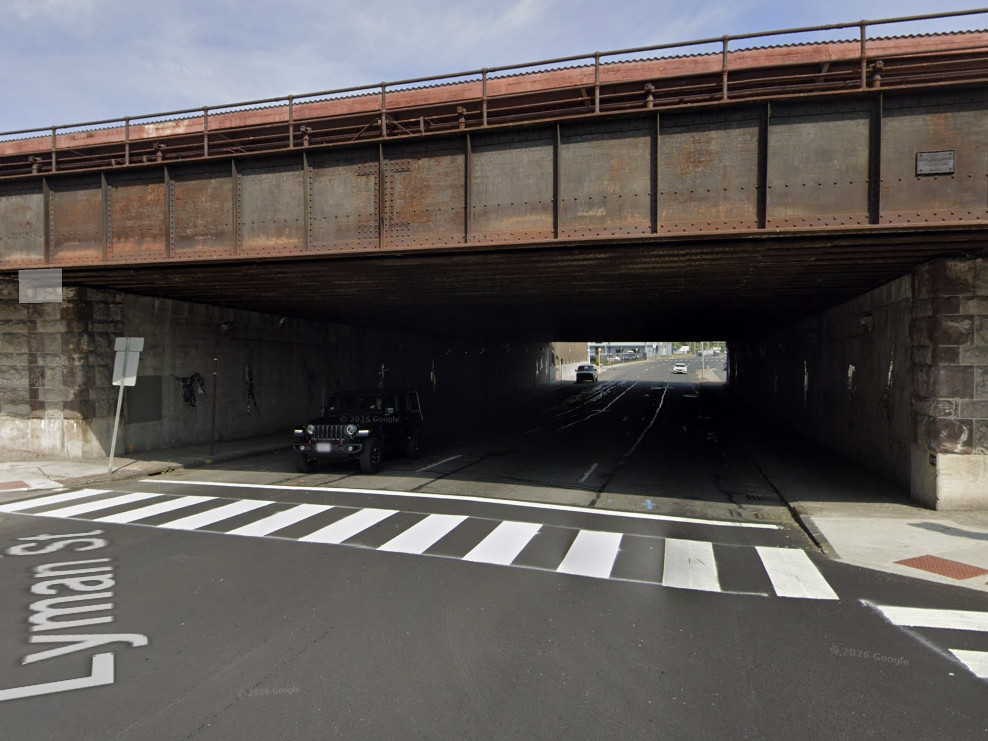
Dwight Street underpass. Inviting! (via Google Street View)
However, the city will also need to consider how it can stitch the new courthouse into downtown. It would be better if people in nearby offices were wiling to walk to 125 Liberty Street. That may also require rethinking Chestnut, Dwight and Main streets’ infrastructure under the railroad.
Despite the criticism from Hizzzoner, Commissioner Baacke is correct that there is potential here for revitalization, too.
That struck a chord with Karen Lee. A city resident, she had been advocating for a fairer process and more community engagement. She called Baacke’s comments an “encouraging foundation for a long-term community partnership and shared benefits framework.”
On Facebook, she said the next step should be to establish a working group with all stakeholders to develop a partnership that ensures the development’s benefits are shared widely.
“While this investment will undoubtedly generate local economic activity and jobs, it also highlights the importance of creating mechanisms that help retain, circulate, and reinvest the long-term benefits to ensure local dollars circulate with this major public investment within the host community,” she wrote. “For today, celebrate the win, Springfield.”