Take My Council, Please: Recommending a High Fiber Diet…
UPDATED 10/11/25 10:16PM: For clarity that the resolution did not receive a final vote at this meeting.
Regular order. (WMP&I and Google images)
The Springfield City Council again put off approval of a bevy of permits for GoNetSpeed, an Internet Service Provider, fearing the company will not deliver on promises to wire the whole city. The issue has bubbled up at full Council and subcommittee meetings before. In July, councilors continued the permits. This past week, the body did so again while giving the clearest indication yet the body wants more than words.
GoNetSpeed’s requests appear as petitions to open up or otherwise use public ways as other utilities do. While gas, electric and cable petition are usually for equipment replacements, GoNetSpeed is installing new equipment, beginning with the wealthier parts of the city. Councilors worry it may not fulfill a citywide installation while taking other actions that could discourage other providers from entering the market.
Councilors Malo Brown, Zaida Govan, Maria Perez and Kateri Walsh participated in the meeting virtually.
While the 2024-2025 term of the City Council has had little marquee legislation, it has been reviewing several longstanding issues such as payments-in-lieu-of-taxes and digital equity. Council President Michael Fenton appointed a Working Group on Digital Equity and Internet Access and installed at-large City Councilor Jose Delgado to chair it.
At Monday’s Council meeting, Delgado said the brass ring remains municipal-owned fiber. However, the build-out costs are likely beyond the city’s capacity. He told his colleagues the price tag could be as much as $100 million. Even at half that price, such sums are beyond the city’s capacity at this time.
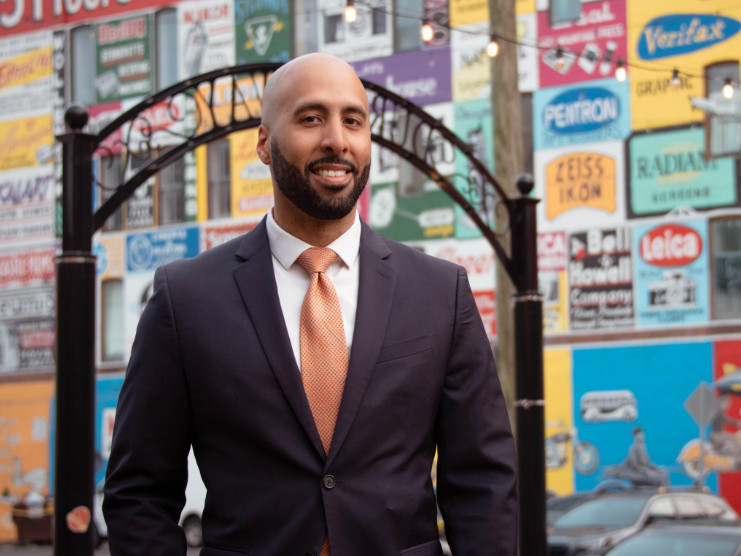
Delgado is looking at how to get more fiber into every Springfield neighborhood to keep the Internet moving along for everyone. (courtesy Delgado campaign)
Delgado was “cautiously optimistic” about what GoNetSpeed’s entry into the Springfield could herald, in part because the Council had some leverage. However, he wants to see a firmer commitment.
“I still have concerns,” Delgado said, “because there is nothing that says They could do phase 1, phase 2 and then they could say we didn’t bring in the number of subscribes that we needed.”
That skepticism was front and center from the beginning of the debate. GoNetSpeed is holding themselves out as a competitor to the incumbent cable companies that provide high-speed internet. Comcast and its predecessors had legal obligations to wire the whole city for cable television, dating back to when cable was becoming a thing. The cable companies simply used that infrastructure to provide Internet services decades later.
Unlike the cable companies, however, GoNetSpeed is not subject to a franchise agreement for cable services. It is not coming into Springfield with an obligation to one day provide citywide services.
Representatives from GoNetSpeed answered a battery of questions from councilors ranging from their long-term plans to the specifics of their infrastructure. One rep said the company already had thousands of customers and could have tens of thousands more once the new work is done. Fenton questioned the specifics of some equipment. He noted that some pre-construction planning for larger pieces of equipment had not been completed.
In the end, councilors clearly wanted some commitment in writing. The representatives of GoNetSpeed said they would have to bring that request to their superiors. Rather than approve the petitions, the Council voted to continue the 27 items until the next meeting.
A side issue that arose during the meeting was the revenue the city receives from Comcast for public access. The quarterly appropriation was on the agenda Monday as well. Chief Administrative & Financial Officer Cathy Buono confirmed that the money is going down, largely due to customers cutting the cord. The $130,317 payment from Comcast—and then transferred to Focus Springfield, the city’s public access network—received unanimous approval from councilors.
At the top of the meeting, the Council confirmed Cary Szafranski Curley to the License Commission. Mayor Domenic Sarno appointed Szafranski Curley on the recommendation of the city’s neighborhood councils. The License Commission is one of a few city boards whose appointees require confirmation from the City Council.

Less than six degrees of Kevin Bacon from blogging. (via YouTube/Focus Springfield)
Szafranski Curley is a first cousin to WMP&I editor-in-chief Matt Szafranski.
Under a 2002 law specific to Springfield, one of the five seats on the Commission is reserved for a nominee who has the support of city’s recognized neighborhood groups. The longtime occupant of that seat had been Peter Sygnator. In an August 22 release, Sarno announced Sygnator had retired and that he had chosen Szafranski Curley upon “reviewing all of the neighborhood nominees for consideration.”
Szafranski Curley is an assistant district attorney and has also done a stint with the Springfield Law Department. She and Ward 6 Councilor Victor Davila, who chairs the General Government committee, both noted she had advised the License Commission while working for the city.
The vote to confirm Szafranski Curley was unanimous, save for at-large Councilor Brian Santaniello’s abstention.
After the GoNetSpeed items, the Council moved through the agenda swiftly. It approved donations and grants of less than $100,000 without dissent. The $139,805 Mass in Motion grant, which also passed unanimously, will fund nutrition programs. The body also approved a $180,000 grant for the Animal Control Department and $323,000 for the mental health diversion program.
The legislation to set minimums for apartment sizes did not advance on Monday. At the request of the lead sponsor, at-large Councilor Sean Curran, the body continued further action until the next meeting.
The Council nearly continued an ordinance regulating additional trash barrels for households, as well. Public Works czar Chris Cignoli was not in attendance, which led some councilors to recommend a pause. Others questioned the need. They understood the bill based on Cignoli’s previous presentation during an earlier reading of the bill. A vote to continue failed 3-10. Councilors Curran, Davila and Timothy Allen voted for the delay. The Council gave the bill final approval without dissent.
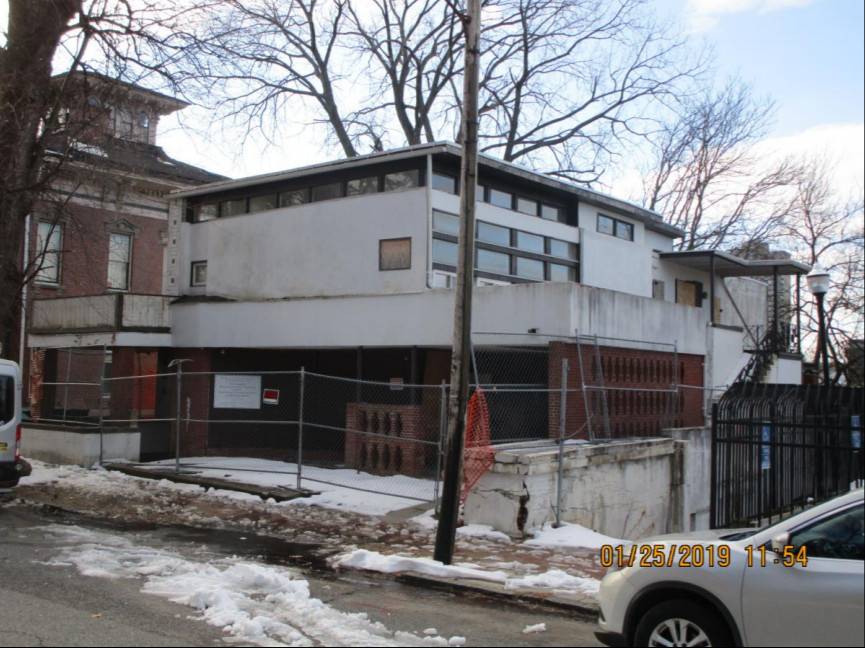
Last best hope to save 60 Byers? (via Spfld Historical Commission)
The Council discussed a few property transfers as well. Deputy Development Director Tina Quagliato-Sullivan presented the body with yet another proposal to save 60 Byers Street. The architecturally significant structure, which uses an International style Frank Lloyd Wright pioneered, has been the subject of several redevelopment plans over the years. The Council even created a historic district around the building to further redevelopment.
The developer has a history of saving distressed properties, including historic ones. Quagliato-Sullivan said the bidder was ready to begin work before the structure would have to endure another winter. Its roof was a particular concern, she said.
Some councilors used the item to pan the procurement process and the notice given for bids like 60 Byers Street. The precarious state of the property led to a unanimous vote for the transfer, however. Two other transfers items—one a property to a developer and the other a list of properties to the Parks Commission—passed without dissent.
The final item was a resolution urging the legislature to broaden the applicability of criminal charges for drug possession and sales nears schools and in parks. The Council did not take final action on it.
The GoNetSpeed petitions are an interesting example of the lengths and the limits of the Council’s power. While the episode underscores the impracticality of Springfield building out its own municipal internet service—for now at least—it also shows that there are the private market has pressure points the city can use to broaden access.
(WMP&I)
The rub, as always, is the delta between promises and action.
It is far from clear that GoNetSpeed bosses will agree to a commitment in writing. The question at that point will be whether the Council would be willing, on principle, to let private investment walk away or if the optics of losing a business are prove too much for councilors to bear.