Analysis: With Swan’s Passing, a Generation That Changed Springfield, Slips into Memory…
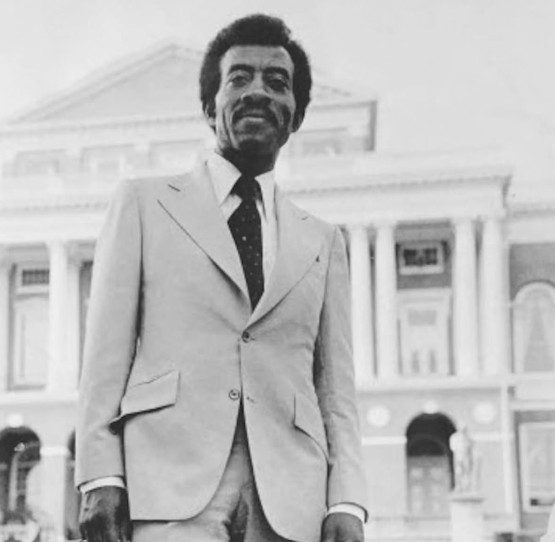
Ben Swan. (via Instagram/The Republican)
When former State Representative Benjamin Swan passed away on Memorial Day, Springfield lost more than an ex-pol. He was the last of a generation of civil rights leaders in the city which pressed for change. Then, they achieved political power themselves. Amid fresh national attempts to disenfranchise people of color and African-Americans in particular, it is worth noting the impact late leaders like Swan, Ray Jordan and E. Henry Twiggs had on Springfield.
Of the three, only Twiggs served on the City Council, becoming the ward councilor for historically Black Ward 4 and serving until his death in 2019. Yet, ward representation is part of all of their legacies, a culmination of efforts to diversify power in Springfield. As the onetime head of the local NAACP, Swan had long played a role in the political rise of Black Springfield.
“I was a member of the NAACP because I was enamored with the talents of a gentleman by the name of Benjamin Swan who was a leader,” Jordan said in a 2004 oral history project Springfield Technical Community College maintains.
Citing both Swan and another civil rights leader in the area, Oscar Bright, Jordan recalled their draw. Working with them set him on a path to becoming the city’s first Black state rep and later a state Democratic Party leader.
“[T]hey seemed like they had no fear in terms of going against the establishment, in terms of making our point about civil rights,” Jordan told his interlocutor.
Jordan passed away in 2022.
Pols on all levels of government mourned Swan’s passing. US Senator Ed Markey remembered Swan as “a lifelong public servant, consummate statesman, and champion for civil and human rights.” He added tat Swan had joined historic demonstrations in the South.
“Later, as one of the Commonwealth’s longest serving and most prominent state legislators, he became widely known as the conscience of the House of Representatives, fighting boldly and unapologetically for marginalized individuals, communities, and causes,” Markey said in a statement.
In a statement, Congressman Richard Neal recalled that it was as a delivery boy for the Springfield Union-News that he had first met Swan. Neal called Swan a “tireless civil rights advocate and a steadfast voice for his beloved city of Springfield.”
“Over the years, I thoroughly enjoyed our frequent visits, both in Springfield and in Washington, D.C.,” the congressman continued. “I could always count on him for his thoughtful perspective, never allowing any bitterness or cynicism to define the moment.”
State Senator Adam Gomez noted that Swan had marched alongside Martin Luther King, Jr., who was assassinated in 1968. However, like many others, Gomez recognized Swan as a public servant, too.
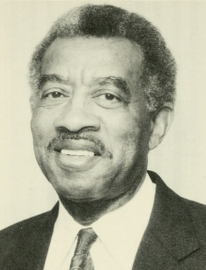
Rep Swan in 1995 (via Wikipedia)
“Today, Springfield lost a giant. Benjamin Swan devoted his life to service — fighting for civil rights, expanding opportunity, and standing firmly for dignity and justice for all,” the Springfield senator said in a statement.
With Swan’s passing at age 92, there are few left in Springfield who could have worked directly with Dr. King. There are a few roughly of their generation, who remain. Yet, few if any achieved political power the way Jordan, Swan and Twiggs did.
Swan served as the state rep for the 12th Hampden and later the 11th Hampden district from 1994. He retired in 2016. He had played key roles in both securing funding and steering legislation. This included bills that would reform Springfield’s charter and help the city through fiscal morass.
One such change was the revival of ward representation. While the North usually did not legally mandate discrimination as Jim Crow did, there were glaring inequities. Some were obvious, like de facto segregation in schools and racialized policing. A violent incident at the Octagon in the 1960s was a formative event for people in Springfield. It was also the decade where what Black political power in Springfield had receded.
The 1961 city charter eliminated ward-based Council seats in favor of electing the entire body citywide. Paul Mason had been a member of the City Council in the 1950s when there were ward seats. It took nearly a decade for him to secure an at-large seat. Only a handful of African-American individuals would join the Council before 2009, the year ward representation returned.
At the time a charter amendment to revive ward representation was working its way through the legislature. Swan was a cosponsor. He was not sure then if it would increase the number of councilors of color. However, that was not the only value to it.
“No matter who it elects, if you elect people from a district base, it’s a better form of democracy in my opinion,” Swan told The Republican then.
As fate would have it, though, ward representation would see more people of color elected. Among the new councilors was Twiggs, himself a champion of restoring ward seats. As Springfield grows more diverse, more people of color are becoming at-large councilors, too. The first woman of color to be Council President is among them.
“Representative Swan understood the importance of civic engagement and believed deeply in empowering the next generation,” Council President Tracye Whitfield said in a statement. “On a personal level, he was the very first person I spoke with when I began considering a run for public office. At a pivotal moment in my life, he offered encouragement, wisdom, and practical guidance on how to pursue public service.”
The passing of this generation is a loss. Moreover, it is vital to remember their work, especially as forces across the country seek to reverse it. Yet, their legacy lives on in those who benefited from their work and their support, and who can now pay it forward.
“His legacy lives not only in the policies he championed or the offices he held, but in the countless lives he touched through his leadership, mentorship, and unwavering commitment to community,” Senator Gomez said in his statement.