Take My Council, Please: A Head Start of Something…
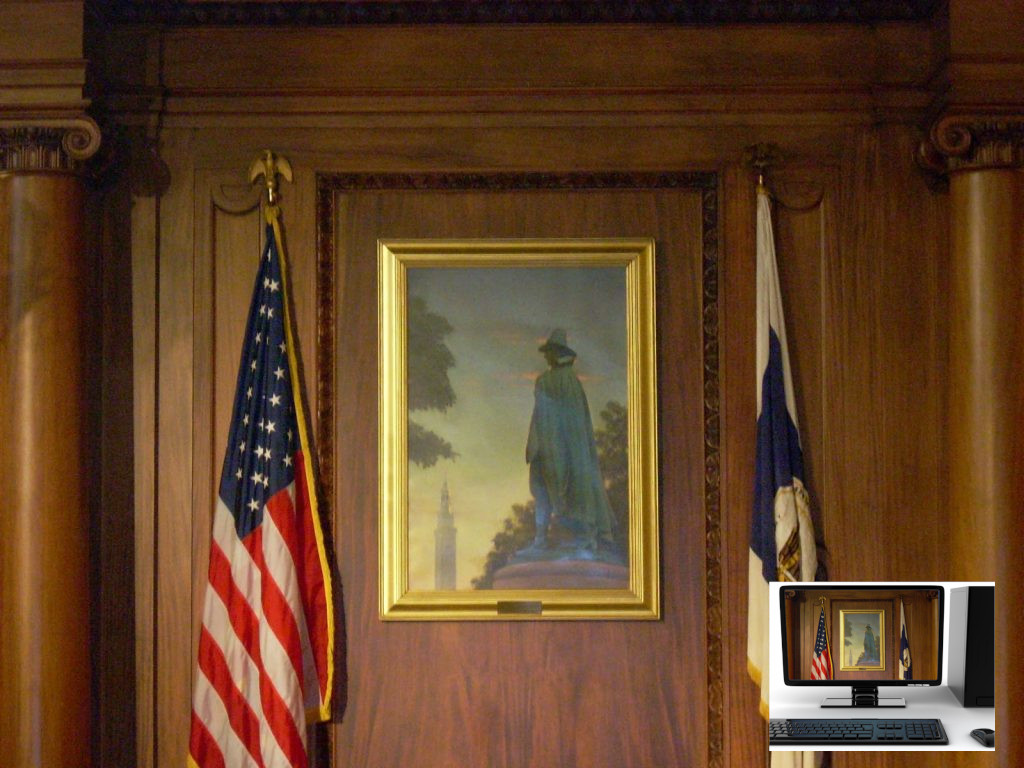
City and state. (WMP&I and Google images)
The Springfield City Council’s October 5 meeting was brief and uncontroversial, lacking the drama a snarky blog might later mock. Indeed, a report on it—especially nearly two weeks afterward—may seem unnecessary. However, the meeting does stand out for its intergovernmental flavor.
Last week, the City Council passed a resolution opposing changes to the federal Head Start program. The US Department of Health & Human Services, which oversees Head Start, proposed a slew of changes that would reduce standards and tighten eligibility for the early childhood education program. The City Council added its voice of opposition the day before the comment period on the rule closed on October 6.
Councilors Malo Brown, Maria Perez and Brian Santaniello participated remotely.
The Council heard reports from committee. In her report, Elder Affairs Committee chair Kateri Walsh described a recent meeting on scams targeting elders. This, she said, underscored the need for the soliciting ordinance that is moving through the Council.
The Council received revenue and expenditures reports for the whole of fiscal year 2026, which ended in June, and for August. Councilors briefly debated the surplus in FY2026. Comptroller Patrick Burns said it was due to several one-time events, including a shift in when excise tax payments were received. On the August report, Burns noted that the expenditures were still skewed because of a lump sum payment to the pension system.
Councilors approved the warrant for the November 3 election. City Clerk and Election Commission head Gladys Oyola-Lopez said that there were no changes in polling places relative to the September 1 primary. There was some discussion about slight changes to early voting at the Ray Jordan Senior Center, which align with the center’s hours. The matter may be revisited for future elections.
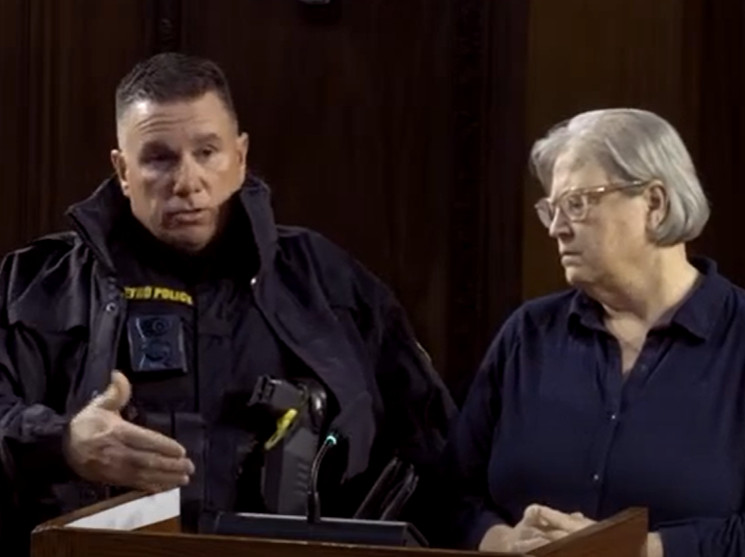
Elliott in 2024 with housing director Gerry McCafferty. (still via YouTube/Focus Springfield)
Councilors approved small grants for gaming harm reduction and parks without dissent. The body also approved a $100,000 grant for police officer and dispatcher mental health training and a $434,264 the mental health diversion program. The latter is a state-funded program to dispatch civilian crisis clinicians to certain 911 calls. The money covers five clinicians. Police also respond to every call.
Springfield Police Department Lieutenant Brian Elliott presented the grant. The item has, for several years now, drawn questions from councilors who have queried the choice of provider. Elliott explained that the state has a contract with Behavior Health Network. That said, the grant does not fund complete 24/7 coverage.
“We try to optimize every penny we do have to get clinicians to those crisis calls,” he said.
If clinicians are not available, police will respond alone and bring the individual to a hospital.
At-large Councilor Justin Hurst asked how many would fully staff the program and whether the department had asked the city to fully fund it. Elliott said eight would fully staff the program but there had not been any budget request to that effect.
The grants passed without dissent.
Councilors also approved payment of a bill from prior year and a donation to the Indian Orchard library. The penultimate item of the evening was $6 million bond authorization for city vehicles. Public works chief presented the item, but it includes money for department across the city. He said the bond was part of a master plan the Council had requested for vehicle purchases. It, too, passed without dissent.

Oliveira swearing into the current term, which has featured–and required–a lot of pushing back on the feds. (WMP&I)
The last item on the agenda was the resolution opposing the changes to head start. City Council President Tracye Whitfield stepped down from the dais to present the resolution. Whitfield said that State Senator Jake Oliveira had approached her about the Council adding its voice to the issue. The changes the federal HHS Department and its secretary, Robert F. Kennedy, Jr. had proposed have provoked opposition across the country.
The resolution pans the reduction in standards in the August 6 regulation HHS proposed as well as lead to cuts in staffing and increases in class sizes.
At Ward 2 City Councilor Michael Fenton’s suggestion, the Council struck the resolution’s reference to Kennedy as “honorable.” Kennedy has undermined many elements of the federal health apparatus. Yet, his groundless and dangerous doubts about the safety and effectiveness of vaccines are perhaps most well-known.
Fenton’s amendment passed 12-1 with only Ward 7 Councilor Gerry Martin dissenting. The resolution itself passed unanimously.
In a statement to WMP&I after the Council approved the resolution, Oliveira thanks the Council for its opposition to the changes to Head Start and emphasized its importance to children in the 413. He called the program “a lifeline for working families, providing children with the foundation they need to succeed while connecting families with critical resources and support.”
“I’ve joined my colleagues in the Legislature in raising these concerns directly with federal officials, but it’s equally important that Washington hears from the communities that will bear the consequences of these decisions,” Oliveira said. “Springfield’s voice matters, and this resolution sends a clear message that we should be strengthening Head Start, not creating additional barriers for the families who need it most.”
The meeting was a significant shift from some of the bumpier meetings over the last couple of months. It no doubt helped that the Council had an opportunity to train its fire on a figure like Kennedy—and the government he works for—that likely disgusts almost everybody in the chamber.

(WMP&I)
However, Oliveira’s encouragement to the Council carries another significance: the Council engaging with other levels of government. While the substance of the resolution basically jeered the federal administration, it was substantive. Working with legislators in a particular and meaningful way also matters.
Perhaps the Council can find more ways to reach out to its state and federal counterparts. Maybe the body can make a difference independent of any other municipal actor.