Longmeadow Daze: Voters’ Give Thumbs up to Merger in the Middle (Schools)…
Longmeadow Daze is an occasional series about Longmeadow government and politics.

Where there’s a will there will be a Williams Middle School? (via Town of Longmeadow)
Longmeadow voters authorized a debt exclusion on Tuesday that will let the town build a new middle school to replace Williams and Glenbrook Middle schools. A special town meeting had advanced the question to the ballot three weeks ago. The nearly $151.6 million project will build a new school at the site of Williams Middle School.
Consolidating to one middle school is partly deference to reality. Enrollment is dropping in the two middle schools, albeit slowly. One facility may suffice. East Longmeadow, which had about 600 more people than Longmeadow in the last census, has only one middle school. However, raising taxes on residents—who overwhelmingly own their own home—can be dicey even this wealthy town.
According to unofficial results, 3490 or 26.7% of registered voters showed. Approval easily passed 2129 to 1360. The Clerk’s office reports a lonely blank ballot as well.
Tending to the schools are, on their best-day, a hot-button issue in Longmeadow. School Committee races can be fraught affairs.
While true everywhere to a point, the reputation and success of public education in Longmeadow underpins a lot of household wealth. The schools are in demand and, therefore, so are homes. Aside from a few commercial developments like the shops in the center of town, tax revenue is almost entirely from residential structures.
A debt exclusion allows the town to sidestep the usual strictures of Proposition 2½. Normally, annual property tax revenue cannot exceed 2.5% of the value of all taxable property. Upon approval of Town Meeting and the voters, the cost of paying back the debt can be added to tax bills on top of the usual levies. There is a second kind of override that raises the year-over-year increase in tax revenue. Unlike debt exclusions, these overrides cannot exceed the 2.5% cap.
These are, in essence, tax increases. Town documents say the increase for the middle school debt will peak in 2028.
Not surprisingly, there is opposition and it is not uncommon. There was opposition to the debt exclusion to build the new Longmeadow High School in 2010 (it was then billed as an addition). Opponents have said this proposal is yet another cost taxpayers cannot afford to bear. Others have claimed property values near Glenbrook could sag.
However, as they did in 2010—and in other overrides for school funding—proponents focused both on education itself and the schools’ relationship to property values. Healthy schools, roughly speaking, mean greater household wealth, override backers have argued. There have also been successful attempts at Town Meeting to boost education funding without overrides.
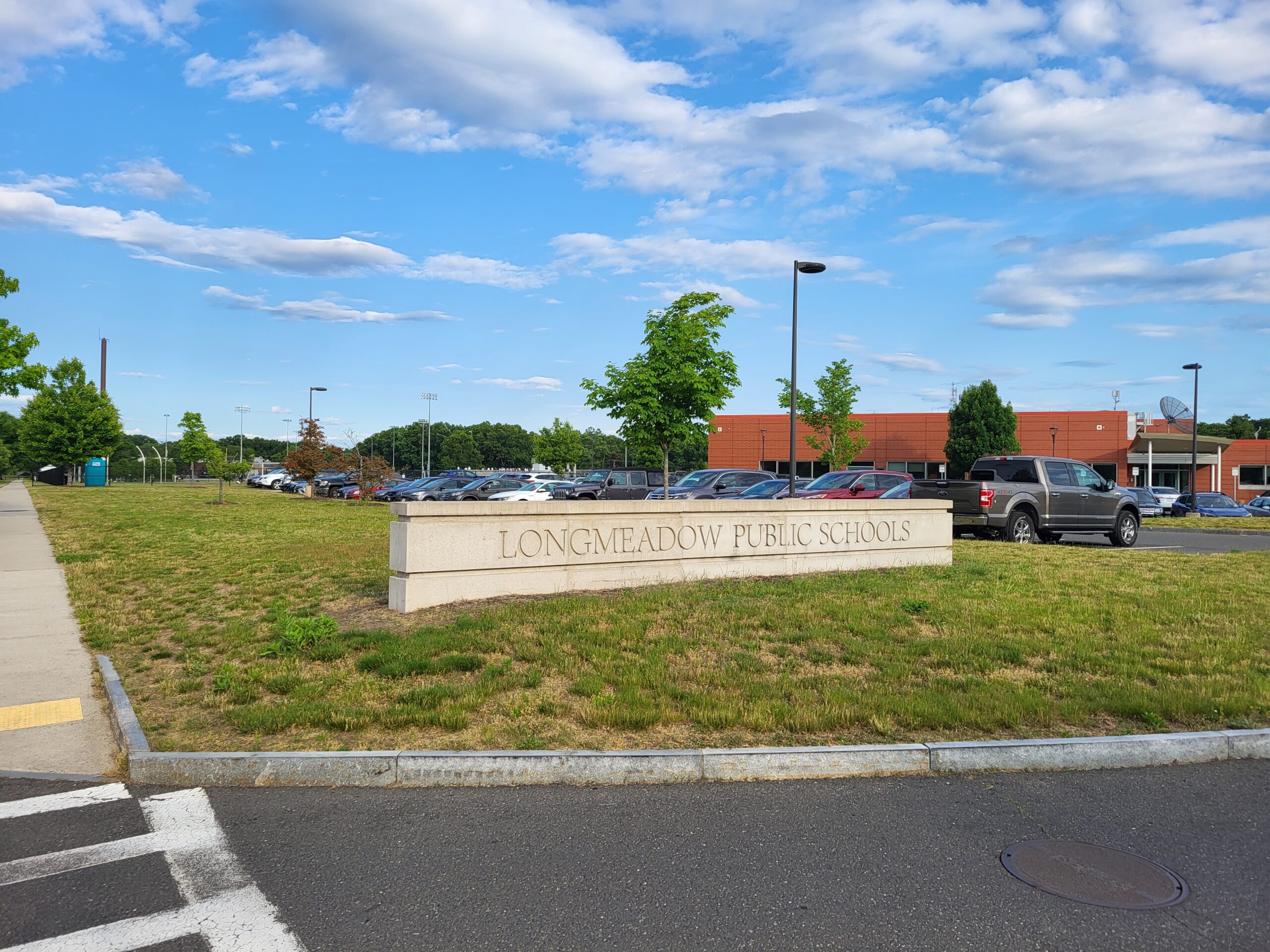
Some community economic schooling wins the day? (WMP&I)
That said, Longmeadow has not been shy about pursuing overrides for non-school purposes. State data indicates that since 1986, Longmeadow has held 20 different override votes, a mix of both types. All but one passed. In the last eight years, town voters have approved three debt exclusion votes for infrastructure and facilities.
It is likely that the full $151.6 million will not come out town residents’ pockets alone. Earlier reports state the town could receive $45 million in reimbursements from the Massachusetts School Building Authority. The MSBA, which a 1% sales tax statewide funds, helped finance the High School project.
In its pitch, the School Department notes that both Glenbrook and Williams are more than 60 years old. That may be baby compared to some aging Springfield schools, but it is old for Longmeadow. The town selected Williams School’s site because it was on a major road. Glenbrook is on a side road and there could be environmental complications.
Town documents state construction could begin next year with the new school’s opening to follow in 2028.