Op-Ed: Platner Was Forced Out—So Why Has Deaton Escaped Scrutiny?
by Matt Chilliak
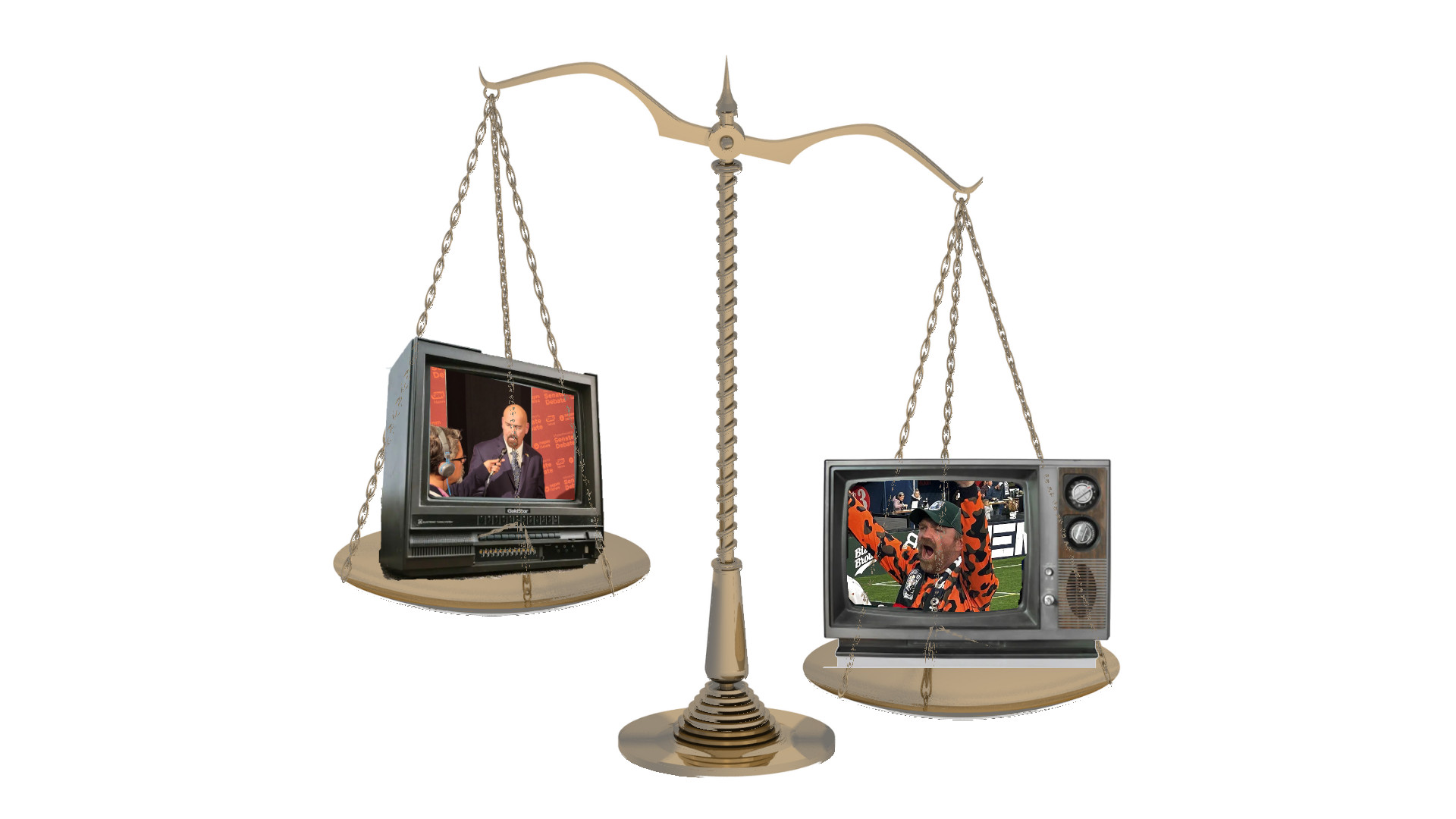
A lack of balance? (created via Google image search, Wikipedia and WMP&I images)
There should be a simple standard for politicians’ bad behavior: sexual misconduct allegations deserve serious scrutiny. We rely on news media and reporters to shine a light on legitimate allegations so that the voting public can make an informed decision.
But apparently, that scrutiny has limits—or at least a double standard.
Take, Graham Platner. In July, sexual assault allegations the press reported pressured him to step down as the Democratic nominee for US Senate in Maine. He denied the accusation, but for Democrats, it was the last straw for a candidate who for months was repeatedly making national headlines for bad behavior.
And rightfully so—the fourth estate serves as an important watchdog to inform the public about those who hold and seek higher office. That includes scrutiny of their past and present character Ultimately, Platner was out, and a new nomination process replaced him.
Contrast that to John Deaton, the Massachusetts Republican nominee for Senate.
Like Platner, Deaton’s path to politics was unconventional. And like Platner, his story includes an incident of sexual impropriety. However, in Deaton’s case, there’s no question. He wrote about it himself.
In his 2023 self-published memoir, Deaton details several transgressions: small-time drug dealing, a shootout and possible homicide, drunk driving, filing a false police report while serving as a Marine JAG officer, and, perhaps most notably, that as an adult he approached a 15-year-old girl, began a sexual relationship, and had her move in with him as she completed high school.
Of the relationship, Deaton wrote: “I made the inherent mistake of thinking, because she was young, I could mold her into the perfect partner.”
Why would Deaton include this in his memoir just months before running for Senate against Senator Elizabeth Warren in 2024? A 15-year-old girlfriend is the kind of thing a campaign would normally want to cover up rather than publish. (Ideally, it’s something that a campaign doesn’t need to worry about to begin with.)

Deaton facing off against Warren in 2024. (via WBZ/New Bedford Light)
Nonetheless, very few Massachusetts voters likely know about this story from Deaton’s past.
The one and only time on the 2024 campaign trail that Deaton was asked about the 15-year-old girlfriend, the Boston Globe-affiliated Boston.com described it as statutory rape, given the girl was under the legal age of consent. But after that single question, there’s been no further reporting or questioning of Deaton on the subject.
Three years after publishing the story and two campaigns for Senate later, and still no mentions from Massachusetts’s mainstream newspapers, television, radio, or podcasts.
Imagine if it were revealed that Deaton’s opponent, Senator Ed Markey, had a sexual relationship with a child under the age of consent. Or if a candidate in a close race, like James Talerico in Texas, had done the same? It would dominate headlines and national cable news programs. Enterprising reporters would be following tips, investigating leads, and combing through any piece of corroborating evidence they could get their hands on. Good old-fashioned shoe-leather reporting for the 24-hour news cycle.
The desire for this kind of scandal even drives some of the less scrupulous media figures to invent such stories out of thin air (see Fox News talking head Jesse Waters suggesting Talerico is secretly gay—and vegan).
Local news outlets jumped on the vague rumors surrounding Holyoke mayor Alex Morse’s 2020 campaign and allegations that he engaged in inappropriate conduct with college students. Those allegations didn’t involve anyone under the age of 18, so there was no question of consent. (Morse denied any improper conduct at all.) The allegations fell apart under scrutiny, and it is unclear whether it had any impact on the race. Still, it was a media feeding frenzy for days if not weeks.
So why is it that Massachusetts voters haven’t heard more about Deaton’s 15-year-old girlfriend? Why is a single question from a run-of-the-mill interview two years ago the only time anyone from Massachusetts’s deep roster of accomplished political journalists has raised this story? Surely they know about it. (In fact, I’ve discussed it and sent the page citations from Deaton’s memoir to several of them directly). Furthermore, the 2024 Boston.com interview, including the “statutory rape” characterization, is still posted. There’s been no clarification or retraction from the publication, and no refutation of that reporting from Deaton himself.
Since last month’s primary, Deaton has sat for interviews on several Massachusetts political television programs and radio shows like Boston Public Radio, been profiled by The Boston Globe, and even conducted an AMA (“Ask Me Anything”) on the social media forum Reddit. No Bay State media took the opportunity to ask Deaton about his past. National media have ignored the race entirely.
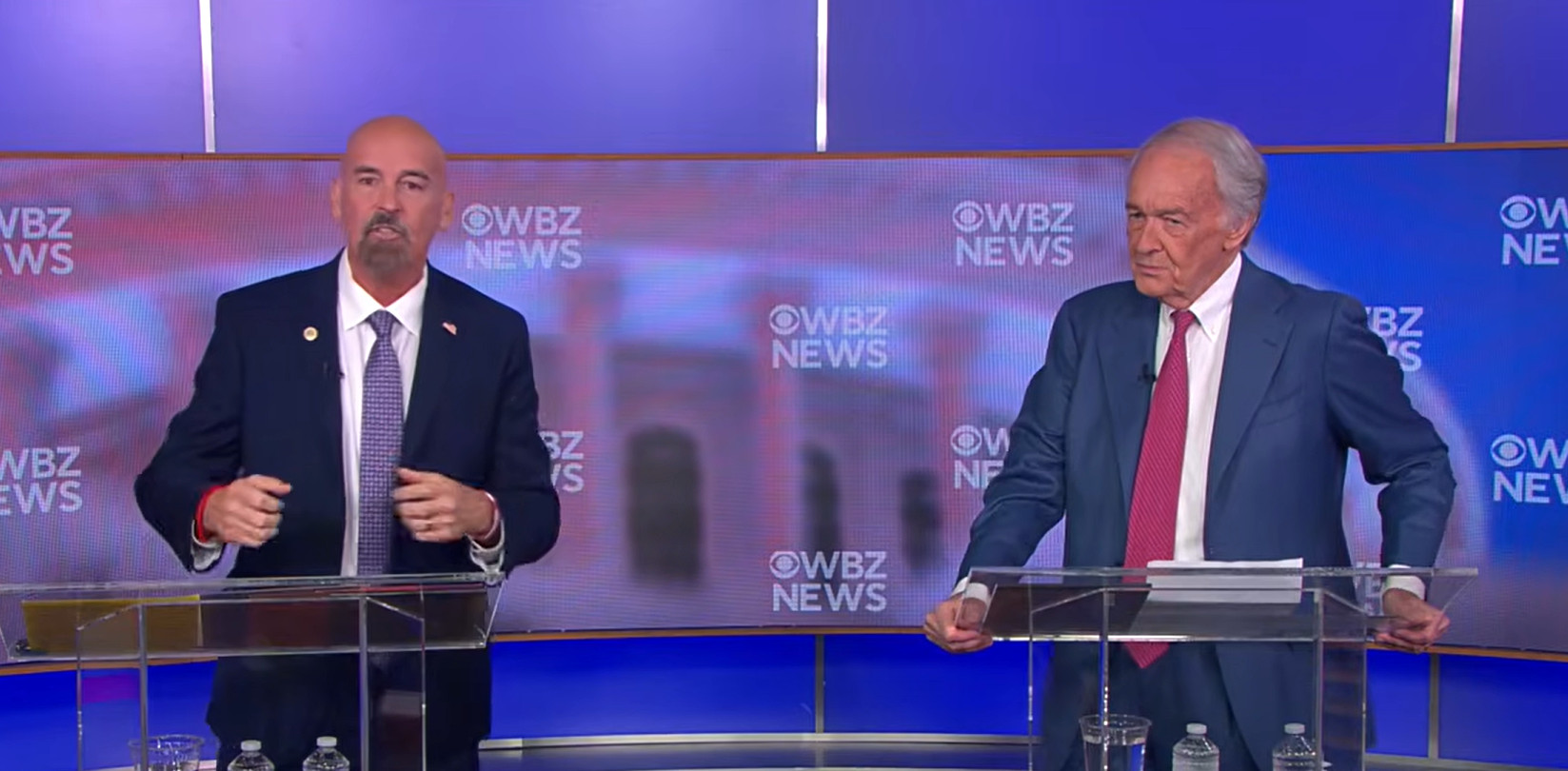
Deaton and Markey debating this year. There were few shockers during it. (still via YouTube/WBZ)
The most likely answer as to why this story has escaped scrutiny is that Deaton is almost sure to lose in November. An incumbent Democrat losing a seat to a Republican challenger is almost unheard of among Massachusetts’s federal officeholders, especially in the Trump era.
But accountability for our nation’s leaders and want-to-be leaders shouldn’t rely on whether their race is a toss-up or not.
I don’t care if you’re in a competitive race as a Democrat or Republican or if you’re in a blowout as the candidate for the Timesizing Not Downsizing Party (a real political designation in Massachusetts). It is still relevant for voters to know if you had a 15-year-old girlfriend as a legal adult. If you’re seeking one of the most powerful offices in the nation, voters deserve to know these kinds of things.
Questions about this don’t stop at Deaton and his campaign, nor with the news media failing to focus on this story. The Massachusetts Republican Party has some explaining to do, too.
Deaton was expeditiously given an early endorsement from the party, before their convention, when delegates would normally vote on ballot access for candidates. He then went unopposed in the Republican primary. Whether the Republican state committee members who voted for this early endorsement knew about Deaton’s relationship history detailed in his memoir is another question. Perhaps the media should have reported it out.
There’s no off-ramp, now. It is too late to have him removed from November’s ballot, as Platner was in Maine. Had this been brought to light earlier, Deaton and the MassGOP could have reconsidered his candidacy. Instead, voters may never hear about it before voting. Therein lies the problem.
This lack of attention to a serious story involving a candidate for US Senate is a disservice to voters who are clamoring for disclosure and accountability in the post-Me Too and Epstein-files era.
Massachusetts’s news outlets have left voters in the dark.